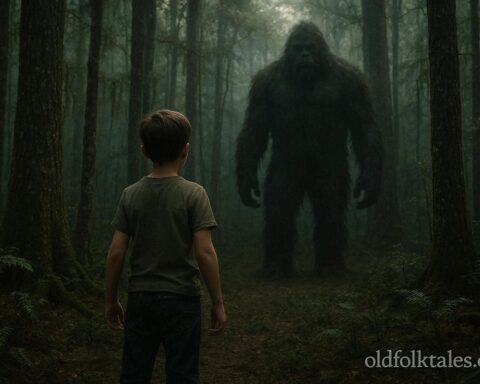
Long before the white men came with their rifles and roads, before the rivers ran with the sound of saws and iron, the Algonquin-speaking peoples, the Cree, Ojibwe, and others who made their home where snow lay deep and wind sang through the pines gathered around winter fires to share stories. Among these tales, whispered with reverence and fear, was the legend of the Wendigo, a spirit that walked in the coldest months when hunger stalked the land.
The elders taught that the Wendigo was not born a monster. Once, it had been human, perhaps a skilled hunter, a loving father, maybe even a good man respected by his people. But when the cruelest winter came, when snow buried the traps and firewood ran out, when the bitter cold gnawed at bones and bellies alike, he faced a choice no person should ever face. In his desperation, driven mad by starvation, he turned on his own kind. He took the forbidden path, tasting human flesh to survive another day.
Click to read all American Cryptids & Monsters — creatures of mystery and fear said to inhabit America’s wild landscapes.
And for this transgression, the Great Spirits in their profound sorrow and righteous fury cursed him terribly.
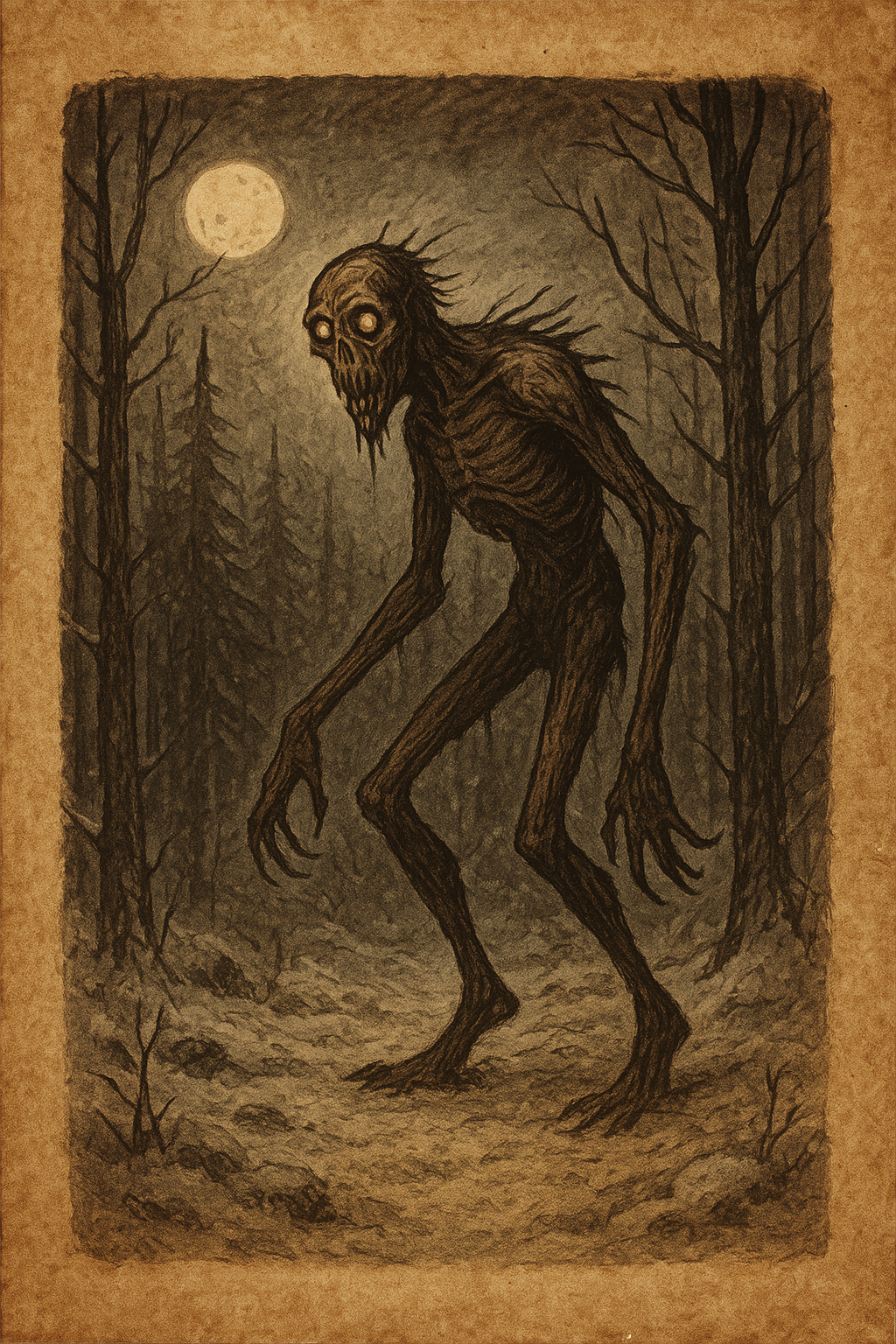
From that moment of his first forbidden bite, his humanity began to die. His heart froze solid as stone, incapable of warmth or love. His body stretched and grew grotesque , long and thin, with skin pulled tight over protruding bones until he became a walking skeleton. His lips rotted away, exposing a mouth full of jagged, yellowed teeth. His eyes burned like dying coals in hollow sockets. And from that ruined mouth came a voice like wind howling through dead branches almost human, but not quite, never quite.
But the cruelest part of the curse was this: the Wendigo could never again be satisfied. Its hunger became eternal, infinite, a gnawing emptiness that could never be filled no matter how much it consumed. The more it ate, the larger it grew, and the larger it grew, the hungrier it became, a terrible, endless cycle of want and horror.
The Wendigo prowled the deep forests when the moon rose pale and cold over the snow-covered pines, seeking the warmth of living flesh. Sometimes, lost travelers heard it calling their names through the trees, mimicking perfectly the voices of those they loved most, a mother’s worried cry, a child’s frightened call, a lover’s desperate plea. Other times, the elders said, it could slip into a man’s dreams like smoke, whispering of hunger and survival until he woke changed, his spirit hollowed out, his humanity already half-devoured.
One winter, so the old ones say a man named Mahihkan lived with his family in a small lodge near the frozen edge of the Great Lake. He was a good provider, skilled with traps and patient in the hunt. His wife kept their home warm, and his children, though often hungry as children in winter always were, had never known true starvation.
But that year, the snow came early and stayed cruelly long. The drifts piled higher than a man’s head. The lake froze so thick that even the fishing holes sealed over in the night. Mahihkan checked his traplines daily, trudging through the deep snow until his legs ached and his fingers grew numb, but the traps caught nothing. The forest seemed empty of life, as if all the animals had vanished or died.
Days turned to weeks. The dried meat ran out. The fish they had smoked in autumn dwindled to nothing. They boiled bark and roots, but these provided little nourishment. The children cried with hunger, their bellies swollen, their faces gaunt. The fire burned lower each day as their supply of wood dwindled.
Desperation gnawed at Mahihkan worse than the hunger itself. He lay awake at night, listening to his children whimper in their sleep, watching his wife grow weaker. He thought of the stories the elders told around the fire warnings of the Wendigo that waits in the darkness for men to grow weak, for their spirits to falter.
But hunger has its own voice, and it speaks louder than fear, louder than wisdom, louder than love.
One night, as the wind howled around their lodge and the last scraps of dried meat were gone, Mahihkan looked upon his sleeping family. And in that moment of weakness and despair, something inside him shifted. A shadow moved behind his eyes, cold and ancient. A voice that was not his own began whispering promises, promises of warmth, of strength, of survival, of endless life if only he would take what he needed, if only he would do what must be done.
When the storm finally passed and weak sunlight broke through the clouds, people from the nearby village grew worried. They had not seen smoke from Mahihkan’s lodge in days. They made the difficult journey through the deep snow, calling out as they approached.
But the lodge was silent.
They entered cautiously, their breath forming clouds in the frozen air. The fire still smoldered weakly in the center, but no one tended it. And there, scattered near the dying embers, they found bones, human bones, scraped clean of flesh, cracked open for marrow.
Horror seized them. With trembling hands, they followed tracks leading away from the lodge into the deep forest, huge, heavy prints that no man could make, prints that sank impossibly deep into the snow. And in the distance, among the skeletal trees, they heard a cry that froze their blood, a sound that was almost human, but twisted, elongated, filled with infinite hunger and rage.
They fled back to their village and told the elders what they had found. The old ones nodded gravely, for they had seen such things before, in other winters, in other times. They performed the ceremonies and spoke the prayers, but they knew the truth: Mahihkan was gone. In his place now roamed a Wendigo, cursed to wander the frozen forests forever, driven by a hunger that could never be satisfied.
From that day forward, the villagers avoided those woods. But on certain nights, when the snow fell thick and the moon hung thin as a blade in the black sky, they swore they could see a tall, impossibly thin shape moving between the trees, its eyes glowing with unholy light, its breath steaming in the cold air, its voice calling out names in voices that sounded almost like loved ones.
The elders taught the children well: Beware greed. Beware hunger that takes too much. Beware the moment when survival seems to demand the unthinkable. For the Wendigo is never far from those who forget gratitude, who give in to the voice of selfish want, who believe that their own survival justifies any act, no matter how terrible.
Even now, when winter howls through the pines of the north and the cold grows so fierce it splits the trees, hunters still leave a bit of meat on the fire, an offering to the spirits, a reminder of gratitude, a prayer that they will never face the choice that Mahihkan faced. For somewhere in those endless forests, the Wendigo still roams, forever hungry, forever cold, forever lost between human and monster, a warning carved in ice and bone of what happens when we sacrifice our humanity to survive.
Explore how American legends shaped the nation — from frontier heroes to Revolutionary War tales.
The Moral Lesson
The Wendigo legend serves as a powerful warning against greed, selfishness, and the loss of humanity in desperate times. It teaches that some boundaries must never be crossed, no matter how dire the circumstances, for certain acts destroy not just the body but the soul itself. The tale emphasizes the importance of community support, sharing resources, and maintaining our essential humanity even when survival is at stake. It reminds us that giving in to our basest instincts consuming others for our own benefit transforms us into something monstrous. The Wendigo represents the danger of insatiable hunger, whether literal or metaphorical, and warns that greed and selfishness grow with feeding, never bringing satisfaction but only deeper emptiness.
Knowledge Check
Q1: What is the Wendigo and how did it become cursed according to Algonquin tradition?
A: The Wendigo is a cursed spirit from Algonquin folklore that was once human. When faced with starvation during a brutal winter, this person resorted to cannibalism to survive. As punishment, the Great Spirits cursed him, transforming him into a monster with a frozen heart, skeletal body with skin stretched tight over bones, rotted lips exposing jagged teeth, and burning coal-like eyes. Most cruelly, the curse made his hunger eternal the more he eats, the larger he grows, and the larger he grows, the hungrier he becomes.
Q2: What supernatural abilities does the Wendigo possess?
A: The Wendigo can mimic the voices of loved ones to lure victims, calling out names through the trees in voices that sound exactly like mothers, children, or other family members. It can also slip into people’s dreams, whispering of hunger and survival until they wake changed, with their spirits hollowed out and humanity partially devoured. It moves through deep snow leaving impossibly large, heavy tracks and possesses inhuman strength.
Q3: Who was Mahihkan and what led to his transformation?
A: Mahihkan was a skilled hunter and good provider who lived with his family near the Great Lake. During an exceptionally harsh winter, when snow came early and stayed long, his traps caught nothing and his family’s food supplies ran out completely. As his children cried with hunger and his wife grew weaker, desperation consumed him. Despite knowing the elders’ warnings about the Wendigo, he gave in to a dark voice whispering promises of survival, crossed the forbidden boundary, and consumed human flesh, triggering his transformation into a Wendigo.
Q4: What evidence did the villagers find at Mahihkan’s lodge?
A: When villagers grew concerned and traveled to Mahihkan’s lodge, they found it eerily silent with only a weakly smoldering fire. Near the dying embers lay human bones, scraped clean of flesh and cracked open for marrow. They followed massive tracks leading away from the lodge into the forest, prints far too large and heavy for any human to make, and heard an inhuman cry in the distance that was almost human but twisted and filled with infinite hunger.
Q5: What precautions and traditions do the northern peoples maintain regarding the Wendigo?
A: Hunters leave offerings of meat on the fire as a sign of gratitude to the spirits and as a reminder never to give in to selfish want. The elders teach children to beware greed and hunger that takes too much, emphasizing that some boundaries must never be crossed regardless of circumstances. They avoid certain woods where Wendigos have been known to roam and remain vigilant during harsh winters when desperation might tempt people toward forbidden acts.
Q6: What cultural groups tell the Wendigo legend and what does it reveal about their values?
A: The Wendigo legend comes from Algonquin-speaking peoples of the northern forests, including the Cree and Ojibwe nations. The story reveals their deep values of community support, sharing resources during hardship, maintaining humanity even in desperate times, and respecting both spiritual and moral boundaries. It demonstrates their understanding that survival cannot justify all actions and that certain transgressions destroy the soul. The tale also reflects the harsh realities of winter survival in northern climates and the importance of gratitude, self-control, and collective responsibility over individual survival at any cost.
Source: Algonquin folktale, Northern North America (Cree and Ojibwe peoples)