Long ago, in a quiet village that rested beside a winding river in Mexico, there lived a woman named María. She was the pride of her town, beautiful beyond compare, with long dark hair that shimmered like black silk cascading down her back and eyes so deep and luminous they could melt even the coldest heart. Men traveled from distant villages just to catch a glimpse of her radiant face, hoping she might favor them with a smile. But María, proud and particular, had her sights set on only one man: a handsome ranchero with a magnificent horse, elegant clothes, and a charming smile that promised the world.
He was wealthy and confident, moving through life with the ease of someone who had never known want. He wooed María with sweet words and grand promises of love and riches, speaking of the fine home they would share and the beautiful life they would build together. María, young and dazzled by his attention, believed every word. Before long, they were wed in the village church, and María thought she had found her fairy tale ending.
Click to read all American Cryptids & Monsters — creatures of mystery and fear said to inhabit America’s wild landscapes.
For a time, she was genuinely happy. She bore him two sons, beautiful boys with their father’s dark eyes and their mother’s gentle spirit. These children became the absolute joy of her life. She sang to them as she rocked them to sleep, walked with them along the riverbank collecting smooth stones, and told them stories under the shade of the willow trees. In her sons, María found a love purer and deeper than any she had known.
But happiness, as it often does in this world, proved fleeting. As the years passed, her husband’s attentions wandered like clouds drifting from the sun. First, he began traveling to other towns on business that seemed to stretch longer with each trip. Then rumors reached María’s ears whispers of other women, younger women, women he entertained while away from home. When he did return to their village, he came only to see his sons, playing with them in the courtyard but barely speaking to María, looking through her as if she were nothing more than a shadow.
The rejection cut María deeper than any blade. Jealousy began to grow in her heart like thorny vines, wrapping around her ribs, squeezing tighter with each cold glance from her husband, with each night he failed to return home. The rage simmered beneath her skin, fed by humiliation and sorrow, growing hotter and darker until it consumed nearly every thought.
Then came the night that would damn her for eternity.
The moon hung full and bright in the velvet sky, casting silver light across the village. María stood by the river with her two sons, the water reflecting the stars like scattered diamonds. The boys laughed and played at the water’s edge, innocent and trusting. Then, in the distance, María saw her husband riding past on his fine horse but he was not alone. A young woman sat beside him, and they were laughing together, lost in their own world.
Her husband rode past without even a glance toward María and his children, as if they didn’t exist at all.
In that moment, something inside María shattered completely. Her sorrow twisted into something dark and terrible a madness born of betrayal and broken promises. The jealous rage that had been building for so long exploded within her chest. In her fury and pain, she looked at her sons the boys who resembled their father, the children he still loved while abandoning her and a terrible thought seized her mind.
If she couldn’t have his love, then neither would anyone else. If he cared only for these boys, then she would take them from him.
Blinded by anguish and rage, María grabbed her sons. Their laughter turned to confusion, then to fear as she dragged them deeper into the river. The same river that had once sung gentle lullabies to them now became their tomb. She pushed them beneath the dark waters, holding them down even as they struggled, even as they cried out for her, even as their small hands reached for her face.
And then, silence. The river swallowed their cries.
The instant the water grew still, the fog of madness lifted from María’s mind. She stared at her hands, at the river, at the terrible reality of what she had done. Horror crashed over her like a wave. She fell to her knees in the shallow water, screaming into the night, “¡Mis hijos! ¡Mis hijos!”My children! My children!” Her cries echoed across the valley, raw and broken, but the river gave no answer. The water flowed on, cold and indifferent, carrying her sons away.
Overcome with unbearable grief, María walked the riverbanks for days and nights without rest. Her beautiful hair became tangled and wild. Her lovely dress turned to rags. She wept until she had no more tears, then wept blood instead. She called out for her children until her voice grew hoarse and ragged, searching every bend of the river, peering into every pool, but finding only her own reflection staring back the face of a murderer.
Some say she drowned herself in that same river, hoping to find her sons in death and beg their forgiveness. Others say she simply wasted away, her cries echoing across the land day and night until her body could no longer sustain her grief and her soul slipped free from her flesh like smoke.
But her spirit found no peace.
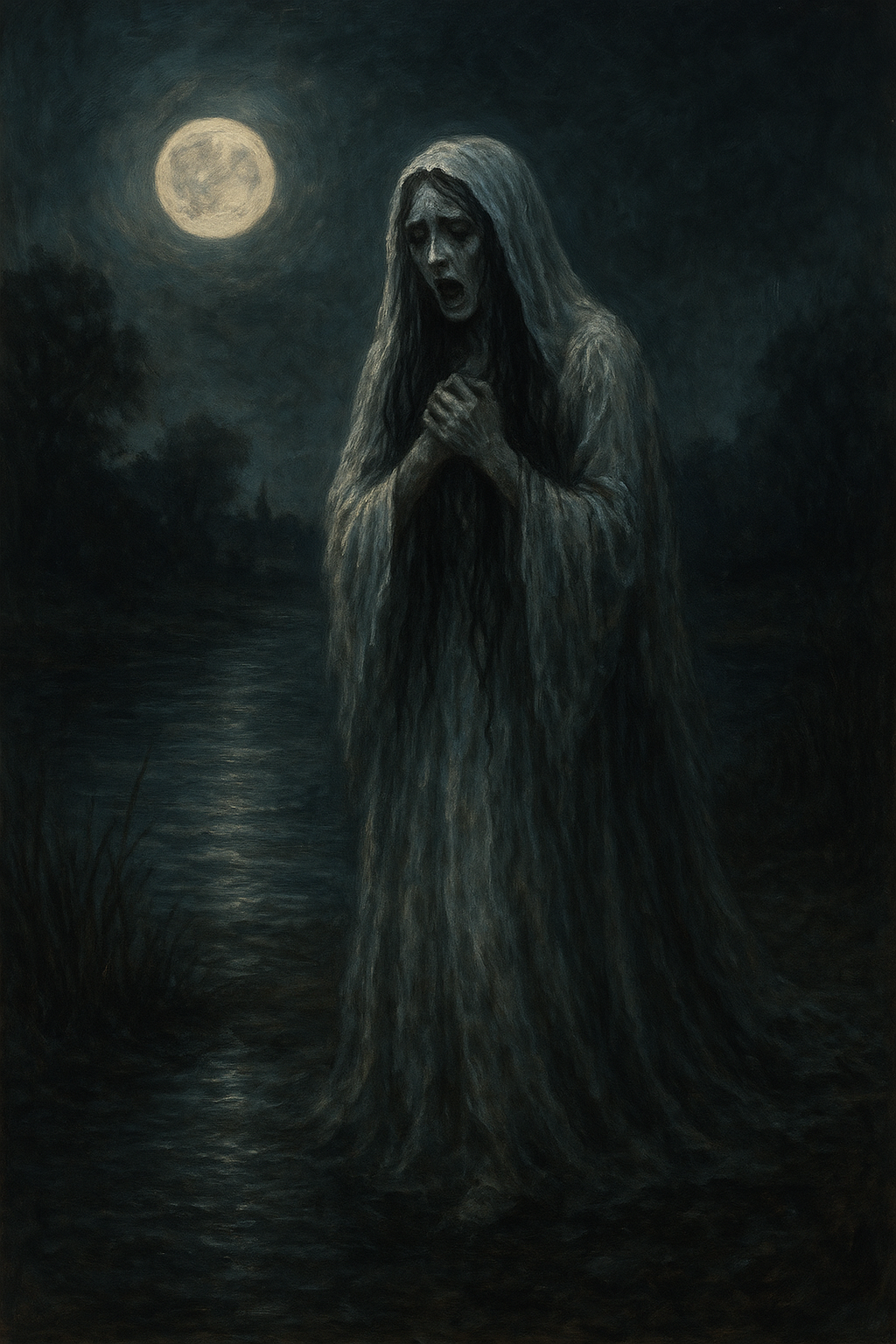
From that night forward, when María’s body was found floating in the river or buried in an unmarked grave the stories differ villagers began to hear strange sounds whenever the moon was high. A woman’s voice, distant and mournful, wailing in the darkness. Children clutched their mothers’ skirts and dogs howled in response to the eerie cries.
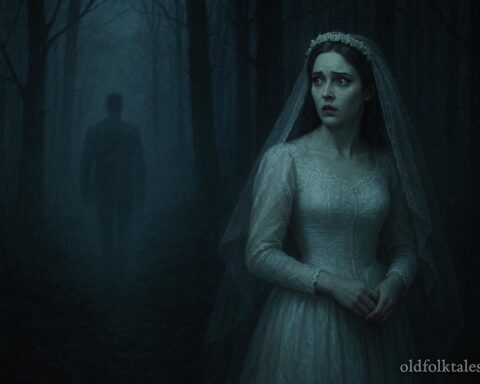
Dressed in a flowing white gown that billowed around her like mist, her face hidden by a veil or obscured by long wet hair, a ghostly figure began appearing along the riverbanks. She wandered endlessly, wringing her hands and crying out for the children she could never reclaim, searching every shadow, peering into every home where children slept.
The villagers gave her a name that would be whispered for generations: La Llorona, the Weeping Woman.
Parents warned their children to stay away from the river after dark, for it was said that La Llorona, in her desperate madness, might mistake any child for her lost sons. If she found you near the water, she might grab you with her cold, wet hands and drag you down into the depths to join her children in their watery grave. Some said if you heard her cries far away, you were safe but if her wailing sounded close, death was near.
The legend spread from village to village, across mountains and deserts, carried by travelers and passed down through generations. Even now, centuries later, people across Mexico and beyond claim to hear her mournful wails on moonlit nights when mist rises from rivers and streams.
When the wind rushes through the reeds by the water’s edge, creating sounds almost like words, mothers still tell their children it’s La Llorona calling: “Mis hijos… mis hijos…” Some say she appears before disasters or deaths, a harbinger of sorrow. Others say she simply continues her eternal punishment, condemned to search forever for the children she destroyed in a moment of rage, never to find them, never to rest, never to be forgiven.
So if you walk near the river at night and hear a woman weeping, calling for her children in a voice filled with infinite sorrow and regret run. Run home and don’t look back. For La Llorona still walks the earth, a ghost trapped between worlds, forever mourning, forever searching, a warning carved in tears of what can happen when jealousy and rage consume the heart.
Explore Native American beings, swamp creatures, and modern cryptid sightings across the country.
The Moral Lesson
La Llorona’s tragic tale serves as a powerful warning about the destructive nature of jealousy, rage, and acting in the heat of unbearable emotion. The story teaches that violence born from betrayal and anger especially against innocent victims, brings only eternal regret and suffering. María’s momentary madness cost her everything she truly loved, condemning her to an eternity of grief and remorse. The legend reminds us that our children are not possessions to be used as weapons in adult conflicts, and that some actions can never be undone, no matter how deep the remorse. It also speaks to the dangers of pride and of seeking revenge, showing how these emotions can transform us into something monstrous. The tale has traditionally been used to keep children safe by warning them away from dangerous waters, while also serving as a meditation on guilt, loss, and the impossibility of escaping the consequences of our worst actions.
Knowledge Check
Q1: Who was María and what made her the pride of her village?
A: María was an extraordinarily beautiful woman from a quiet Mexican village beside a winding river. She had long dark hair that shimmered like black silk and eyes so deep and luminous they could melt the coldest heart. Men traveled from distant villages just to glimpse her beauty. She was proud and particular, eventually marrying a wealthy, handsome ranchero who promised her love and riches.
Q2: What led to María’s transformation into La Llorona?
A: After María bore her husband two sons, he began neglecting her, traveling frequently and entertaining other women while barely acknowledging María when home. On a moonlit night, consumed by jealousy and rage after seeing her husband ride past with another woman without even glancing at her and their children, María’s grief twisted into madness. In her fury, she drowned her two sons in the river. The instant she realized what she’d done, overwhelming guilt and horror consumed her, leading to her death and transformation into the eternally weeping ghost.
Q3: How is La Llorona described and what does she do?
A: La Llorona appears as a ghostly figure dressed in a flowing white gown that billows like mist, with her face either hidden by a veil or obscured by long wet hair. She wanders riverbanks endlessly at night, especially when the moon is high, wringing her hands and crying out “¡Mis hijos! ¡Mis hijos!” (My children! My children!). She searches desperately for the children she drowned, peering into shadows and homes where children sleep, condemned to an eternal, fruitless search.
Q4: What danger does La Llorona pose according to the legend?
A: According to the legend, La Llorona, in her desperate madness, might mistake any child near the water for her lost sons. If she finds children near rivers or streams after dark, she might grab them with her cold, wet hands and drag them down into the depths to join her children in their watery grave. The saying goes that if you hear her cries far away you’re safe, but if her wailing sounds close, death is near.
Q5: What cultural purpose does the La Llorona legend serve?
A: The legend serves multiple cultural purposes. Practically, it has been used for generations to keep children safe by warning them to stay away from dangerous rivers and streams after dark. Symbolically, it serves as a cautionary tale about the destructive power of jealousy, rage, and revenge, particularly warning against using children as weapons in adult conflicts. It also functions as a meditation on guilt, maternal love twisted by betrayal, and the eternal consequences of actions committed in moments of uncontrollable emotion.
Q6: How has the La Llorona legend spread beyond its origins?
A: The legend originated in a Mexican village but spread from village to village across mountains and deserts, carried by travelers and passed down through generations. It has become one of the most famous legends throughout Mexico and has spread across Latin America and into the southwestern United States and beyond. The story has endured for centuries, with people across these regions still claiming to hear her mournful wails on moonlit nights when mist rises from rivers and streams. Some say she appears before disasters or deaths as a harbinger of sorrow.
Source: Mexican folktale, Mexico