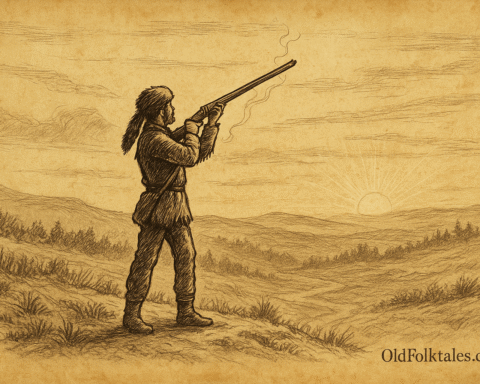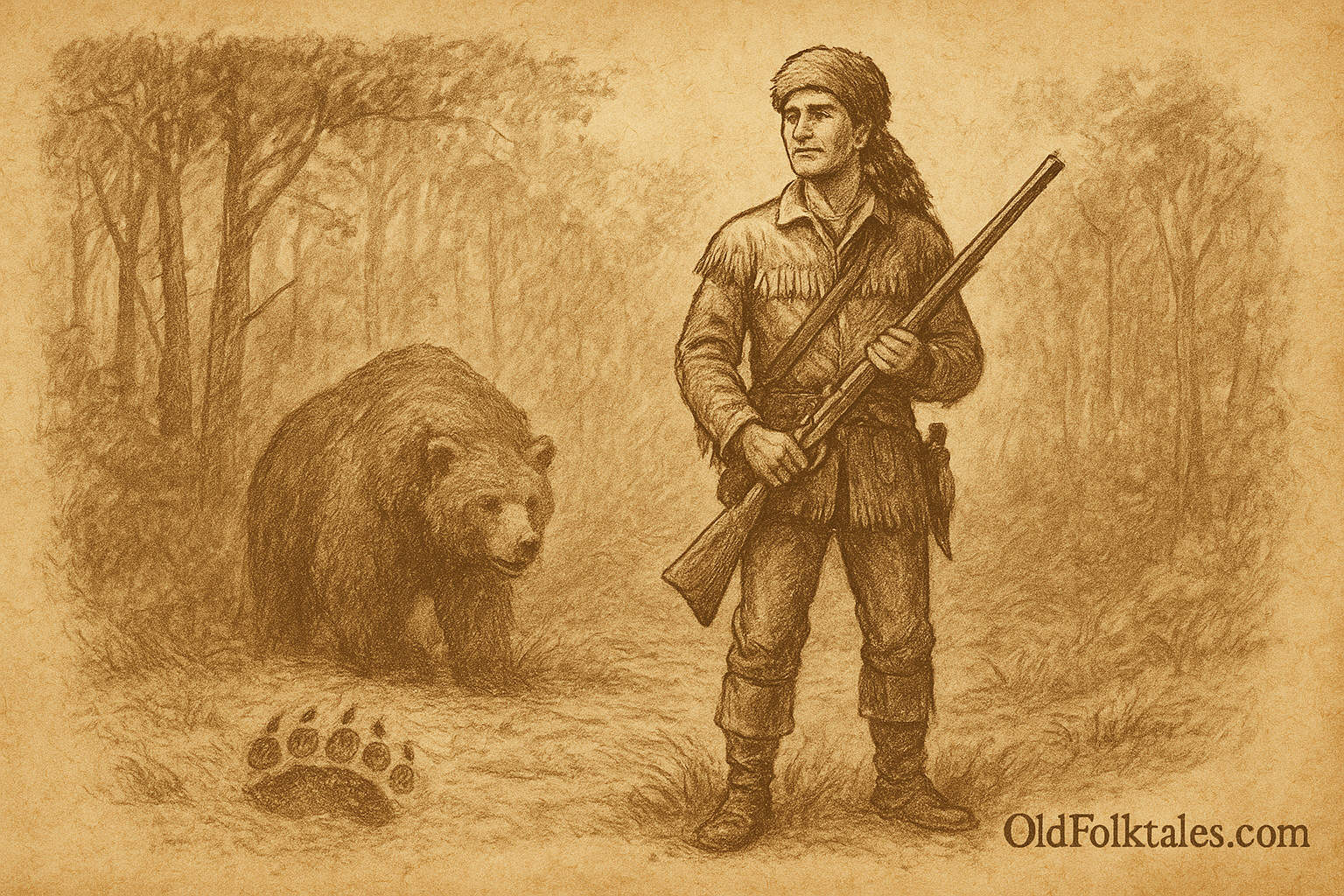
In the early days of the American frontier, when Tennessee’s hills still echoed with wolves and the rivers ran wild and untamed, there lived a man whose name became larger than life, Davy Crockett. He was a hunter, scout, storyteller, and eventually a congressman, but more than anything, he was a man of the wild. His sharp eyes could track a deer through morning mist, and his aim with his rifle, “Old Betsy,” was as steady as the rising sun.
Davy was known not just for his bravery but for his humor. He could outtalk, outshoot, and outwit most anyone he met. Around campfires, men would whisper that he’d tamed the Mississippi itself if it had given him half a chance. Yet the story that outshone them all was the one about the Thunder-Whopper Bear, the biggest, baddest creature ever to roam the American frontier.
Explore Native American beings, swamp creatures, and modern cryptid sightings across the country.
The Hunt Begins
One crisp autumn morning, Davy was out hunting along the cane-brakes and deep swamps of the Mississippi Valley. The air smelled of hickory and damp earth, and fog rolled low across the river. As he followed deer tracks, he heard a rumble in the distance, low and deep, like thunder on a clear day.
“Now that’s a strange kind of storm,” Davy muttered, cocking his head. The sound came again, louder this time, echoing through the woods. The ground beneath his boots seemed to tremble.
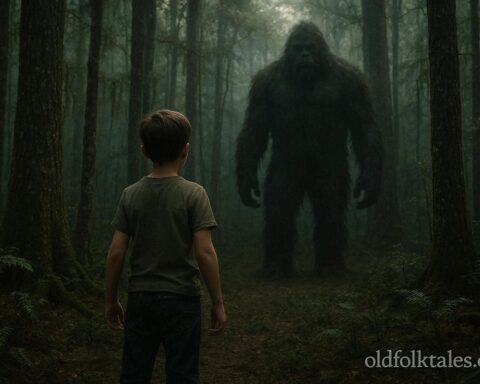
He followed the sound through the thicket until he came upon something that froze him in his tracks. There, standing upright among the shadows, was a bear so massive that the forest bent beneath its weight. Its fur glistened black as night, and when it snorted, clouds of steam rolled from its nostrils like smoke from a cannon.
“By thunder,” Davy whispered, “that critter could swallow a log cabin whole.”
The Clash of Man and Beast
The bear spotted Davy and roared, the sound rolling through the forest like a thunderclap. Trees shook. Birds scattered. Even the river seemed to pause its flow. But Davy Crockett wasn’t one to flinch. He raised Old Betsy, his trusty rifle, took aim, and fired.
The shot echoed. The bear staggered but didn’t fall. Instead, it reared up higher, taller than a man on horseback, and let out another roar that shook the very earth. Davy reloaded with lightning speed and fired again. Still, the beast charged forward, crushing saplings underfoot.
“Looks like I’ll need three to do it,” Davy said through gritted teeth. He waited until the bear was almost upon him, its eyes glowing like coals. Then, crack! he fired one final time.
The bear stumbled, then crashed to the ground with such force that it made the ground quake. The thunder that had followed it through the valley faded into silence.
The Legend Grows
When the dust settled, Davy approached the fallen creature. It was even bigger up close, its paws as wide as washbasins, its fur thick as a buffalo hide. Davy let out a long whistle.
“Well, you old thunder-maker,” he said, “you sure gave me a story worth tellin’.”
He skinned the bear right there in the forest, using its massive hide to make himself a tent. Later, he claimed that the bear’s ribs were wide enough to drive a wagon through and that the sound of its roar could shake down persimmons from the trees for miles.
As with all tales told by Davy Crockett, the story grew a little taller each time it was told. By the time it reached the towns and taverns along the frontier, folks said the bear had caused actual storms and that Davy had wrestled it barehanded.
Whether anyone believed it didn’t much matter, because in the hearts of the people, Davy Crockett had become more than a man. He was a legend, a living symbol of American courage, humor, and grit.
Click to read all American Folktales — timeless oral stories passed through generations across the United States.
Moral Lesson
Davy Crockett’s tale of the Thunder-Whopper Bear reminds us that courage often lies in facing challenges that seem too great to overcome. His larger-than-life storytelling shows that heroes aren’t just born of battle, they’re built by spirit, humor, and the courage to stand tall even when the odds roar like thunder.
Knowledge Check
1. Who was Davy Crockett?
Davy Crockett was a legendary Tennessee frontiersman, hunter, and storyteller known for his courage and humor.
2. What made the Thunder-Whopper Bear so fearsome?
It was said to be the largest bear in the Mississippi Valley, roaring so loudly it sounded like thunder.
3. What weapon did Davy Crockett use to defeat the bear?
He used his famous rifle, “Old Betsy,” firing three times before the bear fell.
4. What did Davy make from the bear’s hide?
He made a tent from the bear’s massive skin.
5. What does this story symbolize about American frontier life?
It celebrates bravery, humor, and the human spirit’s ability to conquer even nature’s fiercest challenges.
6. What moral lesson does the story teach?
True heroism combines courage, wit, and perseverance, even when the challenges seem as great as a thunder-whopper bear.
Source: Adapted from A Narrative of the Life of David Crockett (1834) and later retellings from Legends of the West, Project Gutenberg #37925.
Cultural Origin: American frontier folklore, Tennessee, United States.