Long before towns sprouted along the shore and railways carved through the mountains, Okanagan Lake kept secrets older than human memory. The indigenous peoples who made their homes beside these waters understood what the lake concealed beneath its shimmering surface, a truth that sent shivers down even the strongest warrior’s spine.
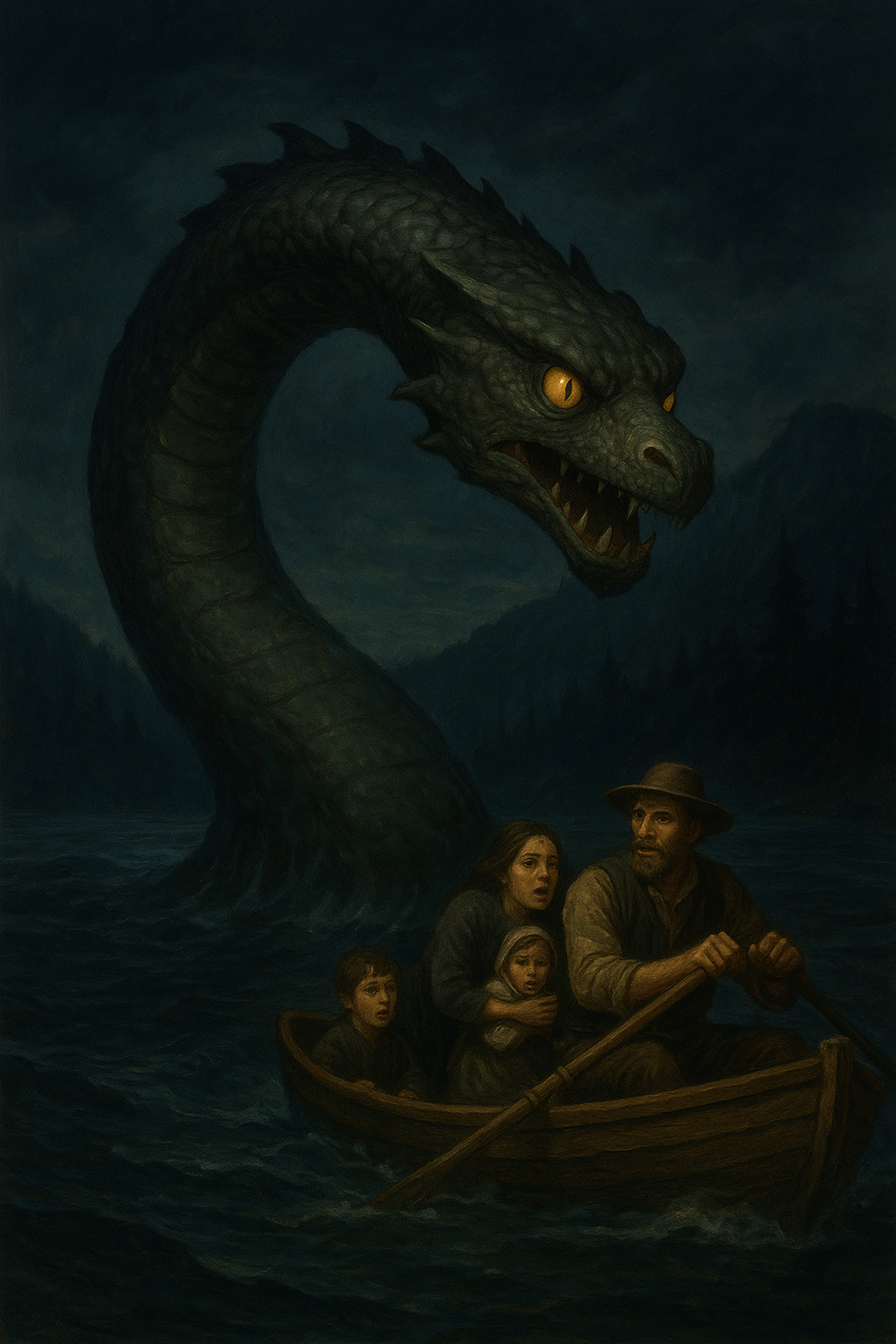
Deep in the cold darkness where sunlight could never penetrate, a creature of terrible power made its domain. The people called it Ogopogo, the water demon, a serpent so immense that its body could wrap around entire canoes, so ancient that it remembered when the mountains were young. Its scales gleamed like wet stone in the rare moments it surfaced, and its eyes held the cold intelligence of something that had witnessed countless generations come and go.
Explore Native American beings, swamp creatures, and modern cryptid sightings across the country.
The elders taught their children well: Okanagan Lake was not merely water and fish. It was Ogopogo’s realm, and those who traveled upon it did so only by the serpent’s permission. The creature’s moods shifted like the wind sometimes it allowed peaceful passage, but other times, when hunger or anger stirred in its ancient heart, it unleashed storms that could flip a canoe with a single wave or drag swimmers down to the bottomless depths with invisible currents.
Wisdom passed from generation to generation carried a simple truth: never cross the lake empty-handed. Before launching a canoe, before wading into deeper waters, an offering must be made. A chicken thrown into the waves, a rabbit released to the current, any small creature that could appease the demon’s appetite. The sacrifice was not cruelty but survival, a contract written in ripples and blood that kept the peace between human and monster.
Those who dismissed these warnings as superstition learned harsh lessons. Travelers who paddled across without offering tribute sometimes disappeared entirely, their empty canoes found drifting days later. Others spoke of seeing something massive rise beneath their boats, a shadow the size of several men, moving with purposeful grace before vanishing into the black water. The lucky ones made it back to shore with wild stories. The unlucky ones became stories themselves, cautionary tales told around fires on dark nights.
One summer when the sun baked the shores and the water lay flat as glass, a European settler named John MacDougall prepared to cross Okanagan Lake with his family. MacDougall was a practical man who believed in hard work, good horses, and his own two hands. The indigenous people who lived near the landing warned him about Ogopogo, urged him to make an offering before departure, but MacDougall dismissed their words with a wave. Old legends, he thought. Primitive fears. He had a sturdy boat, strong horses, and determination, what more did he need?
The crossing began smoothly enough. MacDougall’s family settled into the boat while the horses, tied securely alongside, swam with steady strokes. The water remained calm, almost unnaturally so, as if the lake itself were holding its breath. They reached the middle passage, the deepest point where the bottom dropped away into mystery, when everything changed.
An invisible force seized the boat’s hull, stopping their forward momentum as if a giant hand had reached up from below. The vessel lurched sideways, tilting at a dangerous angle. Water sloshed over the sides as the horses began to panic, their eyes rolling white with terror. They thrashed against their ropes, sensing something their human companions could only feel, a presence circling beneath them, massive and hungry.
MacDougall gripped the sides of the rocking boat, his heart hammering against his ribs as water poured in faster than they could bail. His wife clutched their children, her face drained of color. The other men in the party shouted in confusion and fear, trying to steady the vessel, but the unseen force only pulled harder, dragging them toward the depths.
In that moment of pure terror, MacDougall remembered. The warnings, the stories, the earnest faces of the people who had tried to protect him from his own pride. Ogopogo demanded tribute, and he had offered nothing but arrogance.
With shaking hands, MacDougall pulled his knife from his belt and began sawing at the ropes that bound the horses to the boat. The first animal came free and immediately something pulled it under, the surface erupting in foam and thrashing. One by one, MacDougall released the remaining horses, each disappearing beneath the lake with barely a chance to cry out. Their strong legs kicked uselessly against the serpent’s ancient strength as Ogopogo claimed its due.
As the last horse vanished, the grip on the boat suddenly released. The vessel lurched upright, freed from whatever had been dragging it down. MacDougall and his companions seized their oars and rowed with desperate strength, not daring to look back at the water that now lay calm and innocent behind them. They reached the far shore with gasping breath and trembling limbs, knowing they had survived only because the lake spirit had accepted their unplanned sacrifice.
Word of MacDougall’s encounter spread among both settlers and indigenous peoples, adding another chapter to Ogopogo’s legend. But the serpent of Okanagan Lake was not alone. South across the border in Montana, Flathead Lake harbored its own water demon. The Kutenai people spoke of a creature that emerged during floods, claiming livestock, land, and occasionally lives with equal indifference. Those who knew both lakes whispered that Ogopogo and the Flathead Lake Monster were cousins, ancient spirits of water that answered to no human authority, guardians of depths that could never be fully understood or conquered.
The lakes remain today, their surfaces reflecting mountains and sky, beautiful and serene to those who do not know their secrets. But on certain evenings when fog rolls across the water, when ripples spread from no visible source, the old stories resurface. Elders still teach respect for the deep places, and wise travelers still make their offerings before venturing onto waters that remember everything and forgive nothing.
Ogopogo waits in the darkness, patient and eternal, reminding all who live near its domain that nature holds powers beyond human mastery. The covenant remains unchanged from ancient times: respect the spirits of water, honor their demands, and perhaps only perhaps you will reach the other shore.
Click to read all American Cryptids & Monsters — creatures of mystery and fear said to inhabit America’s wild landscapes.
The Moral of the Story
This folktale teaches the importance of respecting nature and heeding the wisdom of those who understand it. Ogopogo’s legend reminds us that arrogance and dismissing traditional knowledge can lead to disaster, while humility and acknowledgment of forces beyond our control ensure survival. The story emphasizes that humans must honor the natural world and its mysteries, understanding that we are guests in realms far older and more powerful than ourselves.
Knowledge Check
Q1: What is Ogopogo in indigenous North American folklore?
A: Ogopogo is a water demon or serpent that lives in the depths of Okanagan Lake in the Pacific Northwest region of North America. Indigenous peoples described it as an immensely powerful creature that controlled the lake’s waters and could create storms or drag travelers to their deaths if not properly appeased.
Q2: What offering did travelers need to make before crossing Okanagan Lake?
A: According to the folktale, travelers needed to sacrifice a small animal such as a chicken, rabbit, or other creature to Ogopogo before attempting to cross the lake. This offering was believed to satisfy the water demon and ensure safe passage across the dangerous waters.
Q3: How did John MacDougall survive his encounter with Ogopogo?
A: When Ogopogo attacked MacDougall’s boat in the middle of Okanagan Lake, he remembered the indigenous warnings and cut the ropes holding his horses. The serpent pulled the horses underwater as sacrifice, releasing its grip on the boat and allowing MacDougall and his family to escape to shore.
Q4: What is the connection between Ogopogo and the Flathead Lake Monster in Montana?
A: The folktale suggests that Ogopogo and the Flathead Lake Monster of Montana were “cousins” related water spirits that both demanded respect from humans. The Kutenai people believed both creatures were ancient guardians of their respective lakes, possessing similar powers and temperaments.
Q5: What cultural lesson does the Ogopogo legend teach about indigenous wisdom?
A: The story demonstrates the importance of respecting indigenous knowledge and traditional warnings. John MacDougall’s near-death experience came from dismissing the local people’s advice, teaching that indigenous wisdom about the land and waters stems from generations of experience and should not be arrogantly ignored.
Q6: Why do indigenous peoples of the Pacific Northwest region fear and respect these lakes?
A: Indigenous peoples understood that these lakes were domains of powerful water spirits and that humans were merely visitors in these realms. Their fear and respect came from witnessing the creatures’ power to control weather, sink boats, and claim lives, teaching them that survival required honoring forces beyond human control.
Cultural Origin
This folktale originates from the indigenous peoples of the Pacific Northwest region of North America, particularly those living around Okanagan Lake (which spans the U.S.-Canada border) and the Kutenai people of Montana near Flathead Lake in the United States. The legend of lake monsters and water spirits has been passed down through generations as both a warning about the dangers of these deep mountain lakes and a teaching about respecting the natural world. The story reflects the spiritual relationship between indigenous peoples and their environment, where powerful entities inhabit natural features and demand acknowledgment and respect from those who use their domains. While Okanagan Lake extends into British Columbia, Canada, the tale encompasses indigenous traditions from both sides of the border, with the Montana connection to Flathead Lake being central to the narrative.