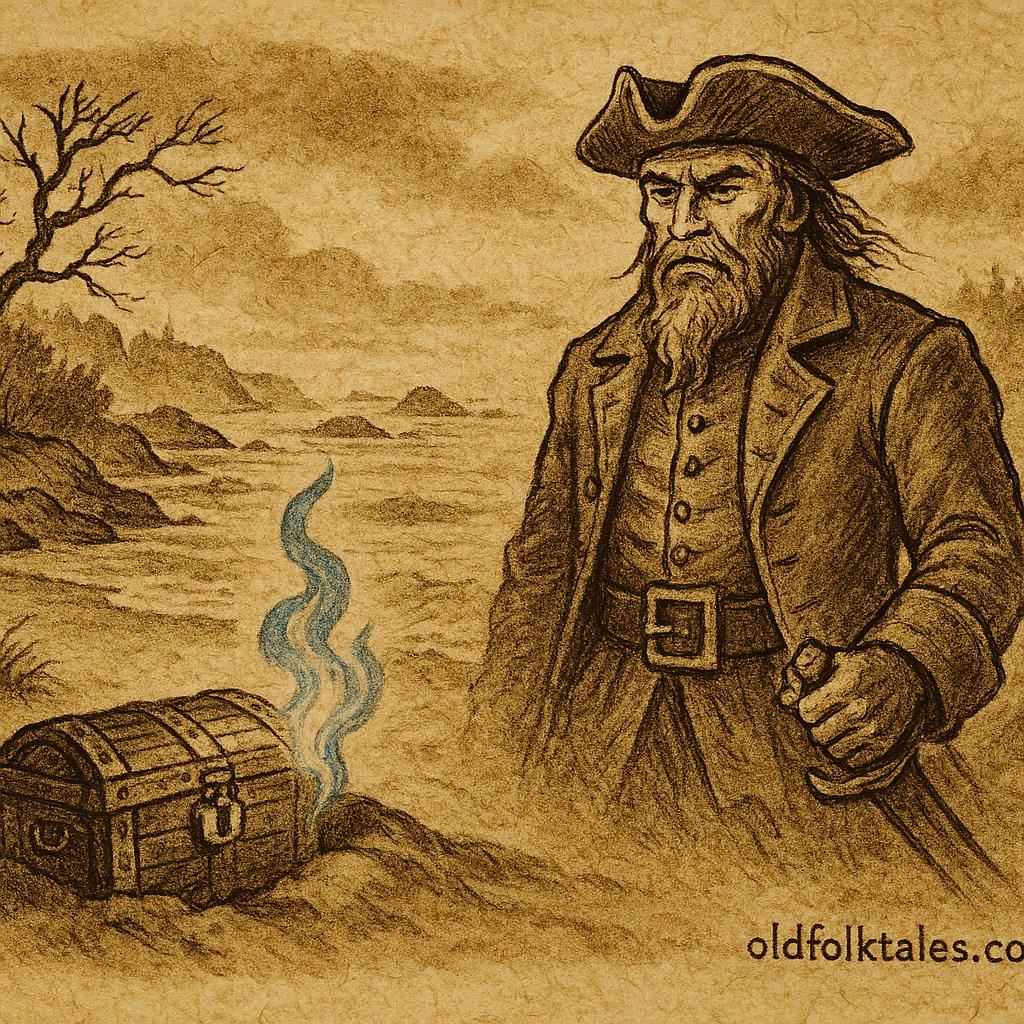
Along the rugged coasts of New England and the quiet coves of Long Island, whispers tell of a pirate whose name was once feared across the seas, Captain William Kidd. Long before his story turned to legend, Kidd was a privateer, sworn to protect merchant ships from pirates and bring order to lawless waters. Yet somewhere between duty and desire, the call of gold and power lured him toward darkness.
The year was the late 1600s, when New England’s shores were still wild and untamed. Ships came and went from Boston and New York, their wooden hulls heavy with goods and coin. Kidd’s vessel, the Adventure Galley, sliced through the Atlantic waves under the banner of the English crown. But instead of chasing pirates, tales spread that Kidd himself had turned pirate, attacking ships, plundering their holds, and hoarding the spoils.
Discover African American wisdom, Native American spirit stories, and the humor of early pioneers in American Folktales.
Whether those rumors were true or twisted by his enemies, no one can say for certain. But what every sailor and villager agreed upon was this: before Captain Kidd was captured and hanged in 1701, he buried his treasure somewhere along the American coast.
Some say he chose a lonely beach on Long Island; others point to the misty coves of Rhode Island or the hidden inlets of Maine. Wherever it was, the place was said to be marked by strange blue flames that flicker on dark nights, the sign of restless spirits and buried gold.
The Ghostly Guardian of the Treasure
Many have sought Captain Kidd’s treasure. Farmers, fishermen, and wanderers all dug along the eastern shore, hoping to uncover his hidden wealth. Yet few who searched ever returned the same.
One story tells of two young men who went treasure hunting near Gardiners Island, guided by an old sailor’s tale. As they dug beneath an ancient oak, the night air grew cold and heavy. Then, from the fog, a blue light glimmered. It floated like a lantern, swaying closer and closer until they could make out the faint figure of a man, tall, cloaked, and silent. The air seemed to hum with dread.
The men dropped their shovels, but the ground beneath them quivered. The earth opened slightly, revealing a corner of a chest bound in rusted iron. Just as one reached for it, the light flared, blinding, white-blue, and the figure raised a spectral hand. A voice whispered, “Leave what is not yours.”
Terrified, they fled and never spoke of it again. In the morning, when they returned to the spot with others, the ground was smooth as if untouched. Only the old oak stood, silent witness to the night’s haunting.
Cursed Riches and the Weight of Guilt
Other stories tell of those who dared to ignore the warnings. A fisherman from Rhode Island once found an old gold coin washed ashore. Proud of his find, he kept it in his coat. But that night, a blue flame appeared outside his window, flickering like a candle in the wind. The next morning, his boat was gone, vanished into the sea without a trace. His family swore they could hear oars splashing in the dark, long after the waves had stilled.
It was said that Captain Kidd’s soul could not rest because his treasure was gained through betrayal. Some claim he buried his gold to save it from capture; others believe he tried to atone for his sins, hiding it where no one could find it. But his restless ghost remains, forever guarding what he cannot reclaim.
Those who hunt for his treasure are warned to beware the flicker of blue fire. For in the light of that ghostly glow lies not fortune, but a curse, a punishment for greed and a reminder that ill-gotten riches never bring peace.
Journey through the lives of folk heroes, war legends, and hometown champions in our American Legends collection.
The Moral Lesson
The legend of Captain Kidd’s Treasure reminds us that wealth born of greed or deceit brings only misery. No amount of gold can outweigh the burden of guilt or the curse of dishonor. True riches lie in integrity and peace of heart, not in hidden chests beneath the sand.
Knowledge Check
1. Who was Captain Kidd in American folklore?
Captain William Kidd was a privateer-turned-pirate whose buried treasure inspired legends across the American coast.
2. Where is Captain Kidd’s treasure said to be buried?
The treasure is rumored to lie along the Eastern Seaboard, especially around Long Island and New England.
3. What do the blue flames in the legend symbolize?
The blue flames represent the restless spirits and the cursed nature of the ill-gotten treasure.
4. What is the main moral of Captain Kidd’s legend?
The story teaches that greed and betrayal lead to guilt and loss, not true fortune or peace.
5. Why does Captain Kidd’s ghost appear in the tale?
His spirit is said to guard his buried gold, bound by guilt and the curse of his own actions.
6. How does this folktale reflect early American culture?
It mirrors early America’s fascination with seafaring, moral justice, and the dangers of unchecked ambition.
Source:
Adapted from Myths and Legends of Our Own Land by Charles M. Skinner (1896).
Cultural Origin: United States (New England / Long Island maritime folklore)