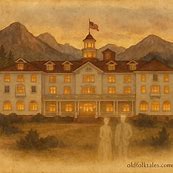
High in the Rocky Mountains, just outside the quiet town of Estes Park, Colorado, stands a grand white building that gleams beneath the mountain sun. With its long veranda, red roof, and sweeping view of the valley, the Stanley Hotel looks like something out of a dream. For more than a century, it has welcomed travelers seeking rest, beauty, and perhaps a touch of mystery.
Yet, the Stanley is not merely a relic of the past. Many who have crossed its threshold say it is alive in more ways than one, a place where history whispers in the halls and the spirits of its founders still linger, ensuring that the light of their creation never fades.
The hotel was built by Freelan Oscar Stanley, an inventor and businessman known for cofounding the Stanley Motor Carriage Company. He came to Colorado in the early 1900s seeking to restore his health after a bout with tuberculosis. The crisp mountain air revived him, and in gratitude for his recovery, he decided to build a magnificent hotel that would bring others to enjoy the same beauty and healing he had found.
Encounter the strange and the unseen — from Bigfoot to regional monsters hiding in America’s forests
Construction began in 1907, and by 1909, the Stanley Hotel opened its doors to guests from across the nation. It quickly became a symbol of elegance in the American West, boasting electric lights, telephones, and fine dining. The building’s charm and refinement seemed almost out of place in the rugged landscape, a shining white jewel set against pine forests and rocky peaks.
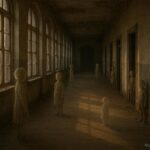
But even in its earliest years, whispers of the uncanny began to drift through the halls. Guests reported faint strains of piano music in the empty ballroom late at night, as though a private concert were continuing beyond time. Housekeepers found doors opening and closing of their own accord. Lights flickered mysteriously, and faint laughter echoed from rooms where no one stayed.
Many of these stories centered around the hotel’s founders, Mr. and Mrs. Stanley. Locals said that even after their passing, they could not bear to leave the home they had built together. Visitors walking the upper corridors sometimes glimpsed a distinguished gentleman dressed in early twentieth-century fashion, his posture upright, his gaze calm and observant. Those who saw him felt no fear only the unmistakable impression that the hotel’s owner was still making his rounds.
Mrs. Flora Stanley, who had loved music and often played the piano in the hotel’s grand ballroom, was said to manifest in softer ways. Guests sitting quietly in the evening claimed to hear gentle melodies from the piano even when no one was near. Staff members told of finding the instrument’s cover lifted as if an invisible performer had just finished a song. The music was never loud or alarming. Instead, it filled the air like a fond memory, a sign of a spirit not restless, but content.
Through the decades, the hotel endured fires, storms, and even periods of decline. Yet it always found a way to renew itself. During the mid-twentieth century, when travelers’ habits changed and tourism dwindled, the Stanley fell into disrepair. Paint faded, corridors dimmed, and the grand ballroom stood silent. But then, new life came from an unexpected source.
In the 1970s, a young writer named Stephen King visited the hotel with his wife near the end of the tourist season. They were nearly alone in the vast building, its corridors empty and echoing. The eerie stillness inspired King to imagine a story about isolation, fear, and the haunting power of a grand old hotel. His novel The Shining brought the Stanley worldwide attention, and though the fictional tale was far darker than the real history, it rekindled fascination with the hotel’s lingering spirits.
Today, the Stanley Hotel stands restored and radiant, drawing guests who come as much for its beauty as for its legend. Some stay hoping to experience something unexplained. Others come simply to admire its elegance and learn its history. But nearly everyone leaves with a sense that there is something extraordinary about the place, a presence that cannot be measured but can certainly be felt.
Many visitors who stay in Room 217, the hotel’s most famous suite, tell of strange happenings. Luggage moves on its own, lights flicker gently, and a soft voice hums familiar melodies. According to tradition, this room once belonged to a housekeeper who was injured in an early gas explosion but later returned to her duties. Some say her spirit remains, dutiful and watchful, ensuring that guests are well cared for.
Yet unlike many haunted places steeped in fear, the Stanley Hotel’s legends are filled with warmth. The spirits here seem protective rather than vengeful, their presence a reminder of love and legacy rather than loss. It is said that when the mountain winds rise at night and sweep through the veranda, the faint scent of lilacs can sometimes detect Mrs. Stanley’s favorite fragrance.
For locals and travelers alike, the Stanley stands as both a historic landmark and a living story. Guides tell visitors that it is not just haunted, but inhabited by the memories of those who built it, worked within it, and loved it dearly. The gentle hauntings of the Stanley Hotel serve as an echo of devotion that outlasts mortality, proof that dedication and beauty can linger like the music that still drifts through the ballroom on quiet nights.
Click to explore all American Ghost Stories — haunting legends of spirits, lost souls, and mysterious places across the U.S.
Moral of the Story
The Legend of the Stanley Hotel reminds us that legacy is not measured only in bricks and stone, but in love and purpose that endure. True devotion leaves its mark not through fear, but through lasting presence and care.
Knowledge Check
1. Who built the Stanley Hotel and why?
Freelan Oscar Stanley built it after recovering from illness in the Colorado mountains to share the beauty that healed him.
2. What strange occurrences were first reported?
Piano music from an empty ballroom, flickering lights, and unseen presences walking the halls.
3. Which spirits are said to haunt the hotel most often?
Mr. and Mrs. Stanley, who continue to watch over their creation and guests.
4. How did the Stanley Hotel inspire popular culture?
Stephen King’s visit inspired his novel The Shining, giving the hotel global fame.
5. What distinguishes the Stanley’s hauntings from darker ghost stories?
Its spirits are portrayed as kind and protective rather than malicious or vengeful.
6. What feeling do most visitors describe after visiting?
A deep sense of peace, nostalgia, and wonder rather than fear.
Source: Adapted from historical records and accounts cited in Haunted Places: The National Directory by Dennis William Hauck (Penguin Books, 2002).
Cultural Origin: United States (Colorado / Western ghost lore)