Long before highways stitched the Midwest together and before Ohio’s towns were pinned neatly on maps, there lay a working settlement pressed between river, forest, and open sky. The people there lived by the rhythm of labor. They cut timber, hauled stone, tilled soil, and raised barns with their own hands. Strength was common, but pride was discouraged. Among them lived a man whose name most have forgotten, though his deed remains whispered whenever storms darken the state.
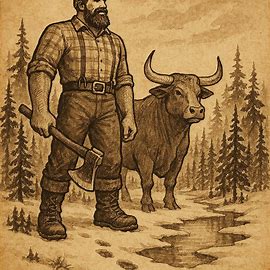
He was not the tallest man in the town, nor the loudest, nor the one who sought praise. He worked where work was hardest. When floods swelled the river, he carried people across. When roofs collapsed under snow, he lifted beams as if they were reeds. Children knew him as the man who fixed what broke without being asked. Elders knew him as the man who listened more than he spoke.
One summer, the sky began to behave strangely. Birds fled inland. Wind twisted the trees before rain ever fell. The air grew heavy, pressing down on shoulders and breath alike. The elders said they had seen storms before, but never one that felt as though it meant to stay.
Encounter the strange and the unseen — from Bigfoot to regional monsters hiding in America’s forests.
On the day the storm arrived, the sky sank lower than anyone had known it could. Clouds folded into one another like wet wool. Thunder did not roll. It groaned. The river surged, trapping families on the low ground. Roofs creaked. Windows shattered. People ran, shouting prayers and warnings, but the wind stole their voices.
As the storm worsened, something impossible happened. The sky seemed to descend. Not metaphorically, but truly. Clouds pressed so low that tree tops vanished into them. Rain fell sideways. People screamed that the heavens were collapsing, that the weight of the world itself was coming down to crush them.
The laborer was hauling debris away from a schoolhouse when he felt the pressure change. He looked up and saw what others could not yet understand. The sky was no longer just weather. It was weight.
Without calling attention to himself, he ran toward the town’s center, where the ground was lowest and the buildings most vulnerable. Families clung to one another. Animals broke free of their pens. The earth trembled.
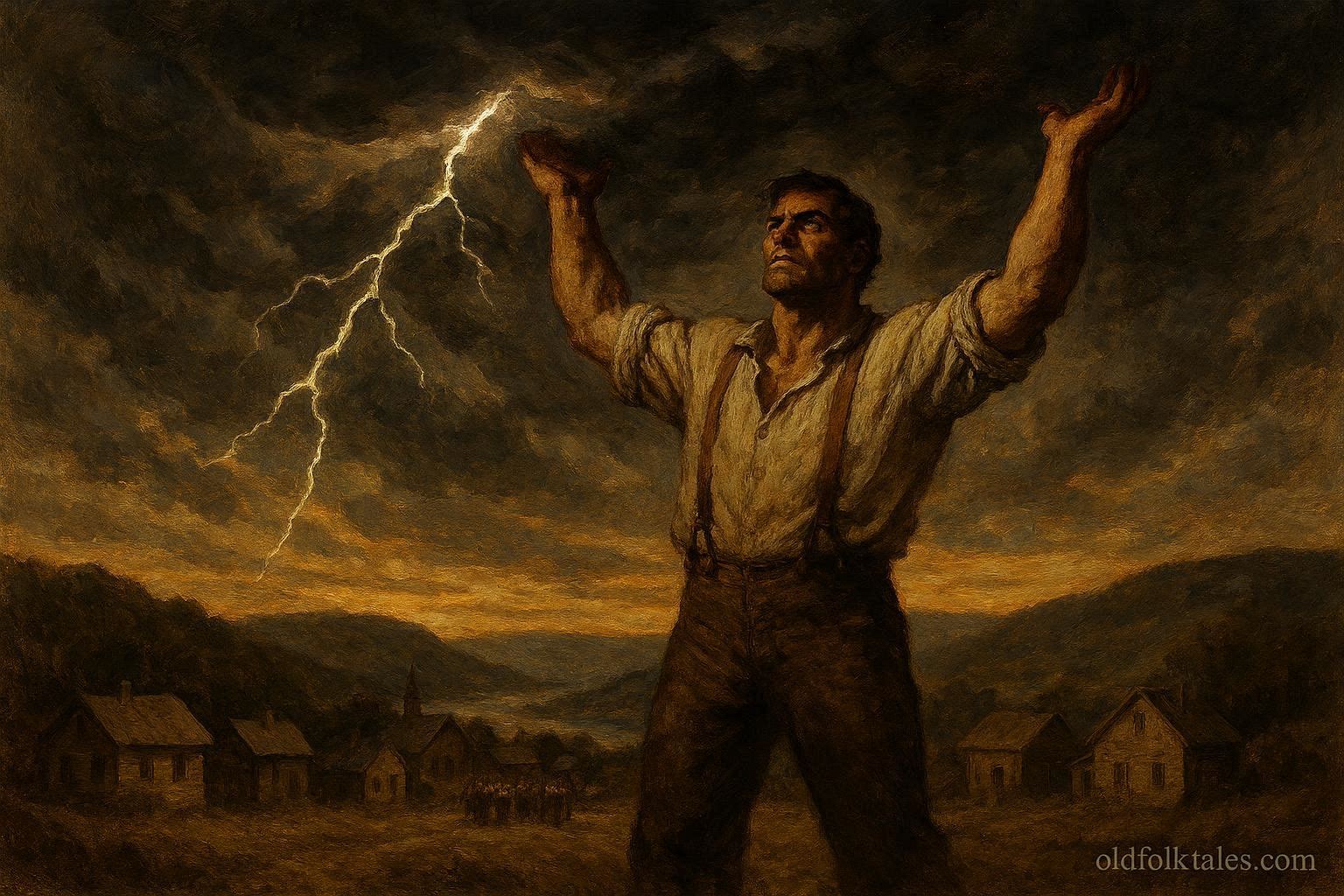
The man planted his feet in the mud. He raised his arms, not in defiance, but in resolve. When the sky pressed down, his hands met resistance. Pain tore through his shoulders. His knees buckled, then held.
The storm raged. Rain lashed his face. Lightning struck nearby trees, splitting them open. Still, he pushed upward. The town watched in stunned silence as something unseen yet undeniable occurred. Where the man stood, the sky stopped falling.
He shouted for the people to move to higher ground, though his voice barely carried. Neighbors dragged neighbors. Parents carried children. Livestock was driven uphill. Through it all, the man did not move.
Minutes passed. Then hours. The storm tested him, shifting, roaring, bearing down with all its force. Blood ran from his palms. His breath came in broken gasps. Yet the sky held.
When dawn finally broke, the storm retreated as suddenly as it had come. Clouds lifted. Rain softened, then ceased. Birds returned cautiously to the trees. The man collapsed where he stood, arms numb, body spent.
The town survived. Homes were damaged but standing. Lives were spared. When people ran to thank him, they found him unconscious, breathing shallowly, his body marked with bruises no ordinary labor could explain.
He lived, but he was changed. His back never fully straightened again. His hands trembled when storms approached. He refused any title or reward, returning to work when he could. When asked what had happened, he answered only that the sky had needed holding.
Years later, when he passed, storms grew quieter over the town. Elders told children that the sky remembers those who carry its weight. Even now, when thunder rolls low over Ohio fields, some say it is checking whether the man has returned, just in case it dares to fall again.
Click to read all American Folktales — timeless oral stories passed through generations across the United States.
Moral lesson
True strength is not shown through pride or recognition, but through quiet responsibility and the willingness to protect others at great personal cost.
Knowledge check
1 What warning signs appeared before the storm arrived?
Answer: Strange winds, fleeing birds, heavy air, and unsettling changes in the sky
2 Why did the sky become dangerous to the town?
Answer: It pressed downward with overwhelming force, threatening to crush the settlement
3 What choice did the laborer make during the storm?
Answer: He chose to hold up the sky so others could escape to safety
4 How did the town respond while the man held the sky?
Answer: They moved to higher ground and protected one another
5 What lasting effect did the event have on the man?
Answer: His body was permanently weakened, and he lived quietly afterward
6 What does the legend teach about strength?
Answer: Strength is shown through sacrifice, duty, and service to the community
Source
Adapted from Library of Congress regional folklore collections on Midwestern heroic labor legends
Cultural origin
Midwestern American folklore tradition