In a time when iron rails were only beginning to stretch across the rolling hills of the eastern United States, there was a blacksmith whose hands and heart were known for their skill and care. His forge sat quietly by a gentle river, away from the hubbub of construction crews and ambitious engineers. Many considered his isolation strange, yet the blacksmith understood that true work demanded focus and respect for the materials at hand. Iron, he believed, responded not only to heat but also to the intent behind the hammer.
Railroad crews came daily, hauling supplies, measuring tracks, and arguing over schedules. They were men of urgency who counted success in miles laid before nightfall. Yet time and again, their progress was hindered. Spikes bent under pressure, cracked in winter cold, or loosened when summer heat softened the earth. Engines stalled, cargo shifted, and crews grew weary. Frustration rippled through every camp. Men blamed the iron, the land, or the weather, yet the blacksmith saw the deeper cause. The workers approached the forge and tools as though they were enemies to conquer, not partners in creation. Iron, he knew, would never bend to arrogance.
One evening, after another derailment left scattered freight along the riverbank, a foreman approached the blacksmith. His voice carried exhaustion but also a hint of desperation. He did not speak of deadlines or contracts. He asked a quieter question. Could iron be made to endure, to hold the weight of locomotives and cargo alike, without failing? Could it be guided to listen to the rhythms of the land rather than the hurry of men? The blacksmith did not answer immediately. He closed his forge doors and sent his apprentice home, signaling that the work ahead required not only skill but patience.
Step into America’s cultural roots — from folk healing and weather lore to seasonal celebrations.
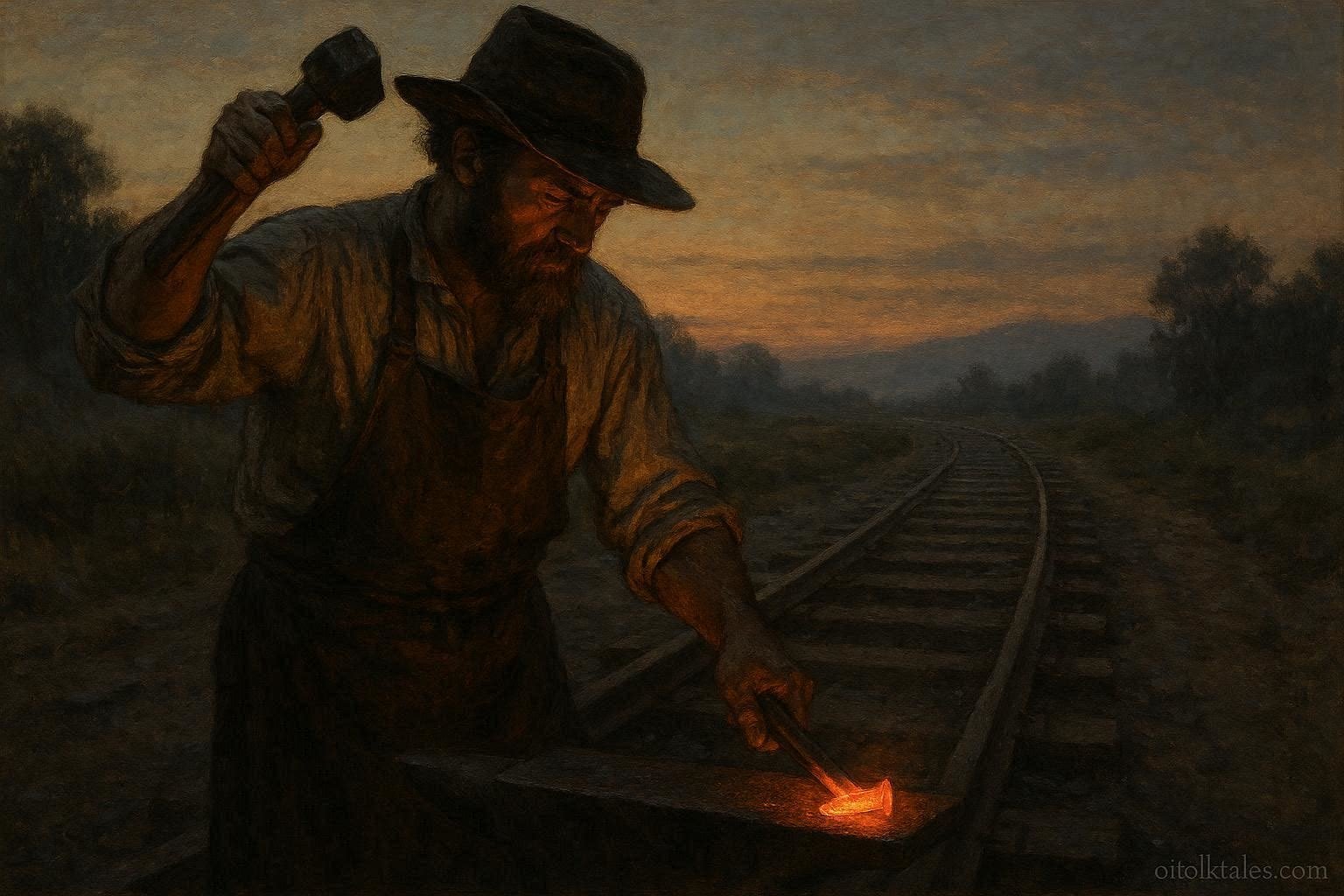
For seven full days, the blacksmith worked alone. Each piece of iron he selected was tested by touch, weighed for balance, and examined for flaws invisible to others. He discarded brittle pieces and only kept those that seemed to respond willingly to heat. Fires were tended gently, and the iron was heated slowly until it glowed evenly throughout. He struck with rhythm rather than brute force, letting his intuition guide each blow. At night, he allowed the iron to cool gradually, never rushing, always observing the transformation that came from both heat and intent.
On the seventh day, after careful shaping, he produced a single railroad spike. Its appearance was unremarkable. No engravings marked the hands that had forged it. Yet when the spike was driven into the first stretch of rail, a subtle change occurred. The ground beneath seemed to settle, welcoming the metal as though it belonged there. When a test engine rolled across, the spike held firm. It accepted the weight without protest. Crews were astonished and requested more spikes, eager to understand the secret of this success.
The blacksmith remained silent. He allowed the spike to speak through its performance. Attempts to replicate it elsewhere failed repeatedly. Engineers added pressure, heated the iron faster, or ignored the cooling process. Each piece cracked or bent. The blacksmith explained that iron responds to intention, not hurry. Only when workers slowed their hands and allowed the material to guide them did the iron behave as intended.
News spread quietly along the rail lines. Supervisors began adjusting schedules, permitting craftsmen to take the time necessary. Fires burned longer, and hammers struck with patience. The blacksmith’s method created consistency, allowing the railroad to expand across valleys, rivers, and plains with tracks that endured the weight of engines, cargo, and people. His work became the unseen foundation of a transportation revolution.
Years later, locomotives thundered across bridges and through tunnels. Few remembered the solitary forge by the river, yet beneath every mile of track lay iron shaped not by speed or pride, but by care, respect, and integrity. The blacksmith’s lesson endured: progress built without patience will crumble, but work done with care becomes timeless.
Click to read all American Folktales — timeless oral stories passed through generations across the United States.
Moral Lesson
Enduring success is achieved through patience, humility, and respect for process. True craftsmanship requires that one align intent with action, rather than succumbing to urgency or pride. Integrity in work strengthens not only materials but communities.
Knowledge Check
1 What recurring problem did railroad workers face with their spikes?
Answer Spikes bent, cracked, or loosened under weight and weather
2 Why did the blacksmith close his forge and work alone for seven days?
Answer To carefully select and shape iron without haste or distraction
3 How did the first successful spike differ from the others?
Answer It was formed slowly with balanced heat and rhythmic hammering
4 Why did other engineers initially fail to replicate the spike?
Answer They focused on speed and force rather than process and intention
5 What principle guided the blacksmith in his work?
Answer That iron responds to careful intent and respect, not hurried labor
6 What overall lesson did the railroad learn from the blacksmith’s method?
Answer That lasting progress comes from patience, integrity, and thoughtful preparation
Source:
Adapted from Smithsonian Folkways labor folklore archives
Cultural origin:
American railroad communities