Long before Birmingham earned the name “The Magic City,” the land along the Black Warrior River thundered with fire, smoke, and iron. Rising from this ground was Sloss Furnaces, an industrial complex that would help build the American South while quietly burying countless stories of pain beneath layers of brick and steel.
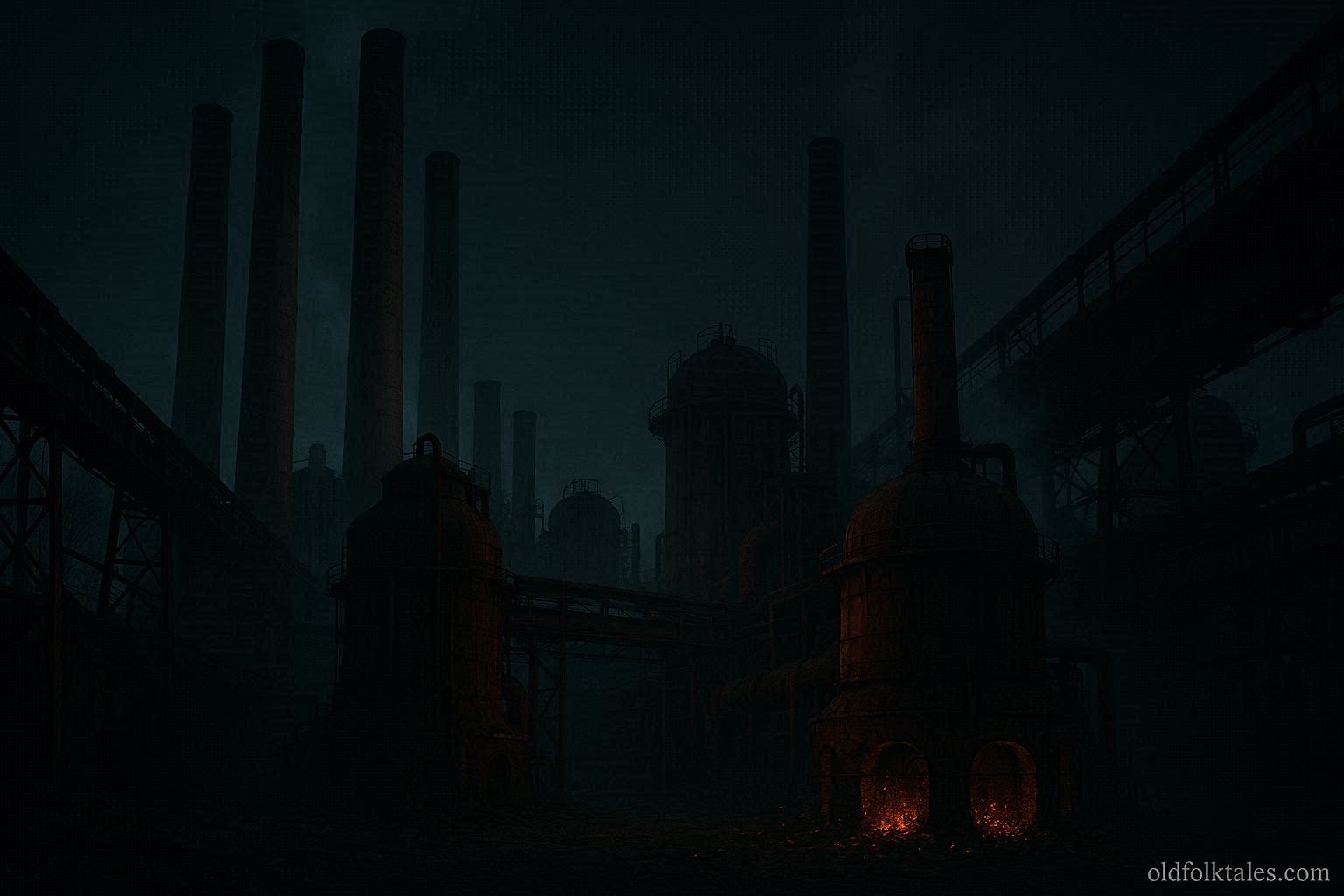
From its opening in the late nineteenth century, Sloss Furnaces became a symbol of progress. Pig iron poured from its stacks, feeding railroads, cities, and factories across the nation. The furnaces glowed day and night, their flames visible for miles. To outsiders, the sight represented prosperity. To those who worked there, it represented survival.
The labor was unforgiving. Workers stood beside open furnaces where molten iron flowed like rivers of fire. Temperatures were unbearable. Protective equipment was scarce. Many laborers were formerly enslaved men, immigrants, or poor locals with few alternatives. Their wages fed families, but the cost was often paid with bodies broken by heat, exhaustion, or sudden disaster.
Discover celestial myths of the sun, moon, and stars — and the heroes who bridged earth and sky.
Accidents occurred with alarming frequency. A misstep could send a man tumbling from elevated platforms. Molten iron sometimes splashed unexpectedly. Gases collected in confined spaces. Machinery failed without warning. Injuries were common. Deaths were not rare.
Official records captured only fragments of the truth. Some deaths went unreported. Others were reduced to brief notations. Yet among workers, stories spread quickly. Names were remembered. Places where accidents happened were avoided when possible. Certain stairways and platforms earned reputations as unlucky.
One supervisor became infamous among the men. He was known for cruelty, relentless demands, and punishment without mercy. Some accounts say he fell into a furnace. Others claim he was pushed by exhausted workers or killed by machinery. No single version remains confirmed. What remains is the belief that he never left.
When Sloss Furnaces eventually shut down in the 1970s, silence replaced the roar of fire. The iron cooled. The smoke cleared. But the site did not feel abandoned.
Caretakers, historians, and artists who entered the grounds after dark described strange sensations. Footsteps echoed across empty walkways. Voices murmured where no one stood. Shadows moved between furnaces despite steady lighting. Some people felt sudden waves of anger or grief without explanation.
Security personnel reported tools shifting overnight. Doors that were locked appeared open by morning. Cameras malfunctioned near certain structures. Visitors spoke of being watched.
One recurring figure was described repeatedly. Tall. Dark. Often near the furnaces themselves. Some believed this was the cruel supervisor. Others believed it was not one spirit, but many, layered together by years of suffering.
Former workers offered a different explanation. They believed the iron remembered.
According to them, iron absorbs more than heat. It absorbs effort, pain, frustration, and fear. Every strike of a hammer. Every shout over roaring flames. Every breath drawn in exhaustion. These experiences soaked into the furnaces themselves, leaving an imprint that did not fade when the fires went cold.
Those who approached the site with mockery or bravado often reported frightening encounters. Those who walked quietly and respectfully described a heavy stillness instead. The furnaces did not chase. They waited.
At night, the structures creak as temperatures shift. Pipes hum softly when wind passes through them. Metal contracts with low groans that sound disturbingly human. Some dismiss these as natural effects. Others say the furnaces are speaking in the only language they have left.
Today, Sloss Furnaces stands preserved as a historic landmark. Artists perform there. Festivals take place. Tours guide visitors through its towering remains. Yet beneath these modern uses lies a deeper truth.
Sloss Furnaces is not merely haunted. It is burdened.
It carries the memory of labor pushed beyond reason. Of progress built without restraint. Of lives treated as fuel.
The iron no longer burns. But it remembers.
Click to explore all American Ghost Stories — haunting legends of spirits, lost souls, and mysterious places across the U.S.
Moral Lesson
Progress achieved without respect for human life leaves echoes that history cannot silence.
Knowledge Check
- What was the primary purpose of Sloss Furnaces?
Answer: To produce pig iron for industrial use. - Why were working conditions dangerous at the site?
Answer: Extreme heat, limited safety measures, and exhausting labor. - What types of paranormal experiences are reported there?
Answer: Voices, shadows, moving objects, and unexplained sensations. - Why do some believe the furnaces themselves hold memory?
Answer: Workers believed iron absorbed pain and emotional energy. - Who is the shadow figure often associated with the site?
Answer: A cruel supervisor whose death remains uncertain. - What larger lesson does Sloss Furnaces represent today?
Answer: The human cost of unchecked industrial ambition.
Source
Adapted from Smithsonian National Museum of American History labor folklore records
Cultural Origin
Early industrial American South, United States