Along the rugged ridgelines of central California, where coastal mountains rise and fall like frozen waves, travelers have long reported a strange presence. The land there feels ancient and watchful. Winds scrape across dry grass, shadows stretch unnaturally at dusk, and silence settles so deeply it presses against the ears. It is in these moments, when the day thins into evening, that the Dark Watchers are said to appear.
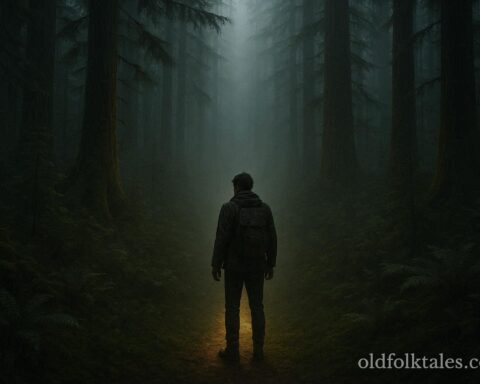
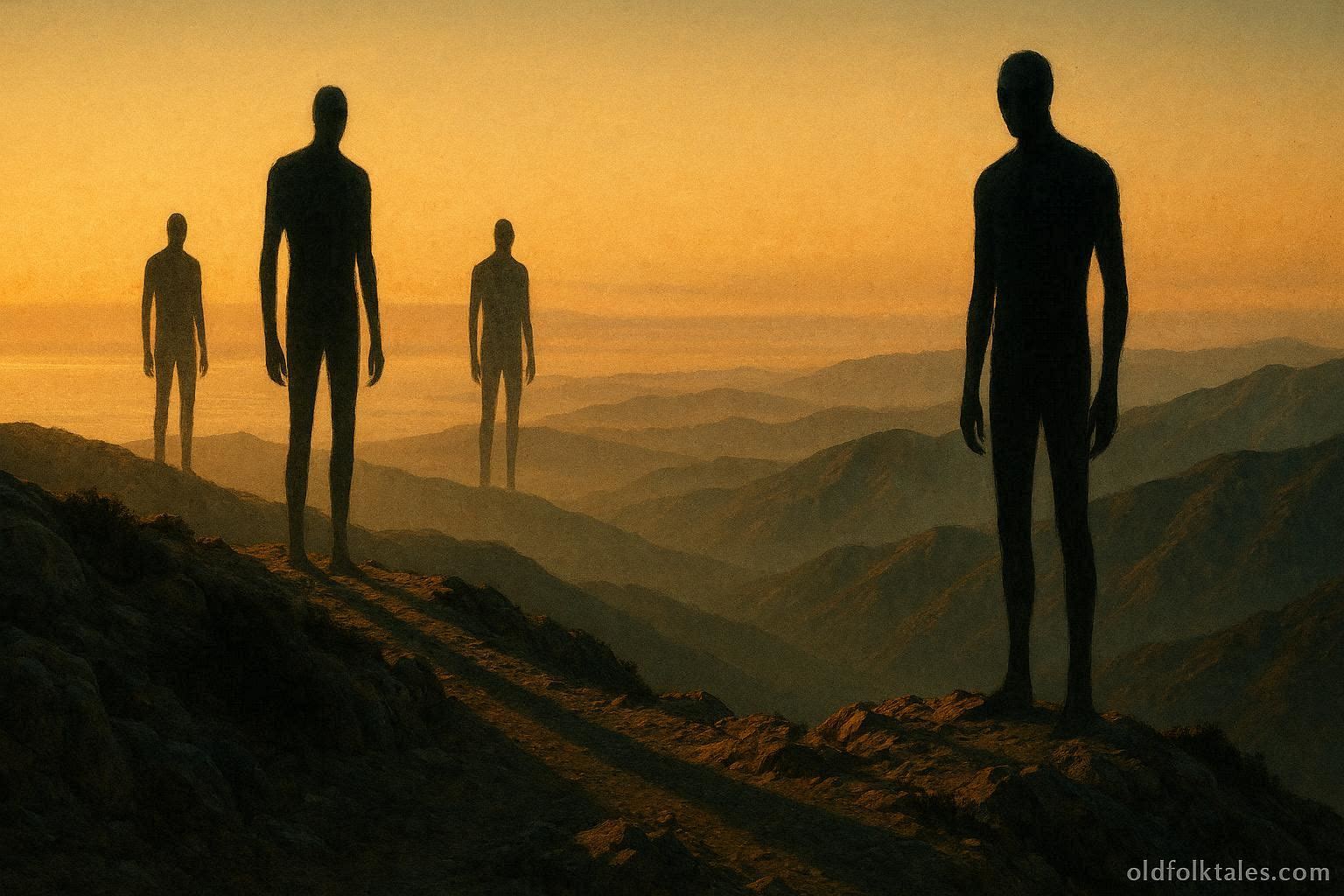
They are not announced by sound. No footsteps follow them. No leaves stir. Instead, people notice them only when they stop moving. A tall, upright shape stands against the horizon, darker than shadow, sharply outlined as if cut from the fading light itself. At first glance, they look like solitary figures watching the land below. But when travelers blink, shift position, or attempt to approach, the figures vanish completely, leaving no trace behind.
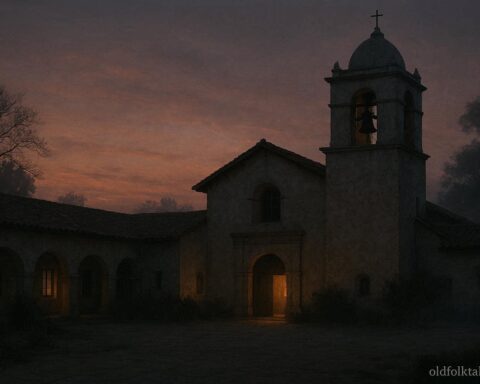
Early Spanish settlers in California wrote of these beings with unease. They described “los Vigilantes Oscuros,” silent watchers who appeared in the hills during long journeys between missions. Vaqueros, ranch hands, and shepherds repeated the stories across generations, warning newcomers that the land was not empty, even when no one else could be seen. Later, American settlers encountered the same figures while crossing the mountains, often during moments of exhaustion or isolation.
Discover chilling ghost tales and haunted places that echo through America’s towns and countryside.
The Dark Watchers never speak. They never chase. They do not threaten directly. Their power lies entirely in their presence and disappearance. A traveler might notice one while resting on a slope, leaning on a walking stick, gazing out across miles of open land. The figure stands motionless, often taller than a man, with long limbs and a head slightly bowed as if in contemplation. Some witnesses claim the figures wear wide-brimmed hats or cloaks, though no two descriptions are ever exactly alike.
One account tells of a lone rancher guiding cattle through the hills at sunset. He paused to count his herd and noticed three figures spaced evenly along a distant ridge. They appeared to be watching him, though their faces were indistinct. Thinking they were other ranchers, he waved. None returned the gesture. When he took several steps toward them, all three vanished at once, as if absorbed by the landscape. The rancher later said the hills felt heavier afterward, as though the land itself had taken notice of him.
Writers and poets also encountered the Dark Watchers. Robinson Jeffers, who lived along the California coast, described mysterious figures in his poetry that resembled these watchers, linking them to themes of solitude, nature’s dominance, and the smallness of human life. For Jeffers, the Watchers were not monsters but symbols, manifestations of a land that existed long before people and would continue long after them.
Among local communities, the Dark Watchers were rarely described as evil. Instead, they were seen as reminders. The mountains did not belong to travelers. The land was not something to be conquered or claimed. Those who walked through it were temporary visitors, watched by forces older and more enduring than human memory.
Some elders told children that the Watchers appeared when people grew arrogant. A traveler who believed himself alone, master of the trail and owner of the horizon, might suddenly feel observed. The Watchers corrected that illusion without violence or confrontation. Their silence carried the lesson.
Sightings often occur during liminal moments. Sunset. Fog. Long hikes when the body is tired and the mind drifts. Yet many witnesses insist they were fully alert and sober. The figures are too consistent across accounts, too similar in posture and behavior, to be dismissed as simple imagination.
One hiker described stopping to drink water near a ridge overlooking the Pacific. As the sun dipped low, a single tall shape appeared on a distant outcrop. It did not move. It did not threaten. But the hiker felt an overwhelming urge to lower his eyes. When he looked back, the figure was gone. He completed his hike in silence, feeling as though he had passed through someone else’s domain.
The Dark Watchers never leave footprints. No physical evidence remains after they disappear. Only memory persists, along with a subtle shift in how witnesses view the land afterward. Many report becoming quieter, more attentive, less eager to dominate the environment around them.
Some interpretations suggest the Watchers represent ancestral spirits tied to the land. Others see them as embodiments of nature’s consciousness, reminders that wilderness observes humanity just as humanity observes wilderness. In all interpretations, one theme remains constant. The Watchers do not intervene. They simply witness.
Even today, modern hikers, photographers, and climbers report encounters. Smartphones fail to capture the figures clearly. Photographs show only empty ridges where witnesses swear something stood moments earlier. The Dark Watchers remain bound to personal experience, not proof.
Perhaps that is their purpose. Not to be studied or categorized, but to be encountered briefly, leaving behind humility rather than answers.
In a world increasingly mapped and measured, the Dark Watchers endure as quiet figures of mystery. They remind travelers that some landscapes resist ownership, explanation, and control. To walk those ridges is to accept that not everything unseen is absent, and not everything observed wishes to be known.
Click to read all American Cryptids & Monsters — creatures of mystery and fear said to inhabit America’s wild landscapes.
Moral Lesson
The story of the Dark Watchers teaches humility before nature. It reminds us that humans are not the center of every landscape and that silence, observation, and respect are sometimes wiser than dominance or certainty.
Knowledge Check
1. Where are the Dark Watchers most commonly seen?
Answer: Along ridgelines and mountainous areas of central California, especially at dusk.
2. How do the Dark Watchers behave toward humans?
Answer: They silently observe and disappear when approached, without confrontation.
3. What time of day are sightings most frequent?
Answer: During sunset or low-light transitional moments.
4. How did early settlers interpret the Watchers?
Answer: As silent observers tied to the land rather than hostile beings.
5. What literary figure referenced similar entities in California?
Answer: Robinson Jeffers.
6. What core message do the Dark Watchers convey?
Answer: Human insignificance and the enduring power of nature.
Source
Adapted from University of California folklore and regional studies archives
Cultural Origin
Central California coastal and mountain communities