Winter ruled the Sierra Nevada with an unforgiving hand. In the nineteenth century, once the snow began to fall, it did not simply cover the land. It erased it. Trails vanished beneath white drifts. Familiar ridges became indistinguishable from ravines. Rivers froze into deceptive mirrors, and the wind turned open passes into corridors of danger. For settlements scattered across the mountains, winter meant isolation, and isolation often meant death.
Long before telegraph wires crossed the region, survival depended on messengers who carried news by foot or snowshoe. Among them was one courier whose name faded into legend, remembered more for what he did than what he was called. He did not ride with caravans or announce his arrival with ceremony. He traveled quietly, deliberately, and alone.
The journey that defined his legend began after an unusually brutal storm sealed the high passes earlier than expected. Snow fell for days without pause. Roofs collapsed under its weight. Food stores dwindled. When the clouds finally broke, several mountain communities were already cut off, unable to send word or receive help.
Encounter the strange and the unseen — from Bigfoot to regional monsters hiding in America’s forests.
At a small western post station, a letter arrived from a settlement east of the main Sierra ridge. The message was urgent. Their supply route had failed. Livestock were dying. Sickness had begun to spread. Without warning neighboring valleys to prepare relief, the settlement would not survive until spring.
The station keeper read the letter aloud. No one spoke. Everyone knew what crossing the mountains meant that time of year. The main pass was already unstable, its slopes heavy with snow waiting to break loose. Even experienced mountain men refused the task. One said plainly that no message was worth a frozen grave.
The courier listened, then reached for the letter.
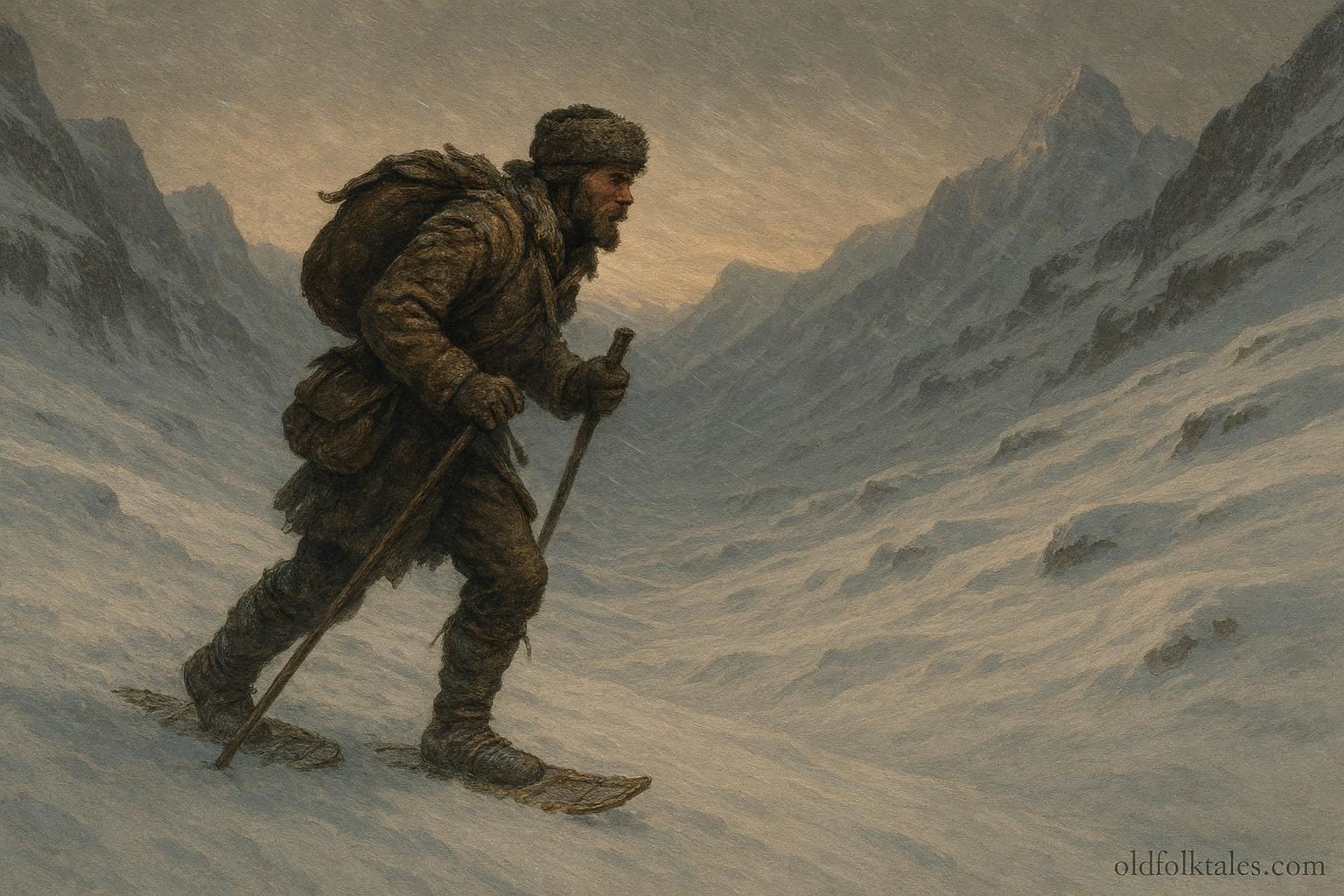
He prepared before dawn. His gear was simple and worn but carefully maintained. Wool layers protected his body from wind. Snowshoes were tied with leather straps repaired countless times. His pack held dried meat, hard bread, a compass, and folded papers sealed against moisture. He carried no weapon beyond a staff, carved from mountain ash, used to test snow and steady his footing.
He left without farewell.
The first days were slow but manageable. Forested slopes provided some shelter from the wind. He followed terrain rather than trails, reading the mountain the way others read maps. Where snow lay undisturbed, he moved carefully, distributing his weight evenly to avoid collapse. When the wind sculpted the surface into hard ridges, he crossed quickly, knowing those areas were less likely to shift.
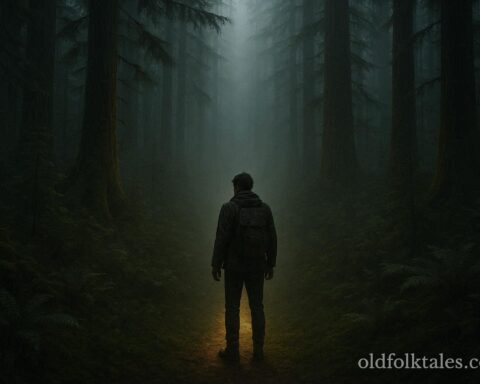
By the third day, the landscape changed. Trees thinned. Sound disappeared. Even his own breathing seemed swallowed by the vastness. The cold sharpened. Each breath burned his lungs. At night, he carved shelter into snowbanks, packing walls tightly to block the wind. Fire was impossible at altitude, so he relied on movement and discipline to stay alive, resting only in short intervals.
On the fourth day, the storm returned.
The wind rose suddenly, tearing snow from the ground and throwing it sideways through the air. Visibility dropped to nothing. The courier stopped immediately. Experience told him that moving blindly was more dangerous than standing still. He crouched low, turned his back to the wind, and waited.
Hours passed. Snow piled against his legs. His muscles cramped from cold and stillness. When the storm finally moved on, the silence that followed felt unreal, as though the mountain itself was holding its breath.
He resumed his climb.
The ridge was the most dangerous part. Beneath the snow lay steep drops and unstable ledges. He tested every step. Once, the ground shifted beneath him, sending a slab of snow sliding away into the void below. He froze, heart pounding, then retreated inch by inch until solid ground returned.
When he finally descended into the eastern valley, smoke no longer rose from the settlement’s chimneys. He feared he was too late.
But a dog barked.
The sound carried weakly through the cold air. Doors opened cautiously. Faces appeared, gaunt and hollow, as if shaped by hunger and worry. The courier handed over the letter without explanation. His task was not to speak, only to deliver.
The message was read that night. Relief would come, but not immediately. The community needed to ration supplies, care for the sick, and prepare shelters against further storms. Without that warning, panic might have driven families into the mountains in search of help, a decision that would have ended in tragedy.
The courier rested briefly, just long enough to regain strength. Replies were written, requests tied securely into his pack. Before dawn, he turned back toward the mountains.
The return journey was no easier. The cold deepened. His food ran low. Yet he maintained his pace, guided by the same patience that had carried him across the ridge. When he finally reached the western post station weeks later, frostbitten and exhausted, word of his journey had already spread.
People called him a hero. He did not accept the title.
When asked why he traveled alone, he answered simply that the mountains punished noise and rewarded caution. Companions made sound. Sound startled snow.
As years passed, roads improved. Telegraph lines replaced many couriers. But old settlers continued to tell the story of the Snowbound Messenger. Not as a tale of reckless bravery, but as proof that survival on the frontier depended on restraint, preparation, and a willingness to carry responsibility without applause.
The mountains remained indifferent. They always would be. But for one winter, a man crossed them anyway, not to conquer them, but to listen closely enough to pass through alive.
Moral Lesson
Endurance guided by responsibility saves more lives than courage driven by pride.
Knowledge Check
1. Why was crossing the Sierra Nevada especially dangerous in winter?
Heavy snowfall erased trails and created constant avalanche risks.
2. Why did the courier choose to travel alone?
Traveling alone reduced noise, weight, and danger in unstable conditions.
3. What kind of message did the courier carry?
A warning that allowed isolated settlements to prepare for survival and aid.
4. Why did the courier stop moving during the blizzard?
Moving without visibility increased the risk of becoming lost or triggering avalanches.
5. How did the message help the isolated settlement survive?
It prevented panic and allowed careful rationing and preparation.
6. What lasting lesson did settlers take from the messenger’s journey?
Preparation and discipline mattered more than speed or bravado.
Source
Adapted from University of California regional frontier correspondence folklore archives
Cultural Origin
19th century Sierra Nevada frontier communities, United States