Courthouses are built to appear permanent. Thick walls. Heavy doors. Shelves lined with leather-bound volumes that seem as immovable as the law itself. Yet in early American towns, justice was often more fragile than stone and paper suggested. Courts depended not only on judges and sheriffs but on clerks whose names rarely entered memory. One such clerk, remembered only through whispered accounts and scattered folklore, became a guardian of law when chaos threatened to erase it.
The town stood at a crossroads of trade and migration. Wagons passed through daily. Riverboats docked nearby. With growth came disputes over land, debt, inheritance, and crime. The courthouse sat at the town center, modest but respected. Inside, records were kept by a clerk whose duties seemed unremarkable. He copied rulings by hand. Filed deeds. Recorded testimonies. He listened more than he spoke.
Tensions rose after a contested trial involving a powerful family and several smaller landholders. The verdict favored the weaker party. Accusations of corruption followed immediately. Rumors spread that the court had been bribed. Within days, crowds gathered outside the courthouse, angry and armed with tools rather than weapons. They did not seek blood at first. They sought proof.
Discover chilling ghost tales and haunted places that echo through America’s towns and countryside.
Someone claimed the records were falsified. Someone else said the clerk could be forced to confess. The judge went into hiding, fearing violence. The sheriff left town under pressure from his own relatives. Order dissolved faster than anyone expected.
The clerk remained.
He understood what many did not. Records were not just paper. They were memory. Without them, guilt and innocence would be decided by shouting, not law. Land would belong to whoever could seize it. Debts would vanish or multiply depending on who told the story.
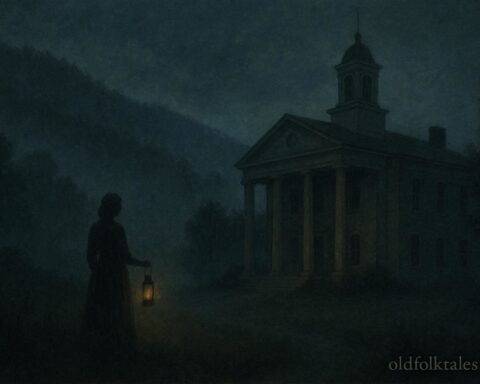
On the second night of unrest, torches appeared near the courthouse steps. The clerk watched from a back window as voices demanded the doors be opened. He knew the building would not survive the night. He also knew that once records were destroyed, they could never be recreated truthfully.
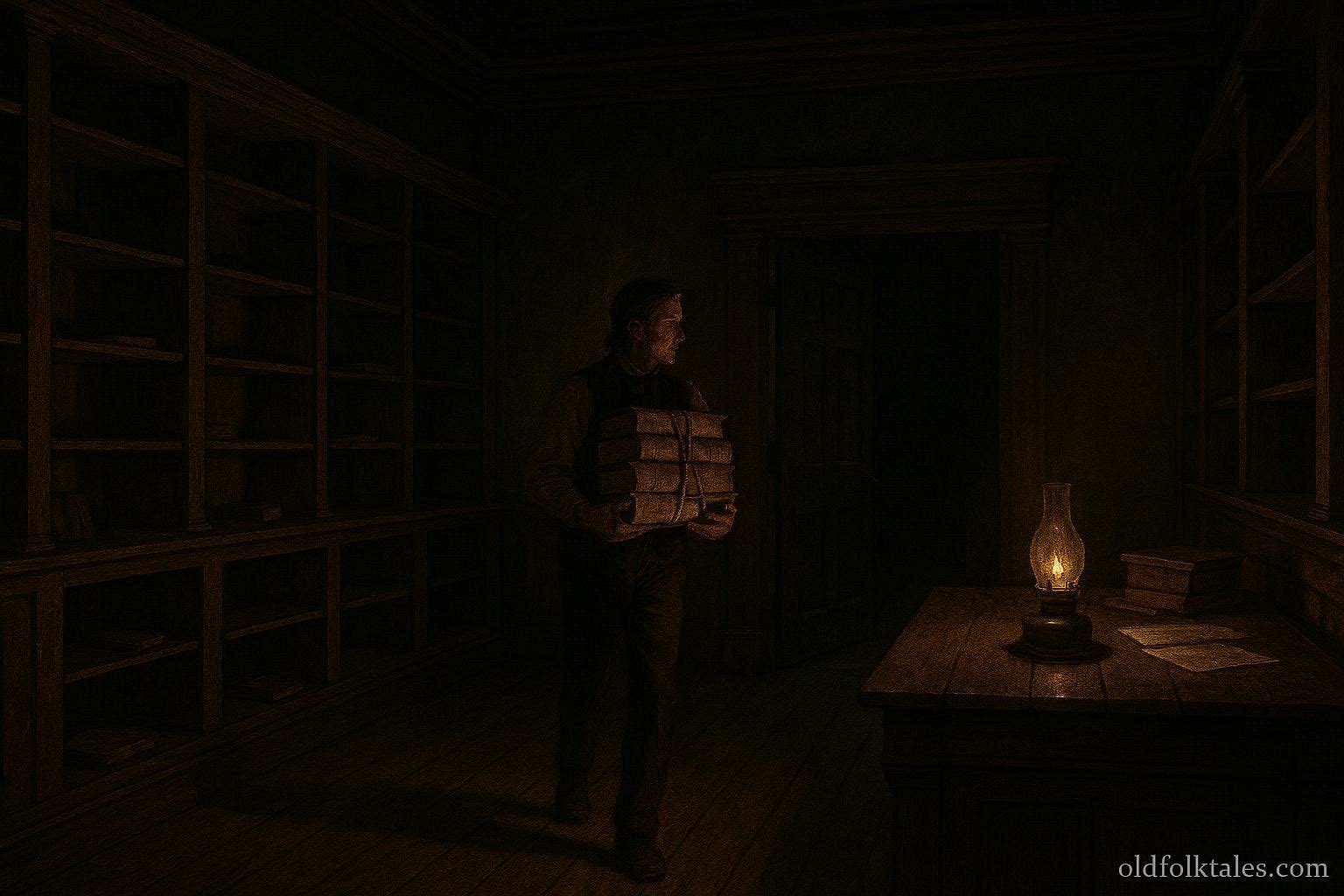
Working by lantern light, he began removing volumes from their shelves. Deed books. Trial transcripts. Wills. Tax rolls. He did not take everything. He chose carefully, prioritizing documents that anchored property boundaries, criminal judgments, and appeals already in motion. He wrapped them in cloth, packed them into crates, and loaded them onto a borrowed cart.
No one noticed him leave.
He drove through side roads to a mill outside town owned by a neutral family. Beneath the mill floor was a dry storage cellar. There, the clerk hid the records behind stacked grain barrels. He marked nothing. He told no one where they were.
When the mob entered the courthouse hours later, they found shelves bare and desks overturned. Papers burned in the street. With nothing left to destroy, anger turned inward. Accusations multiplied. Old grudges resurfaced. The town entered weeks of disorder.
Through it all, the clerk said nothing.
He was questioned. Threatened. Accused of conspiracy. He answered every inquiry the same way. He was a clerk. He followed procedure. He knew nothing beyond his duties. Without evidence, the crowd eventually lost focus. Work resumed. Trade slowed but did not stop. The town did not collapse, though scars remained.
Months later, a circuit judge arrived with authority backed by the state. He demanded court records to review unresolved disputes. Panic spread. Without documents, judgments could not be enforced. That was when the clerk spoke.
He led officials to the mill. One by one, the records were retrieved, intact. Pages smelled faintly of grain and oil but remained legible. The circuit judge reviewed them and confirmed that the original rulings were sound. False accusations were dismissed. Property lines were restored. Pending cases resumed.
The town never formally honored the clerk. His name appeared only once more in official books, listed among witnesses to the reopening of court. Yet among later generations, a story persisted. Not of a judge or soldier, but of a man who understood that justice survives only if its memory does.
He returned to his desk and continued copying records until age bent his back and slowed his hand. When he died, there was no monument. Only books, still preserved, carrying forward a law that outlived chaos.
Moral Lesson
True justice is often protected not by loud authority but by quiet responsibility. When institutions fail, integrity in small roles can preserve order for generations.
Knowledge Check
1. Why did the clerk believe court records were essential to justice?
Because records preserved truth, property rights, and lawful judgments beyond emotion and rumor.
2. What threat did the courthouse face during the unrest?
Destruction by an angry crowd seeking to erase or manipulate legal outcomes.
3. Why did the clerk act alone instead of seeking help?
He understood secrecy was necessary to prevent interference and further violence.
4. Where did the clerk hide the legal records?
In a concealed storage cellar beneath a neutral mill outside town.
5. What happened when the records were recovered?
Lawful judgments were confirmed, disputes were resolved, and order was restored.
6. What larger idea does the clerk’s story represent?
That institutions endure only when individuals uphold ethical responsibility during crisis.
Source
Adapted from National Archives legal folklore and early American court history records
Cultural Origin
Early American judicial communities