In early American households, the hearth held a meaning far deeper than its practical use. It warmed the body, cooked meals, and provided light during long evenings, but it also gathered the unseen weight of daily life. Every argument spoken near the fire, every prayer whispered beside it, and every night spent waiting for loved ones to return seemed to settle into the stones themselves. Over time, families came to believe that the hearth remembered everything.
As the final days of the year approached, homes entered a quieter rhythm. Work slowed when possible, and attention turned inward. The New Year Hearth Cleaning was not treated as ordinary maintenance. It was an act of preparation and reflection, guided by the belief that the future could only be welcomed after the past was properly released.
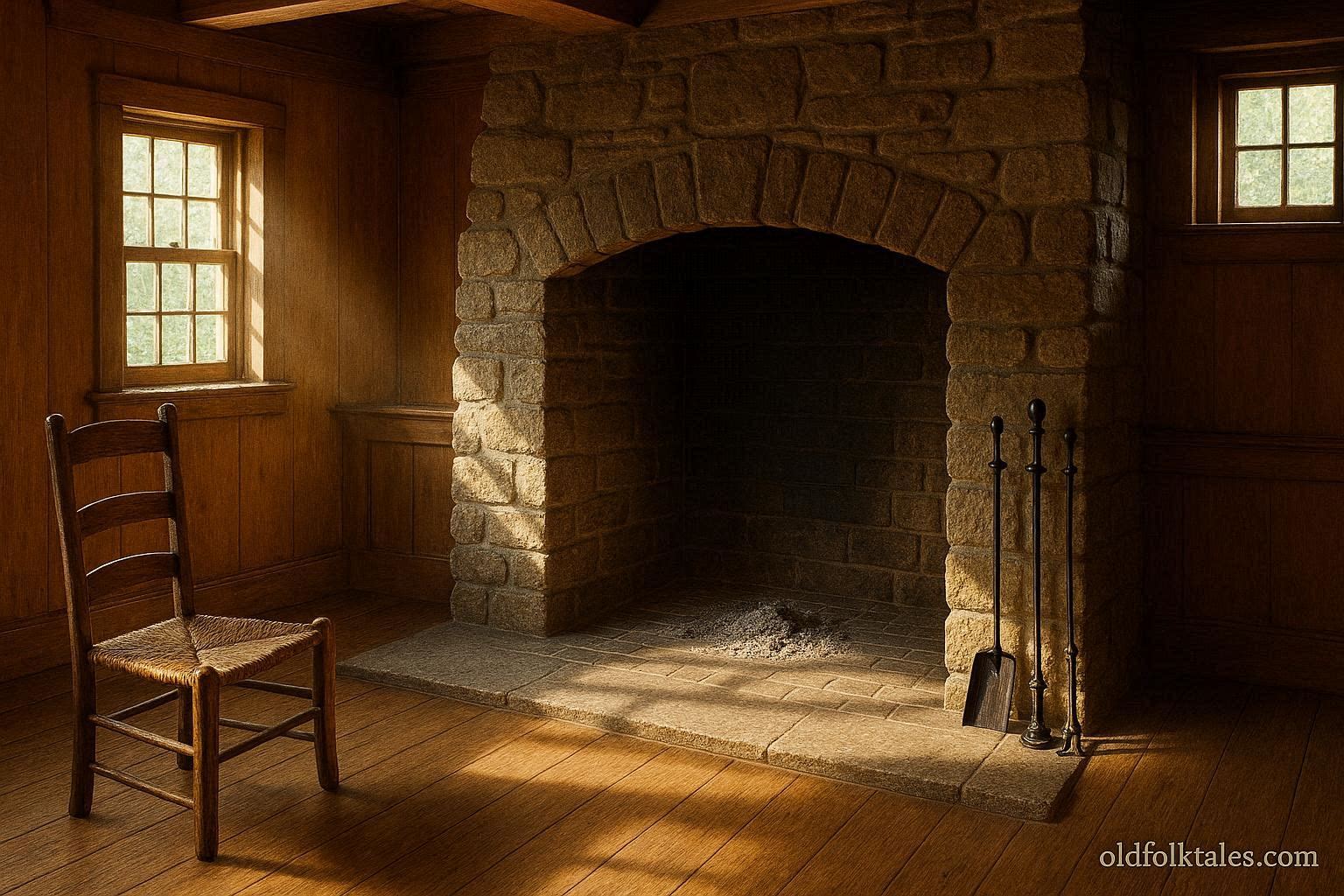
The ritual began when the final fire of the year was allowed to burn itself down. No new logs were added. Families watched as flames softened into embers and embers faded into ash. When the hearth finally grew cold, it marked the closing of the year. This moment was treated with respect, for it symbolized the end of one cycle of living.
Explore the heart of America’s storytelling — from tall tales and tricksters to fireside family legends.
Ashes were swept carefully, never hurried. They represented the remains of effort and endurance. Farmers saw the ashes as proof of long days and hard seasons. Mothers viewed them as remnants of meals prepared and worries carried. Fathers recognized them as the residue of protection and responsibility. Removing the ashes was not an attempt to erase the past but to acknowledge it fully before letting it go.
Many households carried the ashes far from the home. Some scattered them at the edge of fields, believing the land would absorb both hardship and gratitude. Others released them into moving water so that what was carried away would not return. The act was symbolic but deeply felt. Nothing from the old year was meant to linger inside the walls.
Afterward, the hearth itself was cleaned with care. Stones were scrubbed and examined. Cracks were noted. Loose bricks were tightened when possible. The condition of the hearth reflected the condition of the household. A neglected hearth was believed to invite disorder, while a cared for one promised stability.
Hearth tools were given special attention. Tongs, pokers, and grates were inspected closely. If a tool was broken, it was repaired or replaced. A damaged tool was thought to weaken the protection of the home. Even small flaws were addressed, as ignoring them suggested carelessness toward the year ahead.
Children often watched from a distance or were sent outdoors. Elders believed renewal required patience and understanding that came with age. Silence was common during the work. Words were considered unnecessary when intention was clear. Some families spoke blessings quietly, asking for warmth, peace, and health in the coming months.
Once the hearth was cleaned, it remained empty of fire. This pause was intentional. The cold hearth marked a boundary between what had been and what was yet to come. Families believed that rushing to relight the fire risked carrying unresolved burdens forward.
When the New Year arrived, the first fire was built slowly. Dry wood was chosen carefully. The flame was watched closely. A steady fire was seen as a sign of balance and harmony. A fire that struggled reminded families to move thoughtfully in the days ahead.
Even households without traditional fireplaces maintained the spirit of the ritual. Iron stoves became the focus. Kitchens, thresholds, and central gathering spaces were cleaned with the same care. The form changed, but the meaning remained. Preparation, reflection, and respect for continuity guided the practice.
Over generations, the New Year Hearth Cleaning became a lesson passed quietly from one family member to another. It taught that survival depended not only on strength, but on wisdom. The act of clearing space was an act of hope. By honoring the past and releasing it, families prepared themselves to face the future with steadier hearts.
Step into America’s cultural roots — from folk healing and weather lore to seasonal celebrations.
Moral Lesson
True renewal begins with intention. By recognizing what has passed and releasing it with care, individuals and communities create space for balance, growth, and resilience.
Knowledge Check
1. Why was the hearth considered a central symbol in early American homes?
Because it represented warmth, protection, memory, and the emotional center of family life.
2. What did the ashes symbolize during the New Year Hearth Cleaning?
They symbolized the remains of the past year including labor, hardship, and experience.
3. Why were hearth tools carefully inspected and repaired?
Because damaged tools were believed to invite instability or misfortune.
4. Why was the hearth left unlit after cleaning?
To create a clear separation between the old year and the new one.
5. What did the first fire of the New Year represent?
It symbolized the household’s readiness for harmony and responsibility.
6. How did families without fireplaces continue the tradition?
They adapted it to stoves, kitchens, or household thresholds while preserving its meaning.
Source
Adapted from Smithsonian National Museum of American History domestic ritual and household folklore archives
Cultural Origin
Early American households across colonial and post colonial communities