Warmth arrived differently in northern rural communities. It did not rush in with sudden heat but unfolded slowly through longer days and softened soil. By the time June reached its height, people felt they were standing at a narrow doorway between planting and harvest, between promise and risk. Crops stood green but fragile. Storms gathered without warning. The balance of the season felt delicate. At this turning point, communities answered with fire.
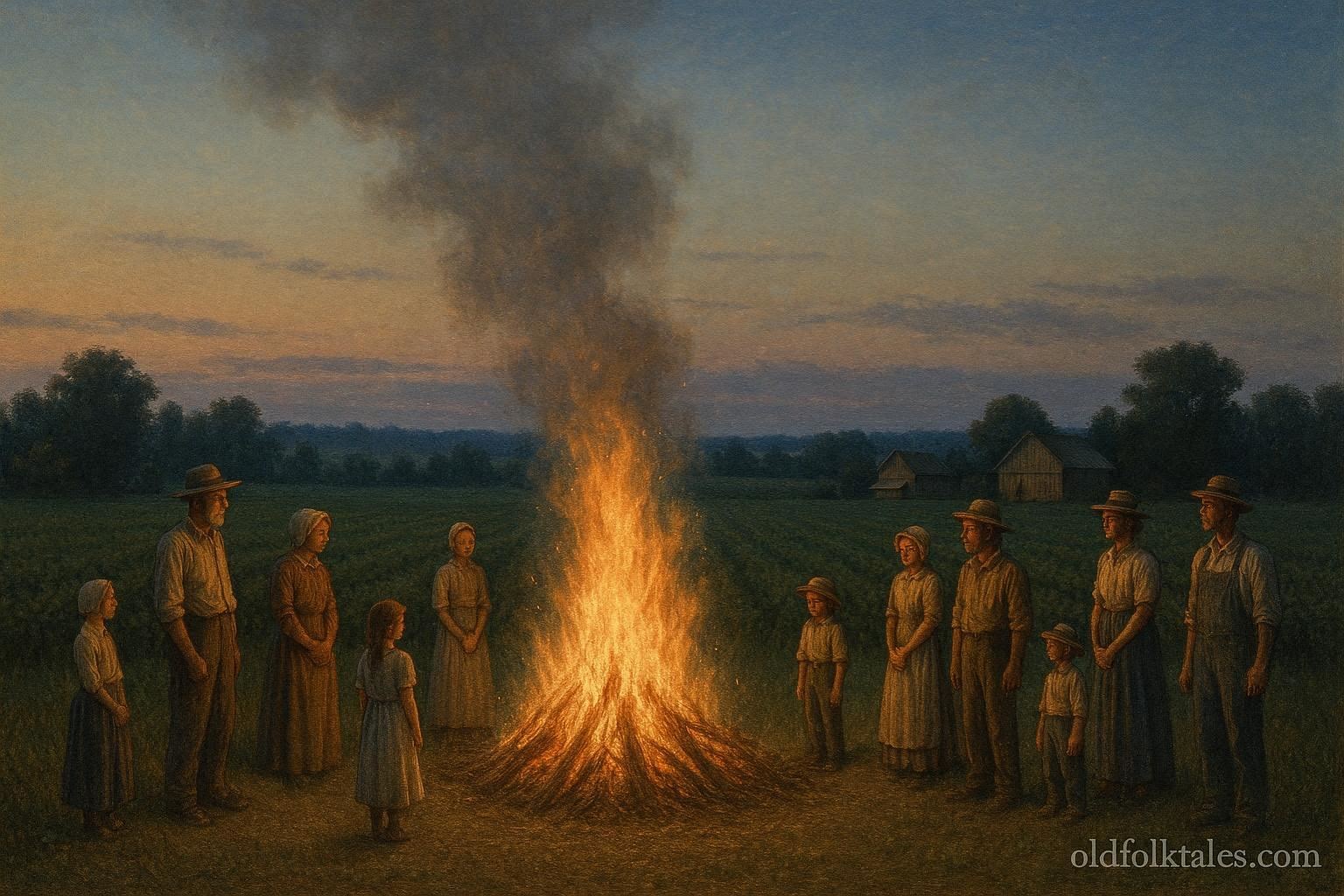
The June Bonfire Vigil was not a festival of noise or excess. It was a watchful tradition shaped by agriculture, weather, and belief. Fires were lit in open fields, on hills, or near the edges of farmland. Families and neighbors gathered as daylight lingered late into the evening, waiting for darkness to fully arrive. The fire was fed carefully, never allowed to rage. Its purpose was not destruction but presence.
Fire carried protection in folk belief. Flames were thought to confuse storm spirits, break harmful air currents, and weaken forces that threatened crops. Smoke rising into the twilight sky was believed to form a barrier, a signal that the land was guarded. While modern science would later explain weather patterns differently, early communities relied on ritual to restore a sense of control in an uncertain environment.
Explore ancient Native American creation myths and the symbolic tales that shaped America’s belief systems
The vigil marked the peak of daylight. June brought the longest days of the year, and with them a feeling of fullness. Sunlight had done its work. Seeds had broken the soil. Fields promised abundance if they survived the coming months. The bonfire honored that moment of balance when growth was strongest yet still vulnerable. Fire met sun as equals, one fading as the other rose.
Children were often present but closely supervised. They were taught that this fire was not for play. Elders explained that respect kept the land generous. Stories were told quietly around the flames, many of them warnings. Tales of storms that flattened crops. Accounts of careless burns that led to loss. The fire became a teacher as much as a symbol.
Communities varied in how they observed the vigil. Some walked slowly around the fire in silence. Others shared bread or early berries. A few carried embers to the edges of fields, placing small coals in the soil as blessings. These acts were not uniform, but they shared intention. Every gesture was meant to steady the season.
Storm protection was a central concern. June brought sudden thunder, heavy rain, and destructive winds. Farmers watched the sky with practiced fear. The bonfire was believed to weaken storms before they arrived. Smoke drifting upward was thought to meet dark clouds and turn them away. Even when storms still came, the ritual provided emotional readiness. People felt less helpless when they had acted.
Fire also served as a communal signal. In scattered rural settlements, the glow could be seen from a distance. It told neighbors that the vigil had begun. It invited participation without command. No one was forced to attend, yet absence was noticed. Shared labor in farming extended naturally into shared ritual. The land belonged to all who worked it.
As night deepened, the fire became a focal point of reflection. The work of spring was behind them. The uncertainty of summer lay ahead. People spoke of hopes quietly, sometimes only to the flames. Fire was believed to carry words upward, to release intention into the open air. Even those skeptical of belief found comfort in the act.
The vigil ended deliberately. Fires were not left to burn unattended. Embers were extinguished or buried. Careful ending mattered as much as careful lighting. Fire respected boundaries. That lesson echoed through daily life. Balance meant knowing when to begin and when to stop.
With industrialization and changing agricultural practices, the June Bonfire Vigil faded from necessity. Storm warnings replaced smoke signals. Fertilizers and machines shifted the rhythm of farming. Yet the memory of the ritual survived in fragments. Community bonfires. Summer gatherings. Quiet moments watching flames against a long evening sky. The old meanings lingered even when forgotten.
The vigil was never about superstition alone. It was about standing together at a moment of transition. It acknowledged that human effort could not control everything. Fire offered warmth, light, and the illusion of protection, but its true power was social. It gathered people into shared attention. It reminded them that survival depended not only on labor, but on care.
The June Bonfire Vigil marked the height of light with humility. It celebrated abundance while admitting risk. Fire did not conquer nature. It negotiated with it. That understanding shaped generations of rural life and left behind a quiet tradition whose glow still echoes in summer nights.
Click to read all American Traditions & Beliefs — the living folklore of daily life, customs, and superstitions.
Moral Lesson
Communal care and mindful ritual can strengthen resilience in times of uncertainty.
Knowledge Check
1. Why was June considered a vulnerable time for crops?
Because plants were growing but still exposed to storms and weather damage.
2. What protective role did smoke play in folk belief?
It was thought to disrupt storms and guard the fields.
3. Why were children taught to treat the bonfire with respect?
The fire symbolized balance and required careful handling.
4. How did the vigil strengthen community bonds?
It gathered neighbors in shared responsibility for the land.
5. Why was extinguishing the fire an important part of the ritual?
Ending the vigil properly maintained balance and safety.
6. What deeper purpose did the vigil serve beyond agriculture?
It offered emotional readiness and collective reassurance.
Source
Adapted from University of Wisconsin folklore and seasonal ritual studies
Cultural Origin
Northern American rural communities