Truth does not always arrive through official channels. In the hills of Appalachia, stories often move ahead of records, carried by voices, glances, and long memory. In one quiet community, justice was not delivered by witnesses or documents alone. It was said to arrive through a voice that refused to remain silent, even after death.
The story begins in a small rural settlement where everyone knew one another’s habits. Homes sat far apart, separated by wooded slopes and narrow paths. Life moved slowly, governed by daylight and necessity. Privacy existed, but secrets rarely stayed hidden for long.
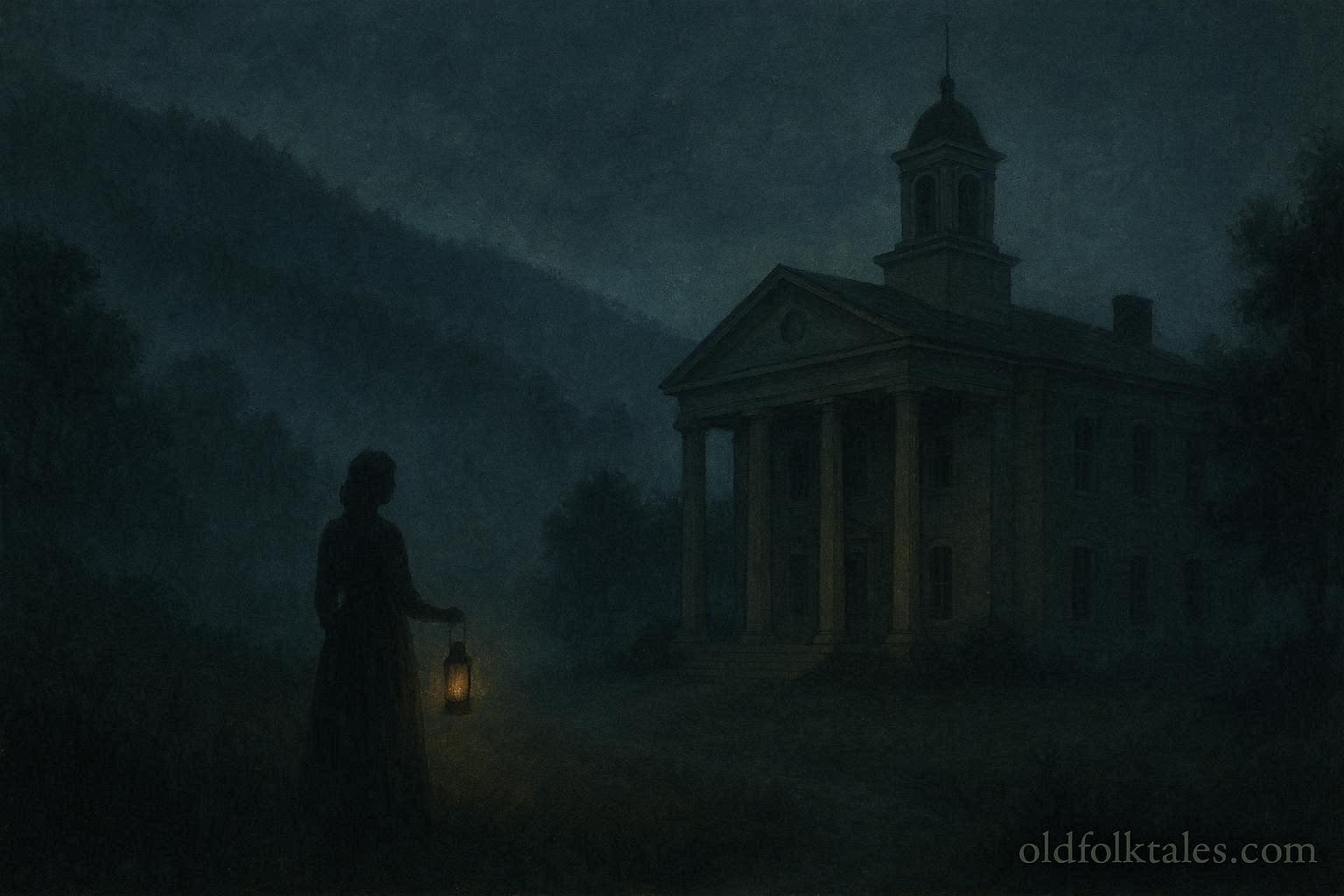
When a young married woman was found dead inside her home, the shock rippled outward quickly. Her body was discovered lying at the foot of the stairs. Neighbors gathered. Whispers filled the yard. The explanation offered was an accident, a fall that ended tragically.
Encounter the strange and the unseen — from Bigfoot to regional monsters hiding in America’s forests.
Her husband told the story calmly.
He spoke of clumsiness. Of misfortune. Of grief.
Yet from the moment her body was prepared for burial, something felt wrong. Those who helped noticed the care he took in arranging her neck and head. How he insisted on choosing her burial clothing himself. How he refused to leave her side.
These details settled uneasily in the minds of those who watched.
The official cause of death was recorded without further investigation. Life, as it often does, attempted to move on.
But the woman did not.
In the nights that followed, her mother began to dream. At first, the dreams were ordinary. Familiar. Her daughter appeared as she had in life, quiet and close. Then the dreams changed.
Her daughter returned again and again, no longer passive. She spoke clearly. She described pain. She described anger. She described betrayal. Most importantly, she described how she had died.
According to the mother, the spirit said she had not fallen. She had been struck. Her neck broken by human hands. The name of her husband was spoken without hesitation.
Night after night, the dreams continued.
The mother woke shaken, convinced she had been visited not by imagination but by testimony. She shared what she had heard, first with family, then neighbors. Some listened politely. Others dismissed it as grief speaking through exhaustion.
But the consistency could not be ignored.
The details never changed.
The manner of death remained the same. The accusation remained fixed. The persistence of the message wore down skepticism. Slowly, the story reached local authorities.
What followed was highly unusual.
An exhumation was ordered. The body was examined again, this time carefully. Evidence emerged that contradicted the original explanation. The woman’s neck showed signs of violent injury consistent with strangulation or blunt force.
The husband was arrested.
During the trial, the prosecution faced a challenge. Evidence existed, but it was circumstantial. Motive was unclear. Witnesses were limited. The case risked collapsing under uncertainty.
Then the mother was called to testify.
In court, she described the dreams. She recounted her daughter’s words calmly and without embellishment. She spoke of repeated visitations and unwavering detail. The courtroom grew still as the judge allowed the testimony to stand, not as proof of the supernatural, but as context for reopening the investigation.
The defense objected.
Yet the testimony remained.
The jury listened.
While the verdict rested on physical evidence, the ghost story shaped perception. It framed the narrative. It prevented the case from being dismissed as another unexplained rural death.
The husband was convicted.
Whether the ghost truly spoke or whether grief sharpened intuition into action remains a matter of belief. What matters to the community is that justice arrived where it had nearly failed.
In the years that followed, the story settled into local memory. It was told quietly, without spectacle. Not as a ghost story meant to frighten, but as a reminder that truth can surface in unexpected ways.
The woman is not remembered as a victim alone.
She is remembered as a witness.
Her spirit, according to legend, did not linger to haunt or threaten. Once her truth was heard, she did not return. The dreams stopped. The nights grew quiet again.
What remained was the lesson.
In places where official systems falter, memory and persistence can intervene. Silence does not always mean peace. Some truths demand to be spoken, even if they must cross the boundary between life and death to be heard.
The hills still stand. The story still circulates. Not as proof of ghosts, but as evidence that justice sometimes requires more than procedure.
It requires listening.
Explore how American legends shaped the nation — from frontier heroes to Revolutionary War tales.
Moral Lesson
Truth has a way of demanding acknowledgment. When justice is ignored, persistence and memory can become powerful forces that refuse to be silenced.
Knowledge Check
- What event begins the legend?
The unexplained death of a woman inside her home. - Who first reports the ghostly testimony?
The woman’s mother. - What did the spirit allegedly reveal?
That her husband killed her. - Why was the body reexamined?
Because repeated testimony raised suspicion about the cause of death. - How did the ghost testimony affect the trial?
It encouraged renewed investigation and shaped the case narrative. - Why does the story remain important to the community?
It represents persistence, truth, and the pursuit of justice.
Source
Adapted from West Virginia University Appalachian folklore and legal history collections
Cultural Origin
Appalachian communities of the late 19th century