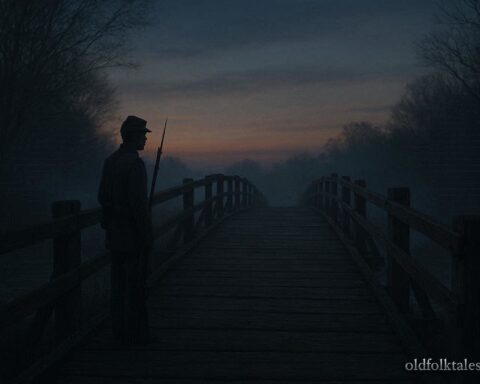
Sound often arrived before sight. Long before riders appeared or paths filled with movement, people remembered hearing voices carried on the wind. These voices did not belong to anyone visible. They rose suddenly, echoed across valleys or plains, and then vanished just as quickly. Elders later said that when such cries were heard, something significant was approaching, even if the land looked undisturbed.
In Appalachian hollows and across the open Plains, stories describe moments when travelers paused, unsettled by what they heard. The land appeared calm, yet voices rang out as if from a distant gathering. These cries were not always understood as literal warnings. Instead, they were interpreted as echoes of memory, signals shaped by past conflicts, and reminders that the land itself remembered what had occurred upon it.
Oral traditions explain that sound carried intention. A cry heard without a visible source was believed to emerge from layered time rather than immediate presence. Communities taught that the land retained emotional impressions, especially after moments of violence or upheaval. When conditions aligned, those impressions resurfaced as sound.
Encounter the strange and the unseen — from Bigfoot to regional monsters hiding in America’s forests.
Some elders described the cries as belonging to ancestors. Others believed they were warnings generated by the land itself. In either interpretation, the message was similar: remain alert, move carefully, and do not dismiss what cannot be seen. These moments of auditory warning often preceded periods of unrest, migration, or confrontation remembered later in community stories.
In Appalachian regions, echoes bouncing between ridges created natural amplification. Yet listeners distinguished ordinary sounds from these cries. The tone was described as purposeful rather than random. It did not resemble animal calls or weather-driven noise. People said it carried emotion urgency, fear, or resolve, making it impossible to ignore.
On the Plains, where sound traveled far across open ground, similar accounts were preserved. Riders reported hearing cries carried miles by wind, even when no movement followed. These experiences reinforced teachings that the land itself participated in human history, responding to moments of danger through sound rather than sight.
Families passed down instructions tied to these legends. When unexplained cries were heard, people gathered closer together, prepared supplies, and avoided unnecessary travel. The stories emphasize caution rather than panic. Listening carefully was considered wiser than reacting impulsively.
Over time, these auditory omens became embedded in regional folklore. They were no longer tied to a single event but remembered as a pattern. Communities learned to interpret sound as a form of communication, one that required stillness and attention rather than immediate action.
The cries were also remembered as reminders of accountability. Elders explained that unresolved conflict left traces behind. Sound, in these stories, was one way those traces resurfaced. Hearing without seeing encouraged reflection rather than confrontation.
As generations passed, the legends remained even as landscapes changed. Roads replaced paths, and settlements expanded. Yet stories persisted of travelers hearing voices where no one stood. These accounts reinforced the belief that history does not disappear; it waits to be heard.
Today, the legends are understood as teachings about awareness. They caution against assuming safety based solely on appearances. Sound, memory, and intuition are treated as valuable sources of knowledge.
In remembering battle cries without visible warriors, communities preserved a lesson about listening. What cannot be seen may still carry meaning. The land speaks, not always through sight, but through echoes shaped by memory and experience.
Click now to read all American Legends — heroic tales where truth and imagination meet, defining the American spirit.
Moral Lesson
Awareness requires listening as much as looking. Not all warnings are visible, and attentiveness to subtle signs can guide wise decisions.
Knowledge Check
- What made these battle cries unusual in the legends?
They were heard without any visible warriors present. - How were the cries commonly interpreted?
As warnings or echoes of past conflicts carried by the land. - Why was sound considered important in these traditions?
It was believed to carry intention, memory, and meaning. - How did communities respond when such cries were heard?
By remaining alert, gathering together, and acting cautiously. - What role did the landscape play in these stories?
The land was believed to store and release memory through sound. - What broader lesson did these legends teach?
That awareness comes from listening as well as observing.
Source
Adapted from American Folklife Center, Library of Congress collections
Cultural Origin
Appalachian and Plains regions