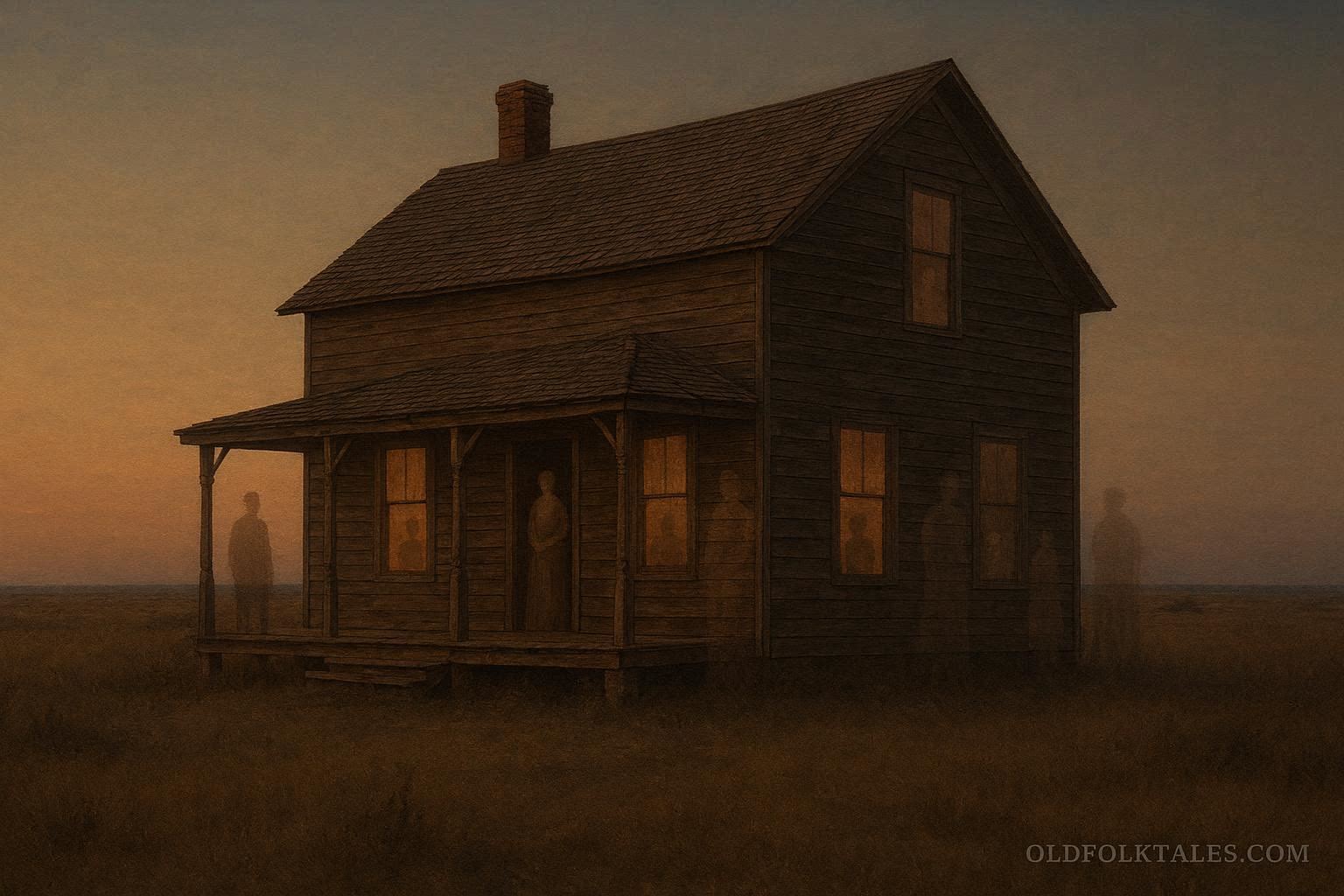
On the open plains where the wind carries across endless grass, abandoned homesteads often appear untouched by time yet full of memory. Windows reflect the changing sky, porches sag under the weight of years, and doors creak as though responding to invisible footsteps. Locals have long told stories about figures glimpsed within or near these deserted homes. Unlike traditional ghost stories, these apparitions do not frighten. Instead, they seem to observe, reminding the living of the endurance of those who once occupied the space.
The lives of early settlers on the Plains were shaped by isolation. Families built homes far from neighbors, leaving miles of open land between communities. Daily existence required constant labor. Winters were bitter and long, summer droughts threatened crops, and illness could strike without warning. Many endured hardships that left few traces beyond the structures they had built with care and sweat. When homes were finally abandoned, the land retained memory of struggle, perseverance, and quiet suffering.
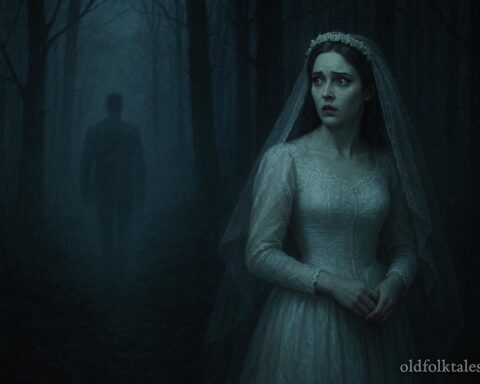
Sightings of apparitions are often described in subtle terms. Figures might stand silently in a doorway, sit on a weathered porch, or appear in a window as if gazing across the fields. They are not threatening. They do not speak or move abruptly. Witnesses describe a calm presence that disappears when directly observed, as if acknowledging attention makes it unnecessary to remain visible.
Encounter the strange and the unseen — from Bigfoot to regional monsters hiding in America’s forests.
Children often notice the figures before adults. Their attention to small details allows them to detect movement or shapes that adults overlook. A child might point to an empty room and describe someone standing quietly inside. When asked to explain, the child may only say the figure is “watching” or “waiting” without fear. Elders interpret these observations as part of a natural connection between the young and the unseen presence of the past.
The apparitions appear most frequently at dawn or dusk, times that mirror the daily routines of the settlers. These are the hours when families would rise to begin labor or settle in for the evening. By appearing during these times, the spirits seem to reenact patterns of daily life, reminding the living of the rhythm of work, vigilance, and endurance.
Adults report different experiences than children. They often feel a stillness in the air, as if the world has slowed around the homestead. Livestock may grow uneasy, doors may move without wind, and floorboards may groan, yet no one is present. Travelers passing by sometimes sense an unseen presence watching quietly, conveying neither warning nor danger but the lingering imprint of lives lived with perseverance.
Elders explain that the apparitions are not restless or angry. They are symbols of endurance. The spirits embody the effort, patience, and quiet struggles of those who built and lived in these homes. They remind the living that the land itself holds memory. Every floorboard, wall, and porch carries the history of human presence, often overlooked yet never erased.
Isolation plays a central role in these legends. Many settlers lived and died far from extended family. Their connection to the land was a substitute for community and support. The spirits are understood as the embodiment of that solitude, preserving the history of lives marked by determination, hardship, and survival in a landscape that could be unforgiving.
Despite the stillness, the apparitions are not intended to frighten. They appear as a quiet acknowledgment, a reminder that lives once lived there were meaningful. Some families who passed through abandoned homesteads reported feeling calm, as if the unseen residents were observing with approval or simply sharing the space in silence. Children often leave small offerings, such as placing a flower on a porch or leaving water, as a gesture of recognition.
Stories of these homestead spirits endure because they connect the living to the past. They teach respect for the land and the labor of those who came before. Even long after buildings have decayed into rubble, witnesses report faint impressions of standing figures, gentle lights in windows, or the sensation of being watched over. These experiences reinforce the legend that memory, endurance, and human presence can persist in ways that are not immediately visible.
In this way, abandoned homesteads serve not only as reminders of settlement history but also as sites where the living can reflect on resilience, solitude, and the invisible footprints left behind by those who endured the vast, challenging plains.
Step into shadowy legends of restless spirits and ghostly travelers in American Ghost Stories.
Moral Lesson
The endurance and presence of those who came before are preserved through memory, attention, and respect for the places they once called home.
Knowledge Check
- What are apparitions at abandoned homesteads believed to represent?
The endurance and quiet presence of settlers who lived there. - Who often notices these figures first?
Children. - When do the apparitions most commonly appear?
At dawn or dusk, reflecting daily routines of settlers. - How do the apparitions affect adults or travelers?
They create a sense of stillness, observation, and respect without causing fear. - Why were homesteads often abandoned?
Due to isolation, failed crops, economic challenges, or harsh conditions. - What lesson do these spirits teach the living?
To honor the perseverance and memory of those who came before.
Source
Adapted from Nebraska State Historical Society folklore collections
Cultural Origin
Great Plains communities