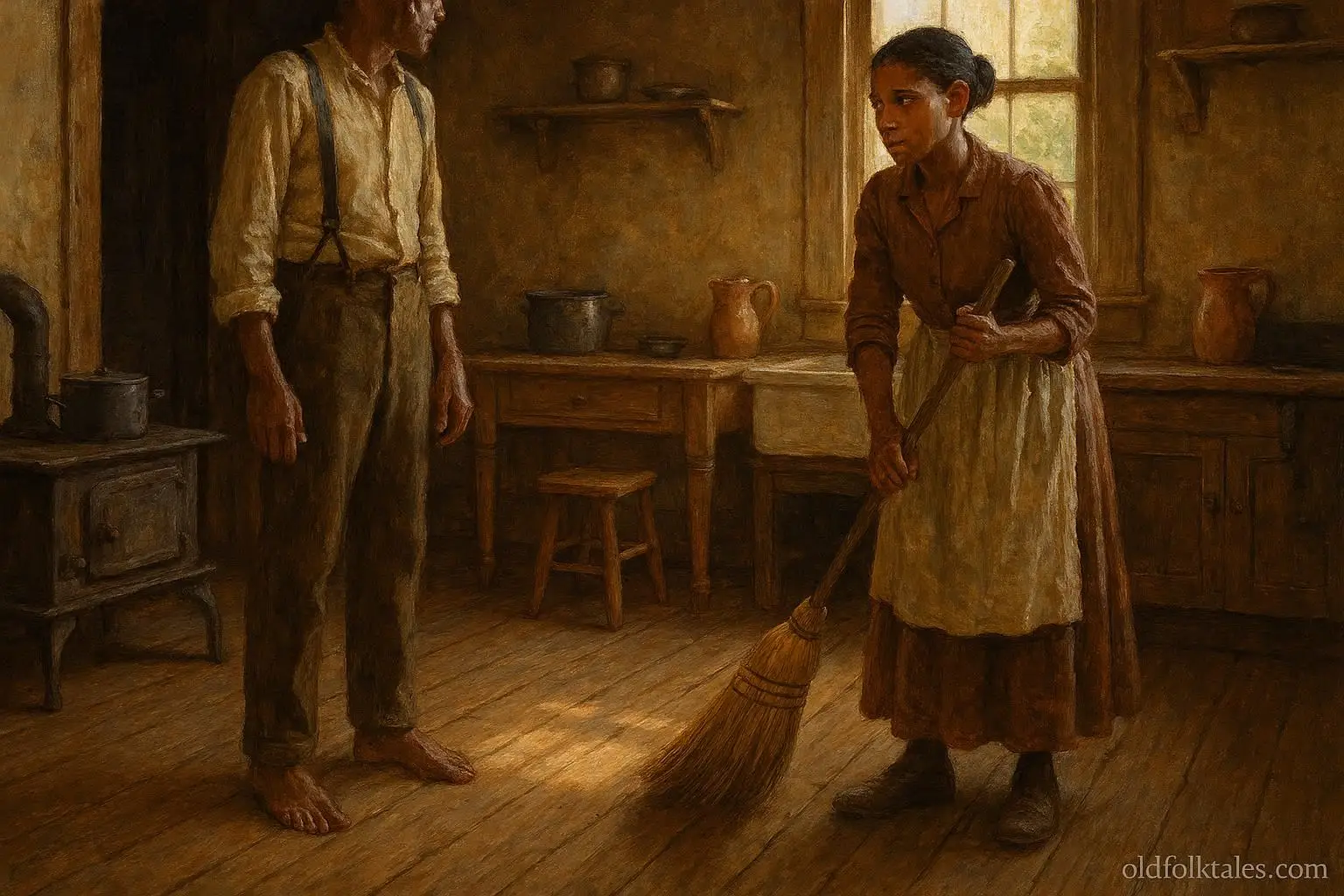
In many American homes, cleaning has never been just about removing dust or keeping order. It has carried rules, cautions, and quiet meanings passed from one generation to the next. Among African American and Southern rural communities, one particular warning echoed through kitchens and living rooms. Never sweep over someone’s feet.
Children often learned this lesson suddenly. A broom passed too close, and a sharp voice interrupted the motion. Elders would correct the mistake immediately, sometimes with urgency. The act was not treated as harmless. It was believed that sweeping over someone’s feet could invite bad luck, disrupt personal fortune, or interfere with the path of one’s life.
The superstition emerged from a blend of African spiritual traditions and rural American domestic customs. In many West African belief systems, the body was connected to fate and spiritual grounding. The feet represented movement, direction, and future paths. To symbolically brush them with a broom was seen as interfering with destiny.
Explore the heart of America’s storytelling — from tall tales and tricksters to fireside family legends.
When these beliefs traveled across the Atlantic through forced migration, they adapted to new environments. Enslaved communities and their descendants preserved symbolic meanings through domestic rituals. Sweeping became more than cleaning. It became a symbolic act that could either protect or disrupt the household.
In Southern rural homes, sweeping was often done slowly and deliberately. Floors were swept at specific times of day. Children were instructed to lift their feet when someone cleaned nearby. If a mistake happened, elders sometimes responded with a verbal correction or a counter action meant to cancel the bad luck.
Some believed sweeping over feet could delay marriage. Others believed it caused financial trouble or constant misfortune. The exact consequence varied by region, but the warning remained consistent. The act was never encouraged or ignored.
The broom itself carried symbolism. It was a tool of transition, pushing old debris out and making space for what was new. Because of this, it was treated with respect. Sweeping was not careless movement. It was a form of ordering life.
In many households, sweeping was done outward toward doors, symbolizing the removal of negativity. Sweeping inward was discouraged. These practices worked together with the belief about feet. The body and the home were seen as connected spaces.
The superstition also functioned as a lesson in boundaries. It taught respect for personal space. Sweeping over someone’s feet was invasive. The rule reminded people to be aware of others while performing daily tasks.
Over time, the belief persisted even as its spiritual explanations faded. Many people followed the rule without fully knowing why. They simply knew it was not done. Even skeptics avoided the act out of habit or respect for elders.
Anthropologists later documented the superstition as part of domestic folklore. They observed that such beliefs helped regulate shared spaces. They reduced conflict by enforcing awareness and care.
In modern homes, the superstition still appears. Grandparents correct grandchildren. Parents repeat the warning instinctively. Even people who dismiss superstition often pause mid sweep and laugh nervously if they brush someone’s feet.
The belief endures because it lives in motion. It is learned through action rather than instruction. A broom stops. A voice corrects. The lesson passes on.
Whether or not one believes in luck, the superstition reflects something deeper. It shows how ordinary tasks carry inherited meaning. It reminds people that daily life has always been shaped by unseen rules meant to protect and guide.
Click to read all American Cryptids & Monsters — creatures of mystery and fear said to inhabit America’s wild landscapes.
Moral Lesson
Respect for shared space and inherited wisdom can shape how people move through daily life and treat one another.
Knowledge Check
- What action is believed to cause bad luck in this superstition?
Sweeping over someone’s feet. - Which communities are most associated with this belief?
African American and Southern rural communities. - What do feet symbolize in the belief system?
Movement, destiny, and personal direction. - Why was the broom considered significant?
It symbolized transition and the ordering of space. - How did elders respond when the rule was broken?
They corrected the action immediately or performed a counter gesture. - Why does the superstition still exist today?
It is passed down through habit and respect for tradition.
Source
Adapted from Library of Congress American Folklife Center domestic belief collections
Cultural Origin
African American and Southern rural communities