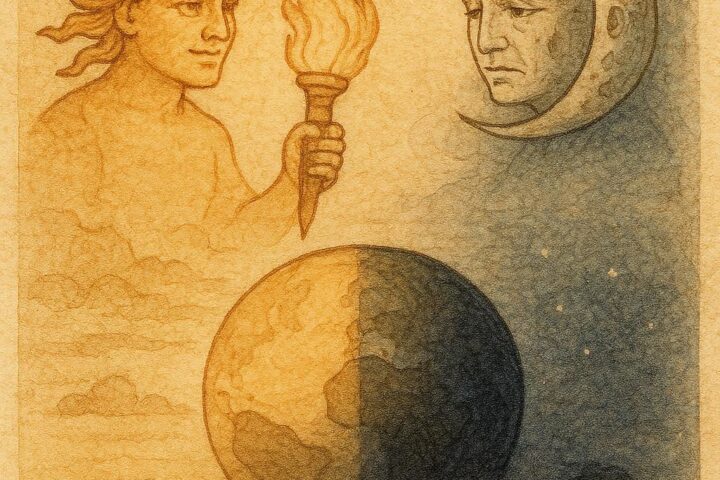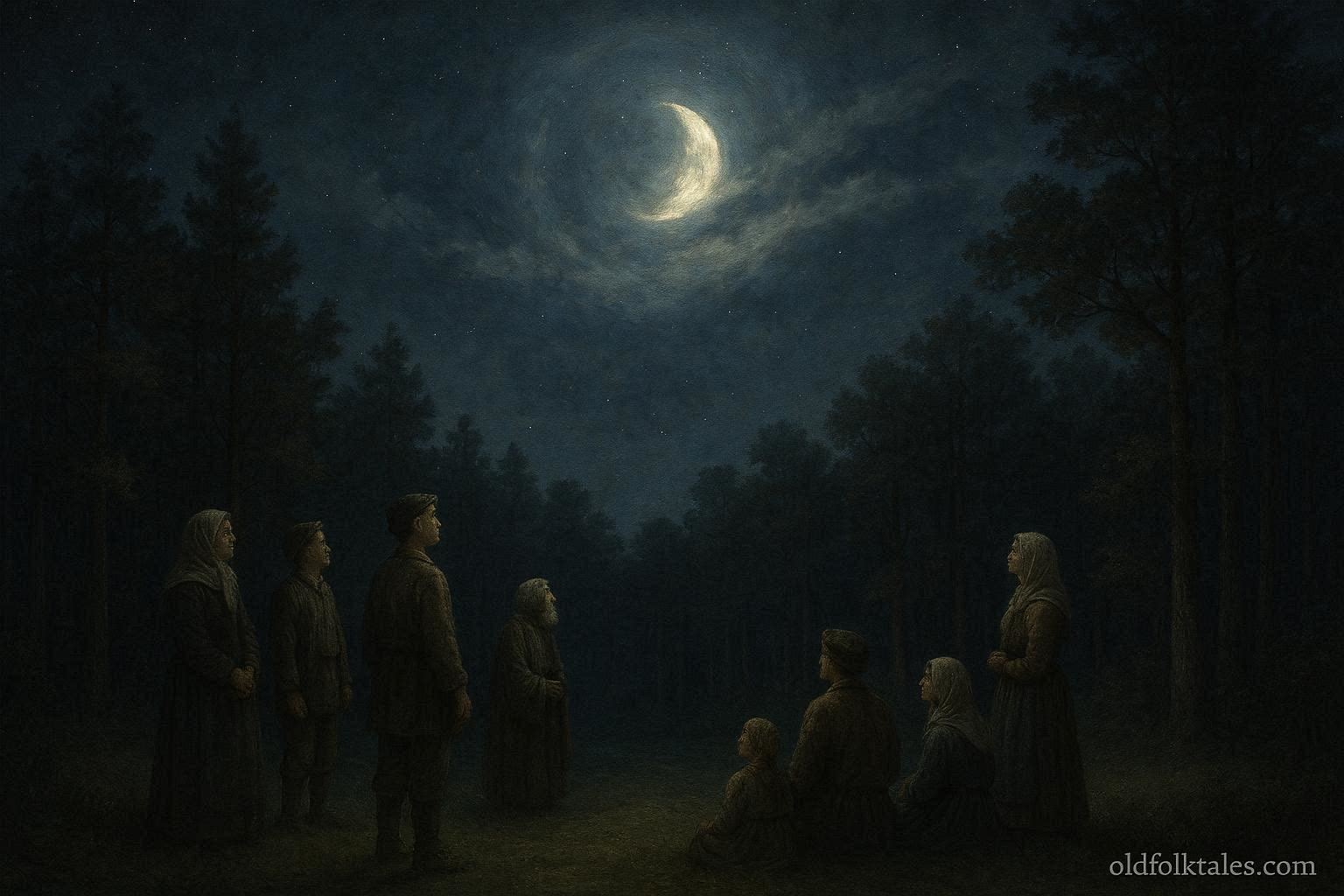
Long ago, the moon shone brightly every night, a perfect circle of silver light that touched every corner of the world. It was celebrated by the people of the Southeastern forests for its beauty and generosity. The moon provided light for travelers, comfort for the restless, and guidance for hunters and farmers. Its face was flawless, always full, reflecting warmth and reassurance. The villagers believed the moon was alive, capable of listening, feeling, and responding to human actions.
The moon had been given a sacred promise by the Creator: it would watch over the earth faithfully, never hiding its face, and in return, the people would honor it through song, ceremony, and care for the land. For generations, the moon kept its promise, and the people kept theirs. Life flowed in balance, the rivers ran steady, and the forests remained abundant. But the moon’s perfection could not remain untouched forever.
One season, the moon grew curious and proud. It began to look down upon the people with vanity, delighting in its own brilliance. It would linger on the horizon, shining brighter than usual, ignoring the prayers of those who sought guidance. It began to hide behind clouds, refusing to provide light when travelers needed it most. This angered the spirits of the land, who had entrusted the moon with the sacred duty of protection.
Step into shadowy legends of restless spirits and ghostly travelers in American Ghost Stories.
The elders warned the people to remind the moon of its promise. They sang songs at night, spoke prayers into the wind, and held ceremonies under its light. The children too participated, singing and dancing with the rhythm of the night. Still, the moon ignored them, focused only on its own reflection in the still waters of the lakes. Its pride grew with every passing night, and the balance between sky and earth began to shift.
One evening, a young boy named Waya noticed that the moon’s glow seemed uneven. Half of its face appeared dim, as though a shadow had touched it. Waya ran to the village elders and described what he had seen. They confirmed his observation, recognizing the signs as a lesson from the Creator. The moon had broken its sacred promise and would bear the consequences. Its face was no longer complete, and it would change shape as a reminder to all of humility and responsibility.
The elders explained that the moon would now undergo cycles, appearing full, then waning, then returning again, never fixed permanently. These phases would reflect its need to repair the trust that had been broken. The people were to continue their ceremonies, not to punish the moon, but to honor the lessons it carried. By respecting the moon’s transformation, they would also learn to maintain their own balance, humility, and reverence for sacred promises.
From that night onward, travelers noticed the change immediately. The once radiant light became a shifting glow, sometimes small and faint, sometimes rising to brilliance again. Hunters used the phases to track animal patterns, farmers adjusted their planting cycles, and families shared stories explaining why the moon appeared incomplete. Children asked questions, and elders would recount the tale of the moon’s broken promise, emphasizing that all beings, even celestial ones, were accountable for their actions.
Waya grew to understand the deeper lesson behind the moon’s transformation. It was not merely punishment but guidance. The moon’s fluctuating face reminded him that pride and neglect could disturb harmony, and that humility and attentiveness were necessary for the health of the community. He shared the story with other children, teaching them to honor promises and respect the cycles of nature.
Over the years, the moon continued its nightly journey, observing the earth with a softer, more deliberate light. The people watched and learned to synchronize their lives with its phases. Festivals were planned to coincide with the full moon, while periods of waning were times for reflection and preparation. In this way, the moon became both a teacher and a companion, its changing face a visible record of lessons learned and respect regained.
The story of the moon spread across villages, carried by travelers and storytellers. Even beyond the Southeastern forests, people spoke of the moon who had lost his face, emphasizing the importance of keeping promises, respecting sacred duties, and observing humility in all actions. The moon became a living symbol of consequence and transformation, guiding both the earth and the people who lived under its light.
Children today still ask why the moon is not always full. Elders recount Waya’s story, explaining that the moon’s changing face reflects accountability. Its phases are a gift, not a curse, reminding all who see it of the delicate balance between pride and duty, between the celestial and the earthly. In every cycle, the moon teaches that mistakes carry consequences, but respect, attention, and care can restore harmony over time.
Thus, the moon’s face is never complete, but it is never abandoned. Its presence continues to light the nights, to guide travelers, and to remind the people that even the most radiant beings must honor their promises to maintain balance and harmony in the world.
Moral Lesson
The story teaches that pride and neglect disrupt balance, and that accountability, humility, and respect for sacred promises are essential for harmony.
Knowledge Check
- Why did the moon lose its face?
Because it broke a sacred promise by becoming proud and neglecting its duty. - Who observed the change in the moon first?
A young boy named Waya noticed the moon’s face dimming. - What was the purpose of the moon’s phases?
To remind the people and itself about humility and accountability. - How did the people respond to the moon’s transformation?
They continued ceremonies, sang songs, and taught children the lesson. - What lesson did Waya learn from the moon?
That pride and neglect disturb harmony, and humility restores balance. - Why is the moon’s changing face considered a gift?
Because it provides guidance and a visible reminder of consequences and respect.
Source
Adapted from University of Oklahoma Indigenous mythological archives
Cultural Origin
Southeastern Indigenous nations