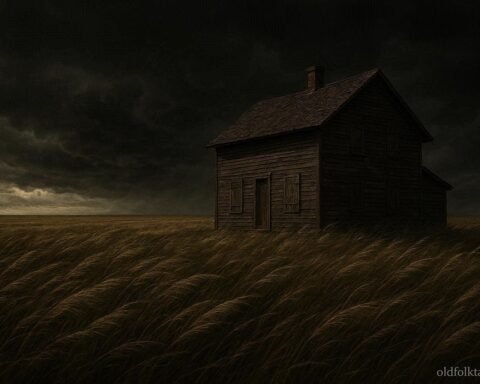
In the nights of rural America, before weather forecasts or barometers were widely available, the sky itself was read like a book. Farmers and homesteaders scanned the heavens for subtle signs that foretold storms, frost, or rainfall. Among the most striking of these signs was a luminous ring, or halo, surrounding the moon. Its ethereal glow fascinated observers and, over generations, became associated with impending rain or snow.
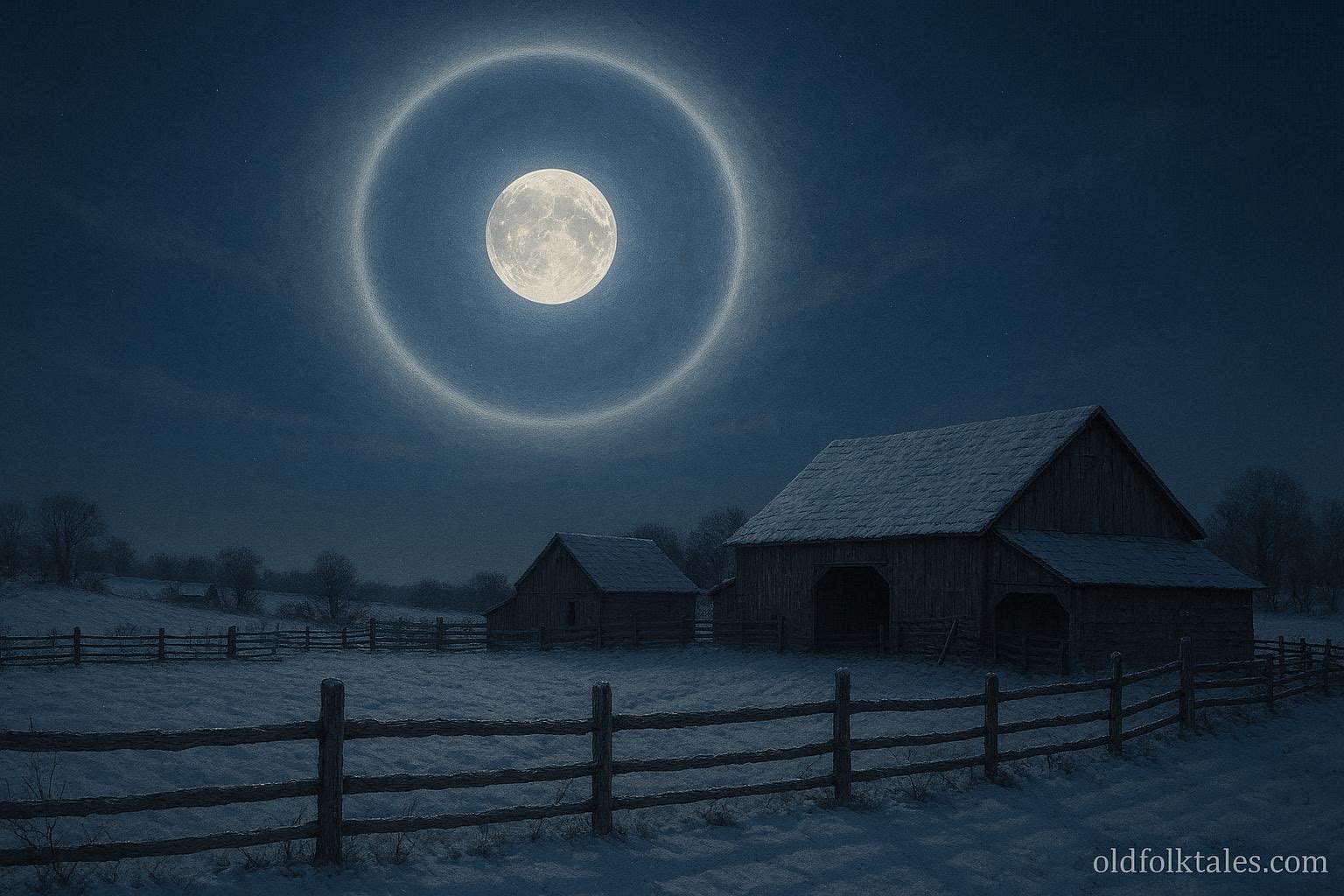
The phenomenon, caused by the refraction of moonlight through thin ice crystals high in the atmosphere, was striking in clear winter and early spring nights. A full moon encircled by a glowing ring appeared almost magical, suspended above quiet fields and homesteads. Early settlers often interpreted this as a message from nature, signaling the approach of precipitation and prompting preparation.
Rural communities quickly developed lore around these lunar halos. The brighter and more pronounced the ring, the more imminent the weather change was believed to be. Farmers adjusted their plans accordingly, bringing in firewood, securing crops, and sheltering livestock. In regions where travel was hazardous, a ring around the moon was taken seriously enough to delay journeys, helping to protect people from sudden storms.
Discover chilling ghost tales and haunted places that echo through America’s towns and countryside.
This belief was not limited to one region. From the snowy plains of the Midwest to the river valleys of the South, halos were remembered in oral traditions and almanacs alike. Generations of farmers shared stories of observing the moon’s ring and later seeing clouds gather and rain or snow descend. The lore persisted because, while not scientifically precise, the correlation seemed reliable enough to guide daily life.
European settlers brought similar traditions with them, where halos around the sun or moon were read as signs of change. As these settlers adapted to the American landscape, the lunar halo took on particular significance. It was a rare, striking phenomenon in rural areas, often witnessed in isolation, which gave it a sense of authority. The quiet majesty of the halo reinforced the feeling that nature was speaking directly to those who watched closely.
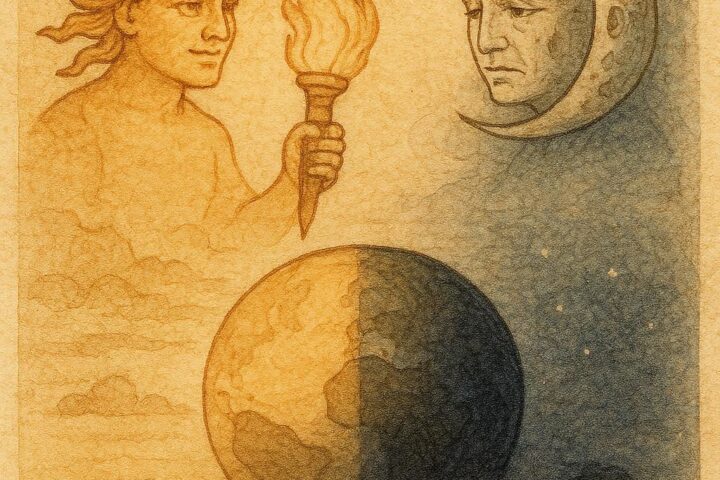
The halo also held symbolic meaning. Some interpreted it as a protective circle, surrounding the moon with light before storms, a warning that balance in nature was shifting. Others viewed it as a sign of divine communication, with the heavens announcing their intentions. In either case, the appearance of the lunar ring inspired attention, caution, and sometimes awe.
Scientific understanding now explains the ring as a halo formed by high-altitude cirrus clouds, which often precede storm systems. Yet early observers had no instruments to measure atmospheric pressure or cloud formation. Instead, they relied on centuries of observation and communal memory. Even without exact prediction, the sign proved useful: lunar halos often appeared before weather systems moved in from the west, giving practical warning.
Stories of these lunar omens were preserved in letters, diaries, and almanacs. One Ohio farmer wrote: “A ring about the moon last night promised rain ere sunrise. Sure enough, clouds gathered by dawn, and we covered the corn.” In Virginia, similar accounts describe shepherds and cattlemen noting halos and securing their flocks before storms arrived. Across the United States, the pattern repeated itself often enough to cement belief in the celestial sign.
The practice extended beyond practical use. Observing the ring became a nightly ritual during certain seasons. Families stepped outside after dark, gazing at the moon, sharing stories, and teaching children to notice the subtle cues in the sky. Lunar halos became a source of wonder, conversation, and anticipation, linking daily life to the rhythms of nature.
The lore also emphasized timing. A ring seen in the early evening was considered a more urgent signal than one appearing closer to midnight. Farmers associated the color, brightness, and completeness of the ring with the severity and immediacy of the approaching weather. Such detailed observation demonstrates the empirical nature of folk meteorology: even in superstition, practical knowledge was embedded.
Even in modern times, when weather forecasts dominate, the halo around the moon continues to capture the imagination. Photographs and social media posts celebrate the phenomenon, echoing centuries of fascination. The story of lunar halos reminds us that observing the sky was once more than aesthetic appreciation; it was survival, storytelling, and connection to the environment.
The appearance of a ring around the moon, then, was never merely ornamental. It was a signal, a warning, and a conversation between humanity and the natural world. Those who heeded it were rewarded with preparedness, while those who ignored it sometimes faced the consequences of unanticipated rain or snow. In this way, the lore preserved both knowledge and communal memory, connecting the practical and symbolic in one luminous circle.
Click to read all American Traditions & Beliefs — the living folklore of daily life, customs, and superstitions.
Moral Lesson
Careful observation of natural signs strengthens preparedness and respect for the environment. Even phenomena that seem mystical can guide practical decisions.
Knowledge Check
- What natural phenomenon creates a ring around the moon?
Refraction of moonlight through high-altitude ice crystals in cirrus clouds. - What did early American farmers interpret a lunar ring to mean?
That rain or snow was approaching. - Why was the ring considered useful for rural communities?
It gave time to protect crops, livestock, and plan travel. - From which European tradition did lunar halo lore originate?
Observations of sun or moon halos as omens of weather change. - How did communities use the appearance of the ring?
They taught children, shared stories, and prepared for impending storms. - Which regions of the United States preserved this belief most strongly?
Rural farming communities across the Midwest, South, and Northeast.
Source
Adapted from NOAA historical weather belief documentation
Cultural Origin
Rural farming communities across the United States