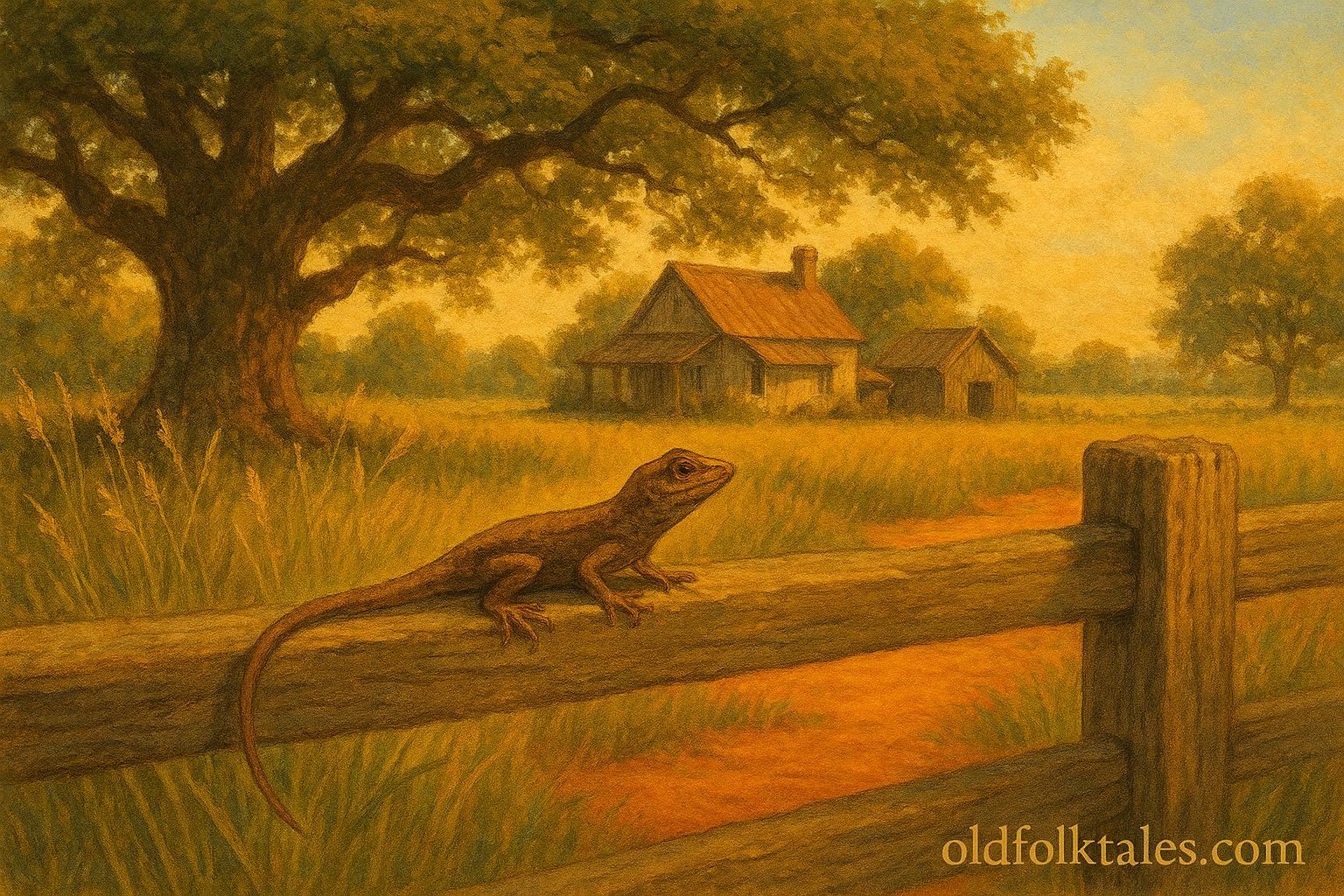
Long before people claimed to understand the habits of the creatures around them, there was much curiosity about the small brown lizard that darted along wooden fences and sun warmed stones. Children noticed something peculiar about it. Whenever someone stepped near, the lizard would pause, lift its tiny head, and nod as though agreeing with an invisible speaker. The motion was quick and repeated, almost polite. Elders smiled when asked about it, for they knew a story that explained the habit.
In a quiet Southern settlement surrounded by tall grass and red clay paths, animals were once believed to speak openly with humans. Back then, every creature had its own personality and reputation. The rabbit was clever, the turtle patient, the crow observant, and the lizard, though small, was known for being restless and talkative.
The lizard loved to boast. It would perch on fence posts and interrupt conversations with opinions no one had requested. If the rooster crowed proudly about waking the farm, the lizard claimed it had whispered to the sun first. If the dog bragged about guarding the yard, the lizard insisted it had warned of danger long before the barking began. Its constant chatter amused some animals but annoyed many others.
Encounter the strange and the unseen — from Bigfoot to regional monsters hiding in America’s forests.
One summer afternoon, during a season of heavy heat, the animals gathered beneath a large oak tree to discuss a troubling matter. The river had begun to shrink, and water was becoming scarce. They needed to decide how to share what remained until the rains returned. Each animal spoke carefully, understanding the seriousness of the situation.
The turtle suggested patience. The crow recommended watchfulness. The rabbit proposed creating a schedule so that each creature could drink without conflict. Just as they were reaching agreement, the lizard scurried forward.
Without waiting its turn, the lizard began speaking rapidly. It claimed that it alone knew where hidden water could be found. It boasted that it could guide them to a secret stream deep in the woods. The other animals listened with skepticism, but desperation made them hopeful.
“Are you certain?” the turtle asked slowly.
The lizard lifted its head and nodded confidently. “I know the way,” it declared.
Trusting the lizard’s assurance, the animals followed it through tall weeds and over dry soil. The sun burned hotter as they traveled, and their thirst grew stronger. After a long and tiring journey, they reached nothing but cracked earth and scattered stones. There was no hidden stream. No fresh water. Only silence.
The animals realized they had been misled.
Embarrassed but unwilling to admit it, the lizard insisted they had simply taken a wrong turn. It nodded repeatedly as it spoke, as if its head movement alone could convince them. The rabbit frowned. The crow tilted its head thoughtfully. The turtle closed its eyes in disappointment.
“You nodded when you said you knew the way,” the turtle reminded gently. “Did you truly know?”
The lizard hesitated, but pride pushed it to nod again. “Of course,” it replied quickly.
The journey back felt longer than the walk out. The animals were tired and frustrated. When they returned to the oak tree, they agreed that boasting without truth endangered everyone. The lizard’s need for attention had wasted precious energy and time.
The elders among the animals decided that a lesson was necessary. They believed that words carried weight and that careless speech could cause harm. The owl, known for wisdom, spoke last.
“If you wish to be heard,” the owl said calmly to the lizard, “you must first learn to listen. If you wish to be trusted, your words must match truth.”
The lizard, feeling small beneath the gaze of its neighbors, tried to defend itself. Yet every time it opened its mouth, it found itself nodding. It nodded while apologizing. It nodded while promising to change. It nodded even when it tried to remain still.
From that day forward, the lizard discovered it could not stop the motion. Whenever someone spoke, its head would dip and rise as though agreeing. Whenever it prepared to boast, the nodding interrupted its confidence. The movement reminded it of the day its empty promises led others astray.
Over time, the lizard spoke less and listened more. Though it still nodded, the gesture became gentler and quieter. The other animals slowly forgave it, recognizing that growth often follows embarrassment. The drought eventually ended, and rain returned to fill the riverbanks. Harmony was restored, but the lizard’s nod remained.
Generations later, people who noticed the small reptile’s curious motion asked why it behaved that way. Elders would smile and share the tale. They explained that the nodding was not merely instinct but a reminder. It symbolized the importance of honesty and humility. It warned against speaking without knowledge and agreeing without understanding.
In the warm afternoons of the South, when a lizard pauses on a fence and lifts its head in that familiar rhythm, some still remember the old story. The tiny creature that once loved to boast now carries its lesson quietly. Each nod is a silent promise to listen carefully and speak truthfully.
And so the lizard continues to nod, not out of pride, but out of remembrance.
Explore the heart of America’s storytelling — from tall tales and tricksters to fireside family legends.
Moral Lesson
Speak truthfully and listen carefully. Boasting without knowledge can harm others and damage trust.
Knowledge Check
- Why did the animals gather under the oak tree?
To discuss how to share water during a drought. - What did the lizard claim it knew?
It claimed it knew the location of a hidden stream. - What happened when the animals followed the lizard?
They found no water and realized they had been misled. - What was the lizard’s main flaw?
It loved to boast and speak without certainty. - What lesson did the owl teach the lizard?
That listening and honesty are more important than pride. - Why does the lizard nod today according to the story?
It nods as a reminder of its lesson about truth and humility.
Source
Adapted from rural storytelling traditions.
Cultural Origin
Southern and rural African American communities