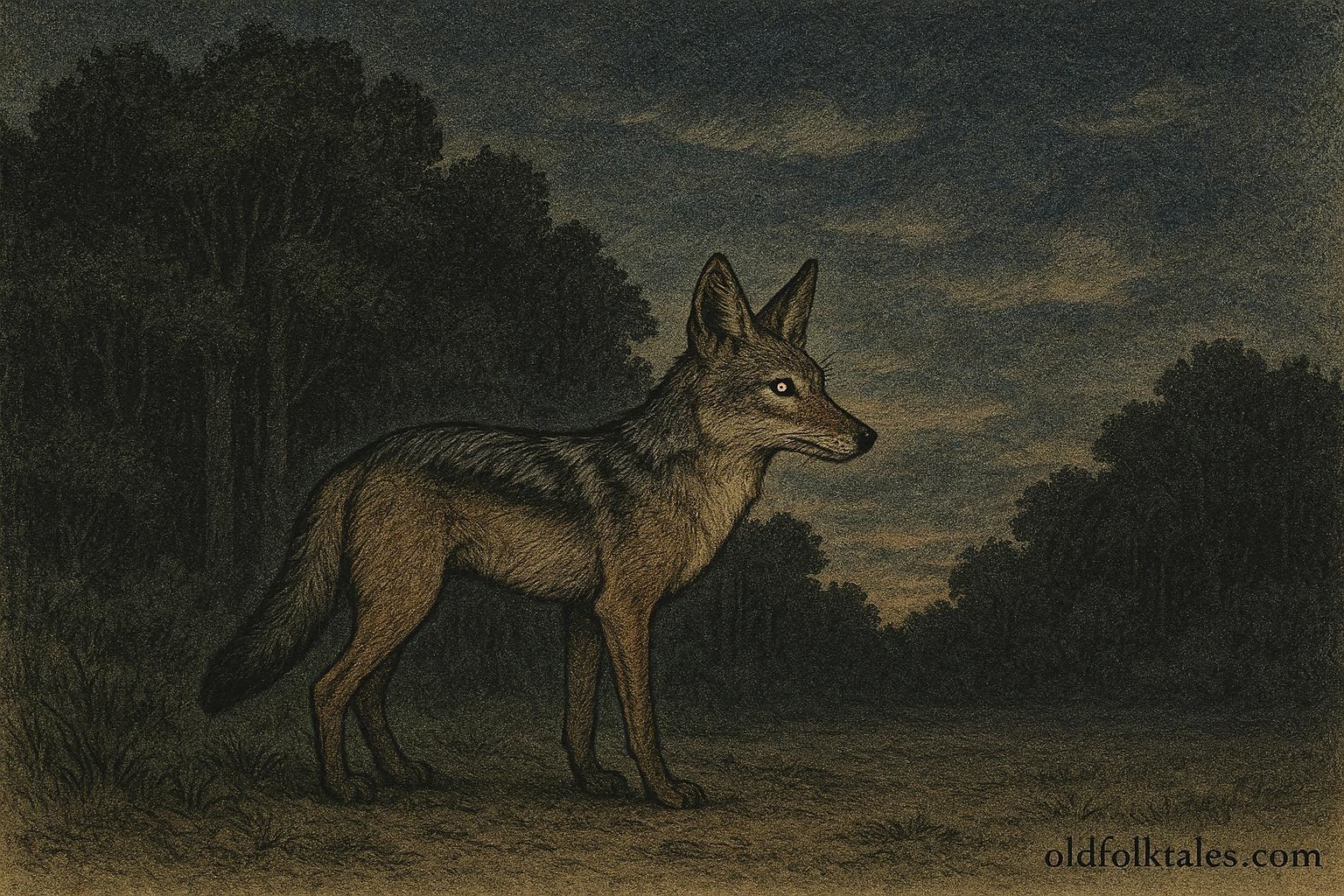
In a time before the world settled into the rhythms known today, animals lived much as humans did, together in communities where laughter, conversation, and work were shared. The jackal, slender and clever, was no exception. In those early days, the jackal had friends, neighbors, and companions, moving through forests and savannas in harmony. Yet unlike the lion, the elephant, or the monkey, the jackal had a sharp tongue and a restless mind. It loved to boast, interrupt others, and speak its opinions at every turn.
Each morning, as the sun painted the sky in gold and amber, the animals would gather to discuss the day’s tasks—where to find food, how to avoid danger, and ways to keep their young safe. The jackal would arrive promptly, tail high and eyes bright, and begin commenting on everyone else’s plans. “That path is too slow,” it would say to the tortoise. “Your call is foolish,” it would bark at the crow. While some animals chuckled at the jackal’s wit, many were weary of its constant criticism.
One day, the elders called a meeting to settle an important matter. A drought had begun, and food and water were growing scarce. The animals needed unity and cooperation more than ever. Each group shared ideas for conserving resources and working together. The jackal, however, interrupted every suggestion with sarcasm. It criticized the elephant’s plan to dig a well, mocked the lion’s hunting schedule, and scoffed at the birds’ proposal to scout for berries.
Explore ancient Native American creation myths and the symbolic tales that shaped America’s belief systems
“Why must we listen to such foolish plans?” the jackal demanded. “Follow me, and I will show you the fastest, easiest way.” Many of the younger animals, impressed by its confidence, followed eagerly. But as they ventured toward the water, they found nothing but cracked earth and heat-warped stones. The jackal had led them astray, not out of malice, but because it could not bear to admit that it did not know the best path.
When the group returned to the assembly, the elders were gravely disappointed. The jackal tried to defend itself, nodding and shrugging as if its gestures alone could excuse its recklessness. “I meant well,” it said, “I only wanted to help.” But the animals had grown tired of its arrogance and disregard for others’ wisdom. The owl, keeper of knowledge, spoke softly yet firmly: “Jackal, your sharp mind is a gift, but your selfishness and inability to listen have caused harm. You must learn humility if you wish to remain among us.”
The jackal, proud and unwilling to accept the rebuke, left the gathering in a huff. It wandered the forests alone, feeling both indignation and confusion. It did not understand why the others had rejected it. Over time, however, the jackal began to notice the consequences of its behavior. Without friends to guide it or companions to warn it, it often missed sources of water or hidden dangers in the woods. Solitude brought both reflection and regret.
As the seasons passed, the jackal adapted to its new life. It became clever in ways that required self-reliance—sneaking quietly to catch prey, listening carefully to the wind for danger, and observing the behaviors of other animals from a distance. Yet despite its growing skills, it remained distant from the communities it had once disrupted. Its sharp tongue and independent spirit became its defining traits, and the other animals accepted that the jackal would always walk a separate path.
Storytellers across the forests began to explain the jackal’s behavior to the young. “See the jackal,” they would say, “and remember that cleverness without kindness or respect leads to loneliness. Words have power, and listening is as important as speaking.” The jackal, once eager for approval and attention, became a symbol of caution. It taught that intelligence alone could not earn trust, and that community required humility, cooperation, and compassion.
Even today, the jackal remains an outcast in the tales told across villages and forests. It prowls alone at twilight, its keen eyes scanning for opportunities, its sharp ears catching every rustle. Yet the stories emphasize both admiration and warning: the jackal’s cunning is remarkable, but its isolation serves as a reminder that brilliance without empathy often comes at a cost. Young animals and human listeners alike hear the tale and remember that social bonds matter, and that recklessness and arrogance, no matter how clever, can shape a lifetime of solitude.
Thus, the jackal’s solitary life, its cleverness and caution, are remembered not merely as traits of the animal, but as lessons for all. In the balance of forest life, each creature’s choices affect the whole. The jackal became a creature of ingenuity and independence, yes, but also of reflection and humility, a living story passed down across generations.
Click to read all American Folktales — timeless oral stories passed through generations across the United States.
Moral Lesson
Cleverness without humility or consideration for others can lead to isolation. Listening, cooperation, and respect are essential for community harmony.
Knowledge Check
- What kind of animal is the story about?
A jackal. - Why was the jackal initially part of the animal community?
It lived among other animals and participated in group activities. - What flaw led to the jackal becoming an outcast?
Its arrogance, selfishness, and refusal to listen to others. - How did the jackal survive after leaving the community?
By relying on its wits, observing others, and being self-reliant. - What lesson did the elders want the jackal to learn?
That intelligence must be paired with humility and cooperation. - How is the jackal remembered in folklore?
As a clever but solitary creature whose behavior teaches lessons about community and respect.
Source
Adapted from African American folklore narratives.
Cultural Origin
African American and Gullah traditions