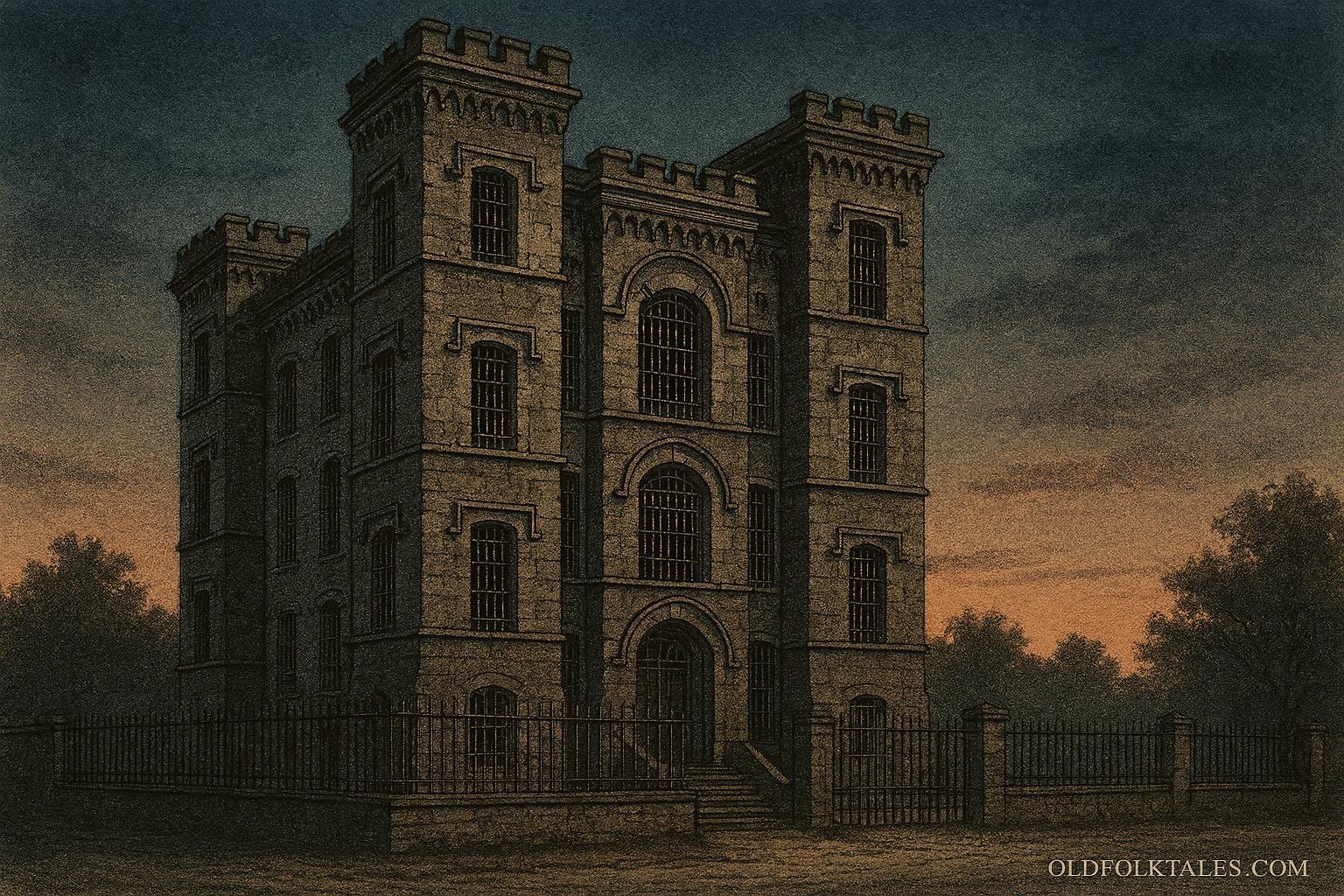
In the historic district of Charleston stands a towering structure of stone and iron that has watched over the city since the early nineteenth century. Known as the Old Charleston Jail, the building once housed pirates, prisoners of war, and those accused of violent crimes. Its Gothic arches and narrow windows cast long shadows across the courtyard, creating an atmosphere that has inspired generations of ghost stories.
Constructed in 1802 and expanded in 1855, the jail was designed to hold some of the most dangerous criminals in the region. At the time, Charleston was a bustling port city, central to trade and politics in the American South. The jail’s thick walls were meant to keep prisoners contained, but they also trapped the heat, humidity, and despair of those confined within. Over time, these physical conditions became woven into local folklore.
During the Civil War, Charleston became a focal point of conflict. Prisoners from both Union and Confederate forces were detained within the jail’s walls. Overcrowding became common, and sanitary conditions deteriorated. Stories tell of soldiers staring through iron bars at a city divided by war, uncertain if they would ever return home. These wartime memories later became central to tales of restless spirits lingering in the corridors.
Explore the heart of America’s storytelling — from tall tales and tricksters to fireside family legends.
The jail also housed infamous figures, including pirates and individuals convicted of violent crimes. Among the most frequently mentioned is Lavinia Fisher, often described in local legend as one of America’s first female serial killers. Whether exaggerated or not, her story has become inseparable from the jail’s haunted reputation. Folklore claims that her presence can still be felt in certain cells.
Architecturally, the Old Charleston Jail resembles a medieval fortress more than a civic building. Its high ceilings, iron staircases, and long, dimly lit hallways amplify every sound. A single footstep echoes like a drumbeat. The wind whistles through cracks in the stone. Visitors often describe the building as heavy with history, as if the walls themselves hold memories.
By the late nineteenth century, the jail was outdated and fell into disrepair. Eventually, it closed, leaving behind empty cells and rusting bars. For decades, the structure stood largely abandoned. During this period, neighborhood stories began to flourish. Residents claimed to see faint lights in upper windows or hear unexplained noises after dark.
In the twentieth century, as Charleston embraced heritage tourism, interest in the jail’s past resurfaced. Guided tours introduced visitors to its layered history pirates, Civil War prisoners, and notorious criminals. Alongside documented history came reports of unexplained experiences. Some visitors described sudden temperature drops in confined spaces. Others reported hearing whispers when no one else was present.
These experiences are often interpreted through the lens of Southern Gothic storytelling. In Southern culture, history is rarely distant; it lingers in architecture, family memory, and public spaces. The Old Charleston Jail became a symbol of unresolved chapters in the region’s past. Its ghost stories reflect broader themes of justice, suffering, and remembrance.
One frequently repeated tale involves phantom footsteps pacing in empty cells. According to guides, guards once made nightly rounds, lanterns in hand, checking iron locks. Modern visitors claim to hear similar pacing long after closing hours. Whether imagination or acoustics, such experiences reinforce the building’s mysterious aura.
Another legend centers on shadowy figures glimpsed at the ends of hallways. In dim light, the iron bars create patterns that distort perception. Yet for those who believe, these shapes represent former inmates who never left. Folklore often suggests that intense emotion like fear, anger, sorrow can imprint itself upon a place.
Historians emphasize that jails in the nineteenth century were harsh environments. Disease spread easily. Medical care was minimal. Punishments were severe. Understanding this historical reality adds depth to the ghost stories. The reported hauntings may be symbolic expressions of collective memory rather than literal spirits.
Charleston itself plays a role in sustaining the legend. As one of the oldest cities in the American South, it embraces both pride and reflection regarding its history. Cobblestone streets, preserved mansions, and historic churches create an atmosphere where the past feels close. In such a setting, a towering old jail easily becomes the centerpiece of supernatural tales.
Cultural scholars note that haunted jail stories often emerge from places of confinement and injustice. The Old Charleston Jail fits this pattern. Its ghost legends highlight unresolved tensions from wartime imprisonment and harsh penal practices. Through storytelling, communities process difficult histories in ways that are dramatic yet meaningful.
Today, the Old Charleston Jail stands restored but still imposing. Tours explore documented events alongside local legends. Visitors move cautiously through narrow staircases and stone corridors, aware of the stories attached to each cell. Some come seeking history; others come seeking mystery.
Whether one believes in ghosts or not, the jail undeniably carries emotional weight. Its architecture reflects a time when justice was severe and war reshaped communities. The stories told within its walls preserve memory in a way that textbooks cannot. They remind listeners that history leaves impressions, both visible and invisible.
Ultimately, the legend of the Old Charleston Jail endures because it speaks to universal themes. Confinement, justice, war, and human suffering are powerful experiences. When tied to a physical structure that still stands, those themes take on vivid form. Through folklore, the jail becomes more than stone and iron, it becomes a storyteller of the past.
Click to explore all American Ghost Stories — haunting legends of spirits, lost souls, and mysterious places across the U.S.
Moral Lesson
History should be remembered with honesty and reflection. Places of confinement remind us of the importance of justice, compassion, and humane treatment for all.
Knowledge Check
- When was the Old Charleston Jail originally constructed?
1802 - What major war influenced its later ghost legends?
The American Civil War - What type of building design does the jail resemble?
A medieval fortress with Gothic features - Which infamous figure is often connected to its legend?
Lavinia Fisher - What themes define its ghost stories?
Confinement, war memory, justice - Why do historians say ghost stories form around such places?
They reflect collective memory and unresolved history
Source
Adapted from South Carolina Historical Society archives; College of Charleston Special Collections
Cultural Origin
Southern Civil War urban folklore