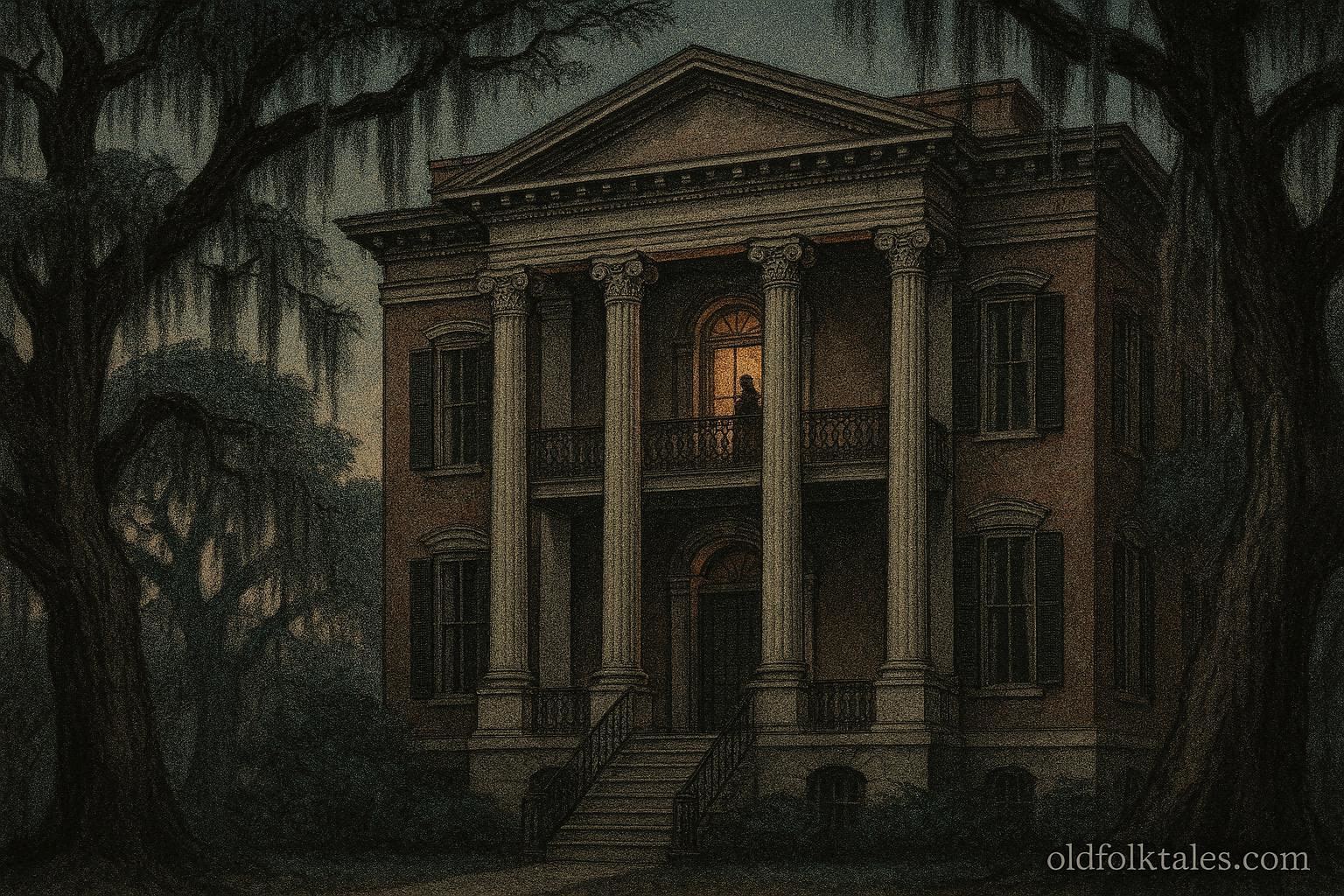
Some homes are admired for their beauty. Others are remembered for the sorrow that unfolded within their walls. In the historic district of Savannah stands the Sorrel-Weed House, a grand Greek Revival mansion that has become one of the most discussed haunted residences in the American South. Beneath its elegant balconies and towering columns lies a story steeped in grief, betrayal, and Southern Gothic legend.
Built in the 1840s by wealthy merchant Francis Sorrel, the house was designed to reflect prosperity and refinement. Its ornate ironwork, spacious verandas, and carefully crafted interiors symbolized success during Savannah’s cotton-driven economic boom. Yet behind this polished exterior, tragedy soon marked the household.
According to historical accounts, Sorrel’s first wife, Matilda, died under tragic circumstances. Family records indicate that she fell or possibly jumped from an upper balcony. The details remain debated among historians, but her death became the first shadow cast upon the mansion. In later retellings, Matilda’s spirit is said to wander the halls, particularly near the balcony where she met her fate.
Explore Native American beings, swamp creatures, and modern cryptid sightingsacross the country.
Complicating the narrative is the story of Molly, an enslaved woman who lived on the property. Folklore suggests that she was involved in a relationship with Sorrel and that this alleged betrayal may have contributed to Matilda’s despair. Historical documentation about Molly’s life is limited, yet her presence in local storytelling has become central to the house’s haunted identity. Some claim that her footsteps can still be heard in the carriage house.
Savannah’s climate enhances the atmosphere of the mansion. Humid air drifts through tall windows, and Spanish moss sways in nearby oak trees. At night, shadows stretch across high ceilings and antique furnishings. The environment itself seems to breathe history. Visitors often report a heavy feeling upon entering, as though stepping into a space saturated with memory.
The Sorrel-Weed House embodies characteristics of Southern Gothic literature. This genre often explores themes of decay, moral conflict, and hidden family secrets set against elegant backdrops. The mansion’s grandeur contrasted with rumored betrayal mirrors this literary tradition. Over time, fiction and history intertwined, reinforcing its mysterious aura.
Reports of unexplained activity began circulating in the twentieth century. Guests and staff described doors opening without drafts, lights flickering, and faint voices in otherwise empty rooms. Some claimed to see an apparition dressed in period clothing near the staircase. Others reported sensing a sudden chill on warm evenings.
The carriage house, once home to enslaved workers and servants, is frequently mentioned in paranormal accounts. Visitors describe hearing footsteps on the wooden stairs or feeling an unseen presence nearby. Whether these sensations stem from structural acoustics or emotional suggestion, they have become integral to tour narratives.
Scholars examining Southern haunted mansions note that such sites often reflect unresolved historical tensions. The Sorrel-Weed House stands at the intersection of wealth built upon slavery and personal tragedy within the family. Ghost stories may serve as symbolic acknowledgments of those painful chapters.
Savannah itself is known for embracing its haunted reputation. Cobblestone streets, preserved squares, and centuries-old architecture create a setting where legends flourish. The Sorrel-Weed House benefits from this cultural environment. Storytelling is part of the city’s tourism and identity, blending historical education with atmospheric intrigue.
Despite its haunted fame, the house remains an architectural treasure. Its Greek Revival style features symmetrical design, tall columns, and ornate plasterwork. Restoration efforts have preserved much of its nineteenth-century character. Visitors touring the home learn about Savannah’s economic history alongside the family’s personal narrative.
The story of Matilda’s death continues to capture imagination. Some believe she appears at windows overlooking Madison Square. Others suggest that unexplained disturbances occur in rooms associated with her life. Whether fact or embellishment, the tragedy forms the emotional core of the mansion’s legend.
Molly’s story, though less documented, resonates deeply in modern interpretations. Her rumored presence invites reflection on the realities of enslavement and hidden relationships within elite households. In this way, the ghost narrative broadens beyond personal sorrow to encompass social injustice.
Paranormal investigators have conducted studies within the house, recording temperature shifts and unexplained sounds. None have produced definitive scientific proof of haunting, yet anecdotal experiences persist. Belief thrives on repetition. Each visitor who leaves with a story contributes to the legend’s endurance.
What makes the Sorrel-Weed House compelling is not simply the possibility of ghosts, but the layers of narrative embedded in its walls. It represents prosperity and pain, elegance and exploitation. The tension between these elements gives the mansion its Southern Gothic identity.
In the quiet hours after sunset, when lantern light glows against brick walls and distant footsteps echo along cobblestone streets, it is easy to imagine figures moving through upper hallways. The house becomes a stage where past and present intersect. Even skeptics often admit to feeling the weight of history within its rooms.
Ultimately, the legend of the Sorrel-Weed House endures because it captures universal themes. Grief, betrayal, ambition, and memory resonate across generations. The mansion stands as a reminder that behind every grand façade lies a complex human story. Whether spirits truly linger or not, the emotional imprint of the past remains unmistakable.
Explore Native American beings, swamp creatures, and modern cryptid sightingsacross the country.
Moral Lesson
Hidden truths and unresolved grief can shape how history is remembered. Confronting the past honestly fosters understanding and healing.
Knowledge Check
- In which city is the Sorrel-Weed House located?
Savannah, Georgia - What architectural style is the mansion known for?
Greek Revival - What tragedy is central to its legend?
The death of Matilda Sorrel - What literary style reflects the house’s atmosphere?
Southern Gothic - Why do scholars connect its ghost stories to history?
They symbolize unresolved grief and social tensions - What broader themes define its legend?
Grief, betrayal, Southern Gothic atmosphere
Source
Adapted from Georgia Historical Society archives; University of Georgia Special Collections
Cultural Origin
Savannah Southern Gothic folklore