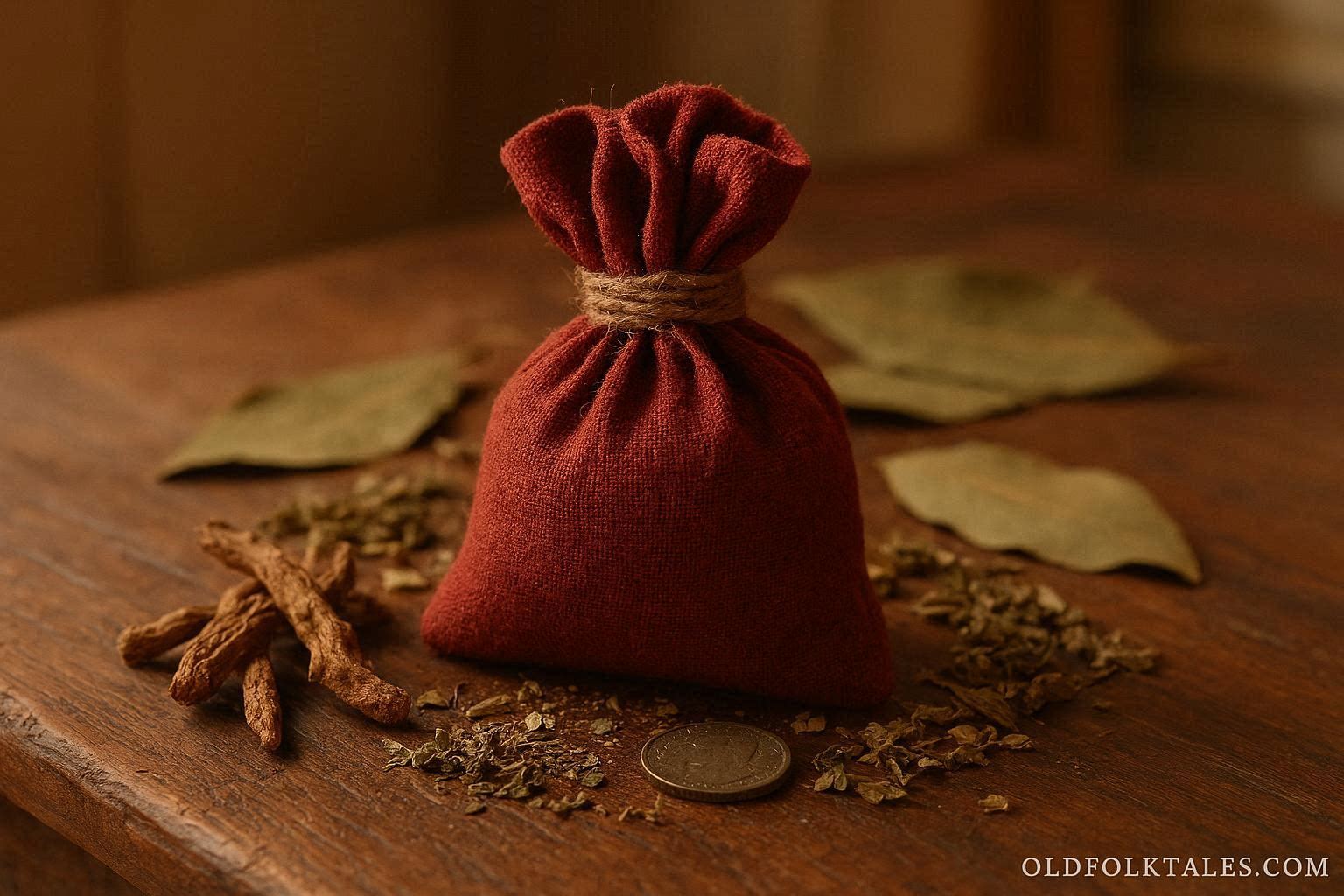
The humid air of southern Louisiana hung thick with the scent of moss and river water. In the early morning light, cypress trees stood tall along the bayou, their roots twisting deep into dark soil. The sound of insects hummed softly as the sun rose over wooden homes built on raised foundations. Within one small Creole household, an elderly woman named Maman Celeste sat at her kitchen table preparing something sacred.
Before her lay small squares of red and white cloth. Beside them rested carefully chosen herbs, roots, and tiny symbolic objects wrapped in paper. She handled each item gently, whispering words that blended memory, faith, and ancestral wisdom. Today she was making a gris-gris protection bag for her grandson, Isaiah.
In Louisiana Creole communities, gris-gris bags have long served as personal talismans. These small cloth bundles are filled with meaningful ingredients and carried on the body for protection, healing, luck, or spiritual strength. The tradition carries roots from West and Central African spiritual systems, blended with local practices shaped by generations of survival in the American South.
Explore the heart of America’s storytelling — from tall tales and tricksters to fireside family legends.
Maman Celeste remembered how her own grandmother had taught her the art. She explained that the power of a gris-gris bag does not come only from the objects placed inside it. It comes from intention, prayer, and ancestral connection. Each ingredient must be selected with care and purpose.
For protection, she chose dried basil for purification, angelica root for strength, and a small piece of bay leaf to ward off negativity. She added a tiny coin for prosperity and a written scripture verse folded neatly into the center. The combination of African diasporic spirituality and Christian influence reflected the blended traditions that developed over centuries in Louisiana.
Isaiah had recently begun working on river boats, traveling long distances along the Mississippi River. His mother worried about storms, accidents, and unseen dangers. Maman Celeste assured her that while no object replaces caution and wisdom, spiritual preparation strengthens the heart and spirit.
As she assembled the bag, she spoke softly. Her words were part prayer, part ancestral remembrance. She called upon protection, guidance, and clarity. The cloth was folded carefully around the herbs and tied with red thread. The knot was firm and deliberate. The bag was small enough to fit into a pocket or hang beneath clothing.
When Isaiah arrived that evening, she placed the gris-gris bag into his hands. She explained each ingredient and its purpose. She reminded him that the bag must be treated with respect. It should not be opened carelessly. It should be carried close to the body, where its presence could serve as a reminder of family protection and spiritual awareness.
Throughout Louisiana’s history, gris-gris traditions served more than mystical purposes. They provided psychological strength during periods of hardship, enslavement, segregation, and economic struggle. For African descended communities, personal talismans became quiet acts of resilience. Carrying a gris-gris bag symbolized agency in environments where control was often limited.
In rural parishes and urban neighborhoods alike, rootworkers became respected figures. They understood local plants, symbolic objects, and the careful blending of intention and ritual. Some specialized in healing, others in protection or attracting good fortune. Their work was not always publicly discussed, but it remained deeply woven into cultural identity.
Isaiah slipped the bag into his shirt pocket before departing at dawn. As the boat moved slowly along the river, he felt the small bundle resting against his chest. It reminded him of home, of his grandmother’s steady hands, and of the long lineage of strength behind him. When storms gathered on the horizon, he touched the bag quietly, centering himself in calm focus rather than fear.
The gris-gris bag did not promise immunity from hardship. Instead, it represented preparedness of the spirit. It encouraged mindfulness, faith, and courage. The belief that protection surrounded him allowed Isaiah to work with greater confidence and awareness.
Over time, Louisiana’s gris-gris traditions became documented in folklore programs and museum collections. Scholars and cultural historians note the blending of African spiritual systems, Indigenous plant knowledge, and European influences that shaped Southern rootwork. Yet within families, the tradition remains personal and intimate, passed from elder to youth in kitchens and living rooms rather than classrooms.
Years later, Isaiah would teach his own children about the small cloth bag he once carried. He would explain that protection begins with respect for ancestors, understanding of nature, and faith in something greater than oneself. The practice would continue, adapted to new times but rooted in old wisdom.
In the quiet Louisiana evening, as cicadas sang and fireflies flickered near the bayou, Maman Celeste prepared another square of cloth. The work was steady and sacred. Each knot tied carried history. Each herb placed inside connected past and present. And in every small bundle rested the enduring spirit of survival magic shaped by generations of resilience.
Click to read all American Traditions & Beliefs — the living folklore of daily life, customs, and superstitions.
Moral Lesson
Spiritual strength, ancestral memory, and intentional action can provide courage and resilience in uncertain times.
Knowledge Check
- What is a gris-gris bag used for?
It is used for protection, healing, luck, or spiritual strength - What items are placed inside a protection bag?
Herbs, roots, symbolic objects, coins, and written prayers - Why are intention and prayer important in making a gris-gris bag?
They give spiritual meaning and focus to the items inside - How did gris-gris traditions support communities historically?
They provided psychological strength and resilience during hardship - Who are rootworkers?
They are practitioners who understand herbs, rituals, and spiritual practices - Why must a gris-gris bag be treated with respect?
It represents sacred intention and ancestral connection
Source
Adapted from Smithsonian National Museum of African American History and Culture; Louisiana Folklife Program
Cultural Origin
Louisiana Creole communities