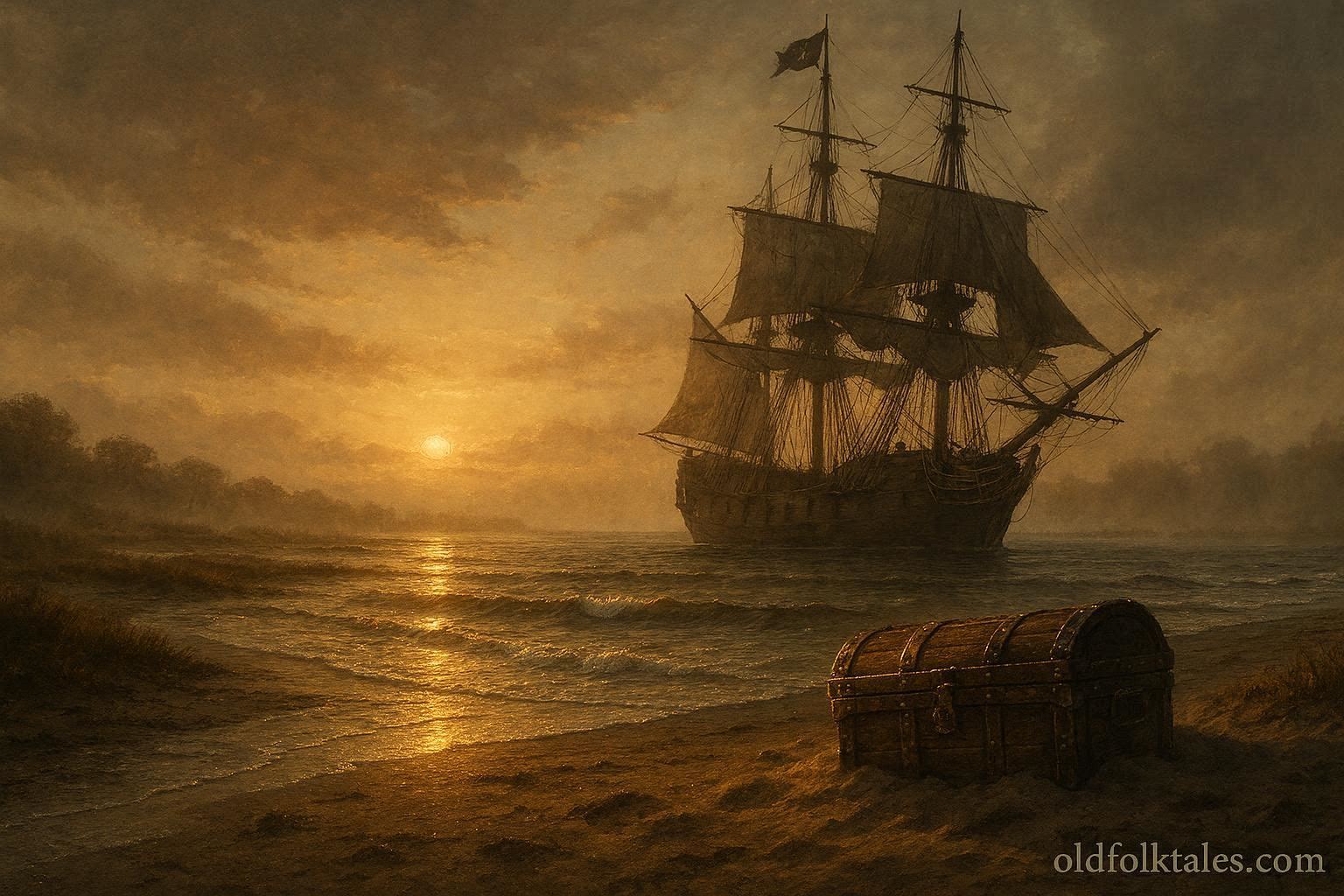
The winds off the North Carolina coast carried the salty tang of the Atlantic and whispered secrets of a time when pirates ruled the waves. Among them, Edward Teach, better known as Blackbeard, became the most feared. His ship, the Queen Anne’s Revenge, loomed like a phantom on the horizon, black sails snapping in the wind. Tales of his ferocity traveled ahead of him. Sailors spoke of his long black beard braided with slow-burning fuses, smoke curling around his face as if he were a living demon. Ships surrendered before any fight began, terrified of what might happen if they resisted.
By the summer of 1718, Blackbeard’s plunder had grown vast. Gold, silver, jewels, and precious trade goods filled his holds. Yet the cunning pirate was not content merely to possess wealth; he wanted to hide it. Stories passed down through the coastal settlements spoke of secret stashes buried in coves, marshes, and hidden sand dunes along the Outer Banks. Some said he carried maps, carefully marked in cryptic symbols, indicating exactly where the treasure lay. Others claimed he scattered clues among local landmarks, daring anyone bold enough to follow in his footsteps.
Blackbeard’s life ended violently in November 1718. Lieutenant Robert Maynard of the Royal Navy ambushed him off Ocracoke Island. The battle was fierce, and Blackbeard fell, struck by musket fire and sword blows. His death was gruesome, but the stories of his hidden treasure lived on. Locals whispered that the pirate, ever clever, had anticipated his end and concealed his fortune in a place no enemy could reach.
Explore the heart of America’s storytelling — from tall tales and tricksters to fireside family legends.
Almost immediately after his death, treasure hunters arrived on the coast. Some waded into the tidal creeks, searching for glints of gold among the reeds. Others dug into dunes under the moonlight, guided by rumors and fragments of maps. In those days, the Outer Banks were a shifting labyrinth of sand and marsh, the perfect landscape for a secret pirate hoard. Storms could erase a path, move a sandbank, or cover a chest with new layers of earth. Each failed attempt at recovery only added to the mystique.
By the nineteenth century, Blackbeard’s legend had become ingrained in local culture. Stories of ghostly apparitions figures pacing the beach at dusk, or strange lights dancing across the waves, spread alongside tales of hidden chests. Residents told children that the pirate’s spirit still guarded his fortune, punishing the greedy or unwary. Some claimed to have heard eerie laughter over the water at night, a spectral reminder that Blackbeard had outwitted death and perhaps even time itself.
Treasure hunters and historians debated whether the hoard ever truly existed. Skeptics argued that the gold may have been spent or lost at sea. Yet the legend endured because it combined history, geography, and imagination. The Outer Banks, with their ever-shifting sands, secluded coves, and storm-swept shores, provided a stage that made the story believable. Even modern visitors feel the suspense when walking along deserted beaches, imagining a hidden chest beneath their feet.
In the twenty-first century, Blackbeard’s lost treasure continues to inspire adventurers, writers, and tourists. Museums display artifacts from his era, telling the story of a pirate whose cunning and ferocity made him larger than life. Tours along the coast recount the legend, combining historical fact with the thrill of mystery. The story of Blackbeard reminds people that sometimes the greatest treasures are not coins or jewels, but the courage, curiosity, and imagination that drive humans to seek the unknown.
Even now, when fog rolls over the Atlantic in the early morning, it is easy to picture the pirate’s ghost pacing the sands, keeping watch over the treasure he may have hidden centuries ago. The legend endures because it is not just about wealth, it is about daring, adventure, and the enduring power of stories to captivate hearts across generations.
Click now to read all American Legends — heroic tales where truth and imagination meet, defining the American spirit.
Moral Lesson
The legend teaches that wealth gained or sought may vanish, but courage, ingenuity, and the stories we create endure. True treasures often lie in adventure, imagination, and perseverance rather than gold itself.
Knowledge Check
- Who was Blackbeard and what was his real name?
Edward Teach, a notorious pirate active along the Atlantic coast in the early 1700s. - When and where did Blackbeard die?
Off Ocracoke Island, North Carolina, in November 1718. - What did rumors claim Blackbeard left behind?
Buried treasure including gold, silver, jewels, and trade goods. - Why were the Outer Banks ideal for hiding treasure?
Shifting sands, barrier islands, tidal creeks, and isolated coves made detection difficult. - How did folklore enhance the legend?
Stories of ghostly guardians, mysterious lights, and traps added intrigue and excitement. - What broader lesson does the legend convey?
That imagination, courage, and storytelling can outlast material wealth.
Source
Adapted from North Carolina Maritime Museum archives and colonial maritime records
Cultural Origin
North Carolina coast, 1718, Colonial America