Across the wooded hills, tidal marshes, and winding back roads of Maryland and Virginia, folklore has preserved many strange and unsettling tales. Among them are stories of mysterious creatures said to inhabit the deep forests and shadowed waterways of the region. Over time, two separate legends gradually blended into one dramatic narrative — a story of territorial rivalry between a serpentine river being known as the Altamaha-ha and a wolf like forest creature called the Dwayyo.
The Altamaha-ha is most famously associated with southeastern river lore, where it is described as a long, reptilian creature dwelling in dark waters. In adapted Mid Atlantic storytelling traditions, the creature takes on similar characteristics. Witnesses describe a ridged back cutting through calm river surfaces, a serpentine body gliding silently beneath murky currents, and occasionally a scaled head rising just long enough to be seen before disappearing again. Fishermen along isolated riverbanks have told stories of unexplained wakes trailing behind their boats, nets tugged without visible cause, and sudden disturbances in otherwise still water.
Unlike ordinary wildlife, the Altamaha-ha in these blended regional tales is said to move with awareness. It appears only at dusk or during mist heavy mornings. Its presence is often marked by an unnatural quiet, as birds cease their calls and insects fall silent. In some versions of the story, the creature protects its stretch of river fiercely, surfacing when strangers linger too long near certain bends or sandbars.
Explore how American legends shaped the nation — from frontier heroes to Revolutionary War tales.
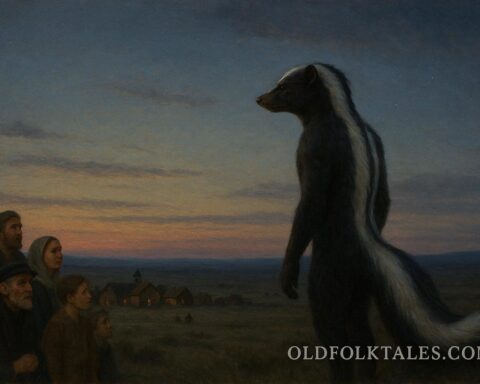
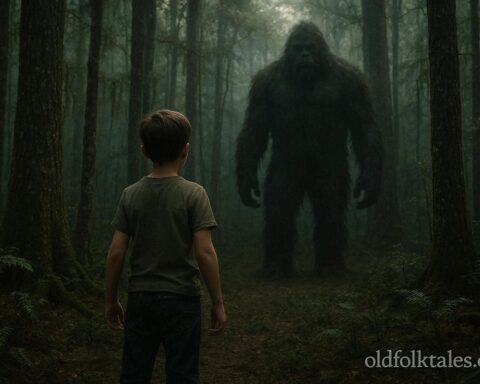
In contrast, the Dwayyo belongs more firmly to Maryland folklore. Described as a towering wolf like humanoid, the Dwayyo is said to walk upright on powerful hind legs while retaining the head and features of a wolf. Its eyes are often described as glowing faintly in low light. Hunters once claimed to see it standing at the edge of tree lines, watching silently before retreating deeper into the woods. Unlike a typical animal, the Dwayyo is portrayed as intelligent and deliberate, choosing when to reveal itself and when to vanish.
Some accounts depict the Dwayyo as a cursed being, perhaps once human. Others suggest it is an ancient forest guardian disturbed by settlement and deforestation. Farmers in isolated communities told stories of hearing heavy footsteps around barns at night, followed by distant howls unlike any known wolf. Travelers reported glimpsing a tall shadow crossing dirt roads just beyond lantern light.
As river towns and forest settlements shared their local legends, storytellers began weaving the two creatures into a shared mythic landscape. In this evolving narrative, the Altamaha-ha claimed dominion over waterways, marshes, and tidal inlets, while the Dwayyo ruled dense forests and remote mountain paths. Where river met woodland, tension brewed.
One of the most frequently retold blended legends describes a misty evening along a remote river bend bordered by thick forest. A small group of hunters had camped near the water’s edge after a long day tracking deer. As twilight deepened, they noticed the river surface begin to ripple despite the absence of wind. Moments later, a long dark shape rose just enough to reveal a ridged back before sinking again. The men stared in stunned silence.
Before they could speak, a low growl echoed from the tree line behind them.
Turning toward the sound, they reportedly saw a tall figure standing partially concealed among the trunks. Its posture was upright. Its outline unmistakably lupine. For several tense seconds, the forest and river seemed to hold their breath. Then, according to the story, the water erupted in a violent splash while the forest figure emitted a chilling howl. The hunters fled, abandoning their camp, later insisting that the two creatures had confronted one another at the boundary of their territories.
Though no physical evidence ever supported these claims, the story spread. In later retellings, the encounter grew more dramatic. Some versions describe the Dwayyo charging toward the riverbank while the Altamaha-ha thrashed violently in the shallows. Others claim eerie lights flickered across the water during the confrontation. Each generation added detail, reinforcing the idea of a supernatural rivalry between forest and river forces.
Folklorists examining these tales note that such blended legends often arise when communities merge traditions. The Mid Atlantic region, shaped by migration, trade, and cultural exchange, provided fertile ground for storytelling evolution. A water monster legend carried northward could easily merge with an existing forest creature narrative, creating a symbolic struggle between land and water.
Natural explanations also exist for elements of the stories. Large fish or floating logs might account for mysterious river sightings. Misidentified animals, especially in low light, could contribute to reports of upright wolf like figures. Human imagination, particularly in isolated rural settings, has always played a role in amplifying unexplained experiences.
Yet beyond literal belief, the Altamaha-ha versus Dwayyo legend reflects deeper themes. Rivers and forests have long represented powerful and sometimes opposing forces in human life. Rivers provide travel routes and sustenance but can flood and destroy. Forests offer shelter and resources yet conceal predators and dangers. By personifying these environments as rival creatures, storytellers gave form to the tension between two dominant landscapes.
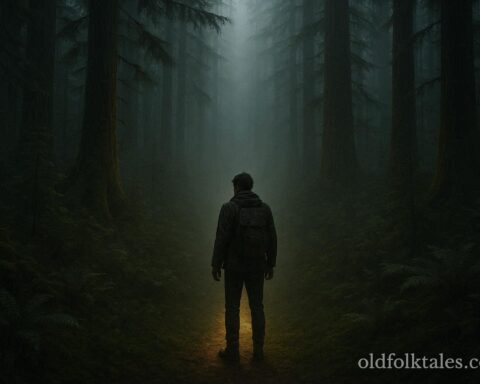
Today, the wooded river valleys of Maryland and Virginia remain peaceful for most visitors. Canoes glide along calm waters. Hikers follow marked trails through tall trees. But occasionally, when mist gathers low over a quiet bend or when a distant howl echoes at dusk, local residents recall the old stories.
They speak of the serpent beneath the water and the wolf in the woods.
And of the place where their territories meet.
Whether interpreted as metaphor, folklore evolution, or cryptid mythology, the Altamaha-ha versus Dwayyo conflict legend endures as one of the Mid Atlantic’s most imaginative examples of inter cryptid storytelling. It reminds us that legends grow, adapt, and intertwine just as landscapes do.
Click to read all American Cryptids & Monsters — creatures of mystery and fear said to inhabit America’s wild landscapes.
Moral Lesson
Folklore teaches that nature holds many mysteries, and human imagination often reflects the landscapes we inhabit. Respect for both land and water encourages harmony rather than conflict.
Knowledge Check
- In which region is this blended legend primarily told?
It is associated with Maryland and Virginia in the Mid Atlantic region. - What type of creature is the Altamaha-ha described as?
It is described as a serpentine or reptilian river creature. - How is the Dwayyo commonly portrayed?
As a wolf like humanoid that can walk upright in forested areas. - What environment does each creature traditionally dominate in the legend?
The Altamaha-ha dominates waterways, while the Dwayyo rules the forests. - What natural explanations are sometimes suggested for sightings?
Large animals, environmental effects, and misidentification in low light. - What larger theme does the rivalry symbolize?
It symbolizes the tension and balance between forest and river landscapes.
Source
Adapted from Mid Atlantic folklore collections and regional historical society archives
Cultural Origin
Maryland and Virginia regional cryptid folklore