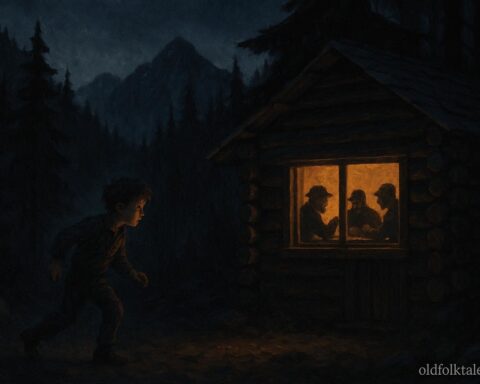
The desolate expanse of California’s Death Valley stretches endlessly under a blazing sun, its vast salt flats and jagged mountains creating a landscape both mesmerizing and unforgiving. Travelers who venture here often remark on the eerie stillness, a silence so deep that even the occasional whisper of wind seems loud. Yet within this barren beauty lies the stories of men who dared to seek fortune amid harshness, and none are more haunting than that of the Phantom Miner, a specter said to wander the abandoned gold mines that dot the desert.
During the mid-nineteenth century, California became the epicenter of a fevered gold rush. Word of abundant deposits spread across the United States and beyond, drawing thousands into the unforgiving terrain of the West. Among these fortune seekers were prospectors who braved the desolation of Death Valley, drawn by rumors of hidden veins of gold deep in its canyons and hills. These miners faced scorching daytime heat, freezing nights, and near-constant scarcity of water and food. Every step carried the risk of injury, illness, or sudden death, yet the lure of wealth proved irresistible.
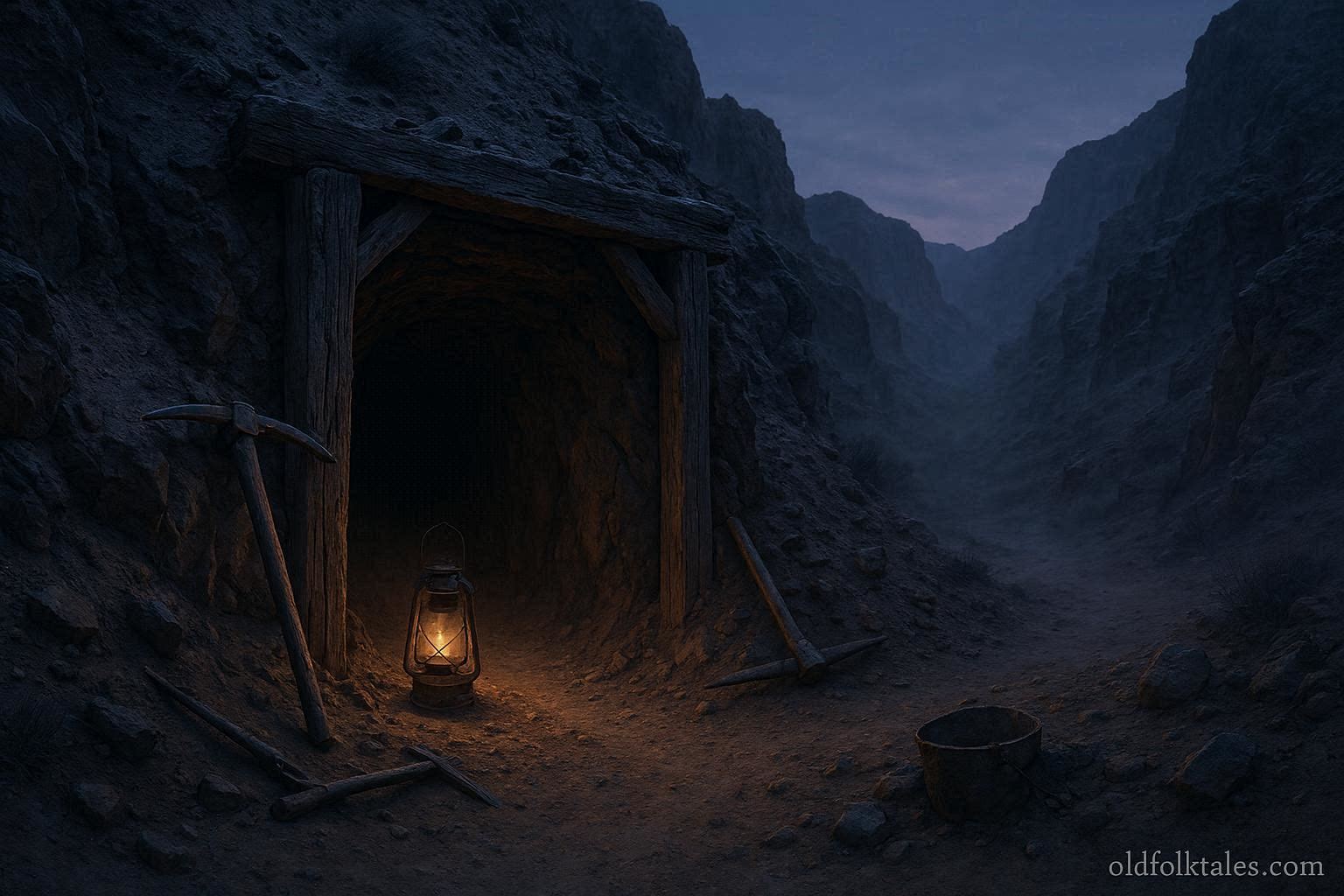
The legend of the Phantom Miner originates from one such prospector, whose name has been lost to time. He was a solitary figure, working tirelessly in a narrow canyon where gold was rumored to glimmer beneath the rock. Unlike others who formed small camps and shared resources, he trusted only himself. Witnesses from neighboring mines recalled the sound of his pickaxe echoing long into the night. His lantern’s glow, faint but constant, could be seen swinging gently from the mine shaft even after dusk fell over the valley. His obsession with striking it rich seemed to grow daily, and he reportedly ignored warnings about unstable tunnels and dwindling supplies.
Encounter the strange and the unseen — from Bigfoot to regional monsters hiding in America’s forests.
One evening, the pickaxe fell silent. The lantern’s glow vanished. Concerned miners ventured toward the shaft, only to find the entrance partially caved in. Tools were scattered, and footprints abruptly ended as if swallowed by the desert itself. Some speculated that the miner had perished in a collapse. Others believed he had succumbed to heat exhaustion or dehydration. Yet, no body was ever recovered, and the absence of evidence only added to the aura of mystery.
Shortly after his disappearance, desert travelers began reporting strange phenomena. Campers and explorers spoke of hearing the unmistakable rhythm of a pickaxe striking rock in the dead of night. Others reported glimpses of a lantern’s glow emanating from tunnels thought long abandoned. The wind would carry whispers resembling human murmurs, only to vanish when approached. The stories grew richer with each telling, cementing the Phantom Miner as a symbol of the Gold Rush’s forgotten ambition and peril.
Folklorists note that such legends often emerge in regions defined by rapid boom-and-bust cycles. Mining towns rose almost overnight, thrived briefly, and disappeared just as quickly. The emotional imprint of sudden success and abrupt loss leaves fertile ground for ghost stories. The Phantom Miner embodies the tension between human greed and nature’s indifference. His ceaseless labor and solitary obsession serve as a cautionary tale about ambition untempered by wisdom.
Over the decades, the desert’s isolation has preserved the legend. Photographers and historians visiting Death Valley sometimes claim to feel an inexplicable presence near abandoned mine entrances. Hikers recount hearing distant sounds of metal striking rock, only to find empty shafts and untouched tools when they investigate. In some instances, dog companions react with sudden fear, growling or retreating without visible cause. The combination of auditory and visual anomalies strengthens belief in the miner’s ghostly persistence.
Environmental conditions in Death Valley amplify the eeriness. Shifting sands, creaking rock formations, and heat mirages create natural illusions that can make distant objects appear as moving figures. Yet for those steeped in the lore, such phenomena only enhance the spectral reputation of the Phantom Miner. The desert, with its extremes of temperature and light, becomes a stage on which memory, imagination, and legend intertwine.
The legend also underscores human vulnerability in extreme environments. The Phantom Miner is remembered not only for the gold he sought but for the risks he ignored. Miners who survived the period often recounted the story to warn newcomers: ambition must be balanced with caution, and survival depends on respect for both the land and fellow humans. His tale bridges history and myth, illustrating how personal tragedy can evolve into folklore.
As mining operations declined and towns were abandoned, the Phantom Miner became a permanent part of Death Valley’s narrative landscape. Writers, historians, and paranormal enthusiasts continue to document the legend, blending oral histories, historical accounts, and personal testimonies. Even in modern times, explorers report fleeting shadows, unexplained footsteps, and a distant lantern glow near deserted shafts, connecting them to a bygone era of dreams and dangers.
Ultimately, the story of the Phantom Miner persists because it embodies universal themes: the pursuit of wealth, the consequences of isolation, and the human fascination with the unknown. The miner’s presence is a reminder that the desert, though silent and lifeless to some, carries echoes of human endeavor, ambition, and loss. Visitors who wander Death Valley today may walk where miners once toiled, feeling a chill of history and mystery even in the blazing sun.
The Phantom Miner’s tale continues to inspire cautionary reflection. It reminds us that ambition without foresight can lead to ruin, and that the natural world holds power beyond human understanding. Through the legend, the Gold Rush era remains alive in the desert, its stories etched into canyons, tunnels, and the imagination of those who hear them.
Click to read all American Folktales — timeless oral stories passed through generations across the United States.
Moral Lesson
The Phantom Miner legend teaches that unchecked ambition and greed can lead to isolation and disaster. It underscores the importance of caution, cooperation, and respect for the natural environment. Pursuit of wealth or success should never come at the cost of safety, balance, or community.
Knowledge Check
- Where does the legend of the Phantom Miner take place?
Death Valley, California. - During which historical period did the story originate?
The California Gold Rush. - What signs are said to reveal the miner’s ghostly presence?
The sound of a pickaxe, a faint lantern glow, and unexplained movements near abandoned shafts. - What does the Phantom Miner symbolize?
The dangers of greed, obsession, and isolation. - Why do ghost stories develop in mining regions?
Due to harsh conditions, sudden town abandonment, and the emotional impact of lost fortune. - What historical reality does this legend reflect?
The extreme hazards and hardships faced by Western prospectors in the 19th century.
Source
Adapted from California State Library historical archives
Cultural Origin
Western mining communities of California