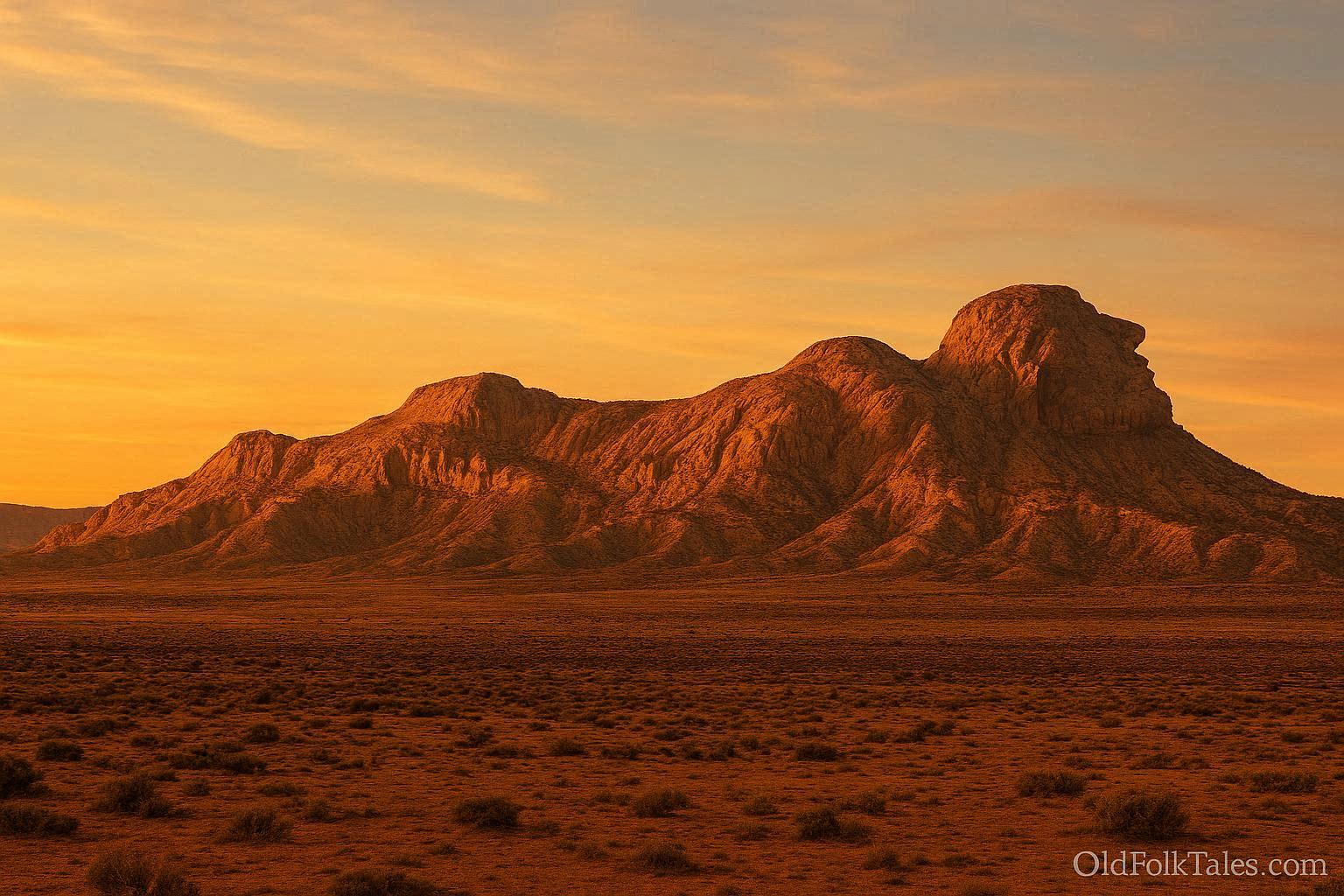
If In the southwestern corner of Colorado, near the borders of New Mexico, Arizona, and Utah, a striking mountain formation stretches across the horizon. From a distance, its ridges and plateaus resemble the outline of a giant figure lying peacefully on its back. The peaks form what appears to be a head, folded arms, a chest, and legs resting against the sky. To the Ute people, this is not merely a mountain range. It is the Sleeping Ute, a sacred warrior turned to stone, resting in patience and power.
The Ute Nation has lived in the Rocky Mountain region for centuries, long before the arrival of settlers. Their traditions are deeply tied to the land, rivers, forests, and mountains of what is now Colorado and Utah. In Indigenous worldview, the landscape itself carries spirit and memory. Mountains are not simply geological formations but living presences connected to ancestral stories and identity.
According to Ute oral tradition, the Sleeping Ute represents a powerful warrior chief who once protected his people. In one version of the story, a great conflict arose between the Ute and neighboring tribes or rival forces. The warrior, known for his strength and courage, led his people in defense of their homeland. Though victorious, he was wounded in battle.
Step into America’s cultural roots — from folk healing and weather lore to seasonal celebrations.
As he lay resting, the Creator transformed him into a mountain so that he could continue watching over the land forever. His head rests toward the east, his arms folded across his chest, and his body stretching westward across the desert plateau. From this vantage point, he remains an eternal guardian, protecting the Ute people and their homeland.
Another version of the legend tells that the warrior was placed into a deep spiritual sleep, not death. He rests beneath the sky, gathering strength. One day, when his people face great danger or when the balance of the world is threatened, he will awaken. The trembling of the earth will signal his rising, and the mountains themselves will shift as he stands once more.
For generations, Ute elders have pointed to the mountain’s silhouette to teach children about patience, resilience, and respect for sacred places. The formation becomes both story and classroom. It reminds listeners that strength does not always require movement. Sometimes true power lies in endurance and quiet watchfulness.
The legend of the Sleeping Ute is deeply connected to Indigenous understandings of land stewardship. Unlike perspectives that treat land primarily as property or resource, the Ute worldview recognizes the land as relative and teacher. The mountain’s presence reinforces the idea that ancestors remain connected to the physical world. The warrior’s transformation into stone symbolizes continuity between past and present.
When settlers arrived in the nineteenth century, many saw only a striking geological formation. Yet even non Indigenous travelers began referring to it as the Sleeping Ute because of its unmistakable human outline. Photographs taken from certain vantage points clearly reveal the profile of a reclining figure. The mountain became both a natural landmark and a cultural symbol.
Historians and anthropologists studying the region emphasize that such land based legends are essential to understanding Indigenous relationships to territory. The story does not attempt to explain the geological origins of the formation. Instead, it provides meaning. It situates the Ute people within a sacred geography where landscape and identity are inseparable.
Today, the Ute Mountain Ute Tribe continues to live near the mountain that bears this legend. Cultural preservation efforts include storytelling, language revitalization, and education about traditional beliefs. The Sleeping Ute remains a powerful symbol of heritage and continuity.
Visitors traveling through southwestern Colorado often pause to observe the mountain’s outline at sunrise or sunset. As shadows deepen, the figure becomes more pronounced. Some describe a sense of awe standing before what appears to be a giant guardian resting against the sky. While the legend speaks of possible awakening, its deeper message centers on patience. The warrior sleeps not out of weakness but out of enduring strength.
The legend also reflects broader Indigenous traditions across North America in which mountains, rivers, and rock formations embody ancestral figures. These stories root communities in place. They affirm that identity is not abstract but grounded in specific landscapes shaped by memory and sacred meaning.
The Sleeping Ute teaches that power can exist in stillness. The mountain’s unchanging silhouette across centuries mirrors the endurance of the Ute people themselves. Despite displacement, treaties, and historical challenges, the community remains connected to its ancestral homeland. The warrior’s presence symbolizes cultural survival.
Whether viewed through the lens of folklore, cultural history, or spiritual belief, the Sleeping Ute Mountain stands as more than a scenic formation. It is a narrative carved across the horizon, reminding all who see it that land carries story. The warrior rests, watching patiently, embodying strength, guardianship, and ancestral continuity beneath the vast Rocky Mountain sky.
Explore the heart of America’s storytelling — from tall tales and tricksters to fireside family legends.
Moral Lesson
True strength lies in patience, endurance, and respect for one’s heritage. Sacred landscapes remind communities of their responsibility to protect culture and land.
Knowledge Check
- Where is the Sleeping Ute Mountain located?
In southwestern Colorado. - What does the mountain formation resemble?
A warrior lying on his back in sleep. - Which Indigenous nation is connected to this legend?
The Ute Nation. - What does the warrior symbolize?
Ancestral protection and enduring strength. - What broader cultural idea does the legend reflect?
That land and identity are deeply connected in Indigenous traditions. - What does the story teach about patience?
That true power can exist in stillness and watchful endurance.
Source
Adapted from History Colorado archives
Cultural Origin
Ute Nation of the Rocky Mountain region