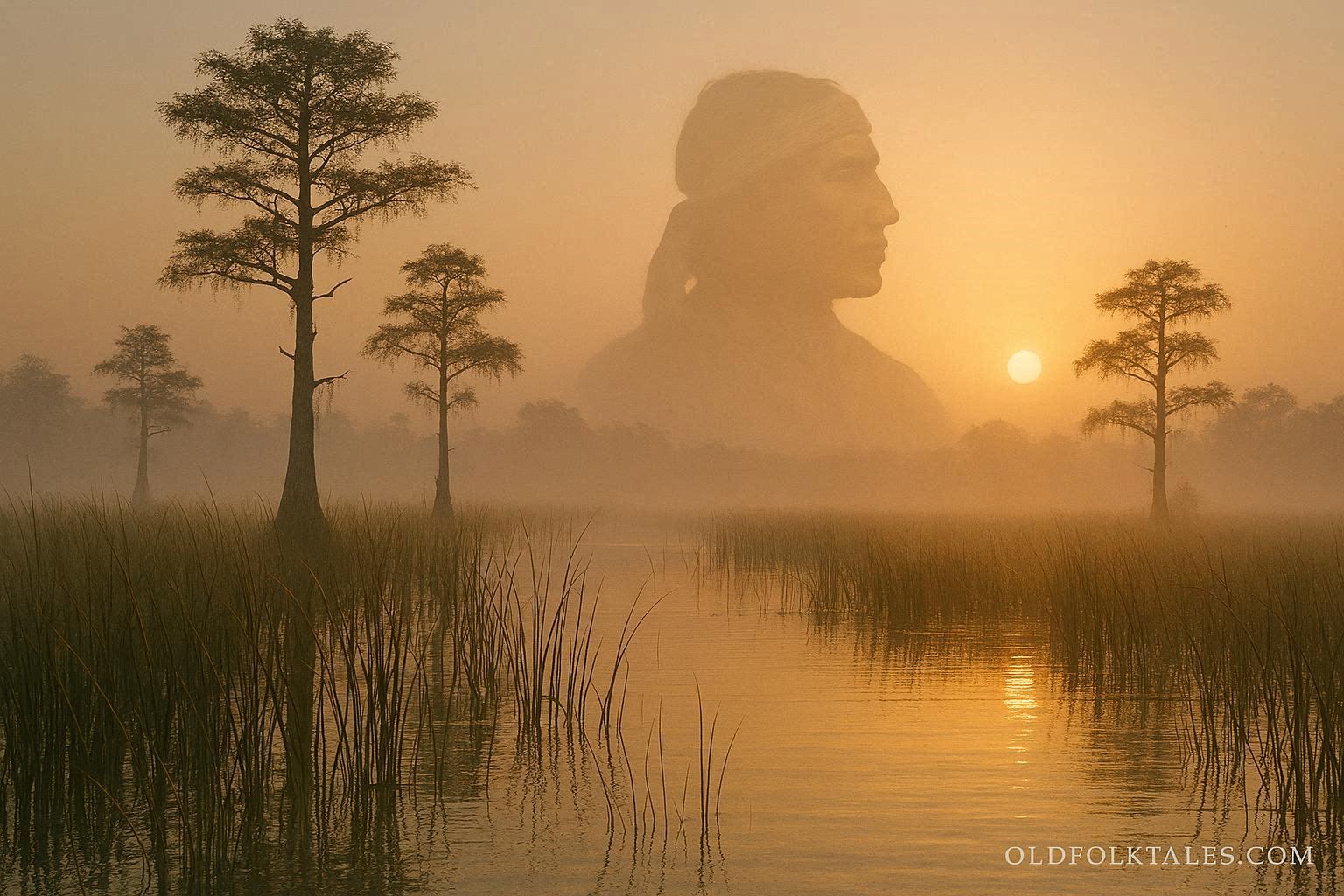
Across the wide wetlands and slow moving waterways of Florida, the land carries stories older than written record. The cypress trees rise from dark water, draped in moss that shifts gently in the breeze. Sawgrass stretches toward the horizon, and the air hums with insects and distant bird calls. In this landscape, history is not confined to monuments or pages in a book. It is said to move quietly through the mist at dawn. Among the most enduring of these stories is the legend that the spirit of Osceola still walks the land he fought to protect.
Osceola emerged as a leader during one of the most turbulent periods in Seminole history. Born in the early nineteenth century, he grew up at a time when the United States government was expanding rapidly into Indigenous territories. Policies aimed at relocating Native nations from the southeastern United States intensified pressure on the Seminole people of Florida. For the Seminole, the forests, rivers, and wetlands were not simply resources. They were home, sacred inheritance, and the foundation of identity.
When federal authorities demanded removal west of the Mississippi River, many Indigenous communities across the Southeast were forced to leave their homelands. The Seminole, however, resisted with determination. Osceola became one of the most visible figures in that resistance. He opposed agreements that required relocation and rejected the idea that his people should surrender their ancestral territory.
Discover chilling ghost tales and haunted places that echo through America’s towns and countryside.
The conflict that followed became known as the Second Seminole War. It was one of the longest and most costly wars fought between the United States and an Indigenous nation. Unlike open battlefield engagements common in other wars, much of this conflict unfolded in the swamps and dense forests of Florida. Seminole fighters relied on intimate knowledge of the terrain. The wetlands became both refuge and defense. Narrow waterways, thick vegetation, and shifting ground made large scale military operations difficult.
Osceola’s leadership symbolized courage and refusal to yield. He inspired many to continue resisting despite overwhelming odds. Yet the war also brought suffering, displacement, and loss. In 1837, Osceola was captured during what had been presented as a negotiation under a flag of truce. The circumstances of his arrest were widely viewed as deceptive. He was imprisoned and later transported far from Florida. In 1838, he died while in captivity.
Official records mark that moment as the end of his life. Oral tradition, however, tells another story. According to legend, Osceola’s spirit could not remain separated from the land he defended. Instead of fading into distant memory, he returned to the Everglades.
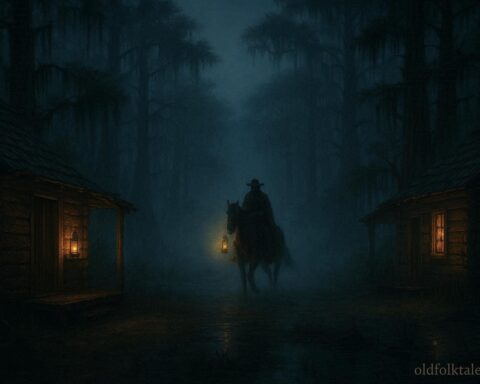
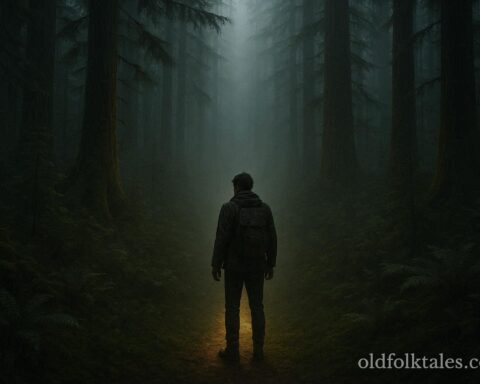
Stories passed down through generations describe sightings of a solitary figure standing at the edge of tree lines at sunrise. Hunters navigating shallow waterways have spoken of sudden stillness, as if the swamp itself paused in recognition. Some claim to hear measured footsteps moving through sawgrass when no one else is present. Others describe glimpsing a shadow that disappears as quickly as it appears.
In these accounts, Osceola does not wander aimlessly. He is not portrayed as a restless ghost filled with anger. Instead, he is seen as a guardian. His presence represents watchfulness and protection. The wetlands that once shielded his people during conflict are said to remain under his spiritual care.
The legend carries deeper cultural meaning. In many Indigenous traditions, ancestors are not distant or detached from the living. They remain connected to the land and to future generations. The idea that Osceola’s spirit still walks Florida affirms that leadership and sacrifice are not forgotten. It reinforces continuity between past and present.
The Everglades themselves strengthen the power of this story. The landscape can feel mysterious and timeless. Light reflects unpredictably off water. Fog settles low across marshes at dawn. Sounds travel in unusual ways across open wetlands. In such an environment, the boundary between memory and presence can feel thin.
For Seminole communities, the legend also represents survival. Despite removal efforts, some Seminole groups avoided forced relocation by retreating deeper into Florida’s swamps. Their descendants continue to live in the state today. Cultural traditions, language, and governance endure. The belief that Osceola remains spiritually present symbolizes that connection has never been broken.
Beyond Seminole communities, Osceola’s story has been interpreted in various ways. Artists painted portraits that emphasized his dignity and strength. Writers described him as a symbol of Native resistance. Over time, these portrayals blended documented history with romanticized imagery. Yet within the legend itself, the focus remains clear. The spirit walks not for spectacle, but for guardianship.
The narrative also reflects a broader human impulse to anchor memory in place. When leaders die far from home, communities often create stories that symbolically return them to familiar ground. In this way, the legend becomes an act of restoration. Though Osceola’s body was buried far from Florida, the story ensures that his spirit remains where his heart belonged.
Visitors to historic sites associated with the Seminole wars sometimes report unexpected feelings of solemn reflection. Standing beside quiet waterways or beneath tall cypress trees, they sense the weight of history. Whether these experiences are interpreted spiritually or emotionally, they echo the themes embedded in the legend.
The endurance of this story speaks to the resilience of cultural memory. Even in the face of displacement and imprisonment, identity persists. The swamps that once sheltered resistance fighters now support thriving ecosystems and communities. The same landscape that witnessed struggle continues to nurture life.
The legend of Chief Osceola’s spirit ultimately affirms that resistance is not erased by defeat. Leadership does not vanish with death. The land remembers. And through story, so do the people.
As morning mist rises over Florida’s wetlands, the silhouette of trees stands against the growing light. The air feels still, watchful. In that quiet moment, the legend lives again. Not as a tale of fear, but as one of endurance, guardianship, and unwavering connection to homeland.
Click to read all American Folktales — timeless oral stories passed through generations across the United States.
Moral Lesson
Courage and loyalty to one’s heritage endure beyond hardship. Cultural memory and connection to land cannot be erased by force.
Knowledge Check
- Who was Chief Osceola?
A Seminole leader who resisted forced removal from Florida. - What conflict is he associated with?
The Second Seminole War. - How was he captured?
During a negotiation presented under a flag of truce. - What does the legend say about his spirit?
That it still walks Florida’s wetlands guarding ancestral lands. - What does the legend symbolize?
Resistance, cultural survival, and ancestral guardianship. - Why is land central to this story?
Because identity, memory, and heritage are deeply connected to homeland.
Source
Adapted from Florida Memory Project archives
Cultural Origin
Seminole communities of Florida