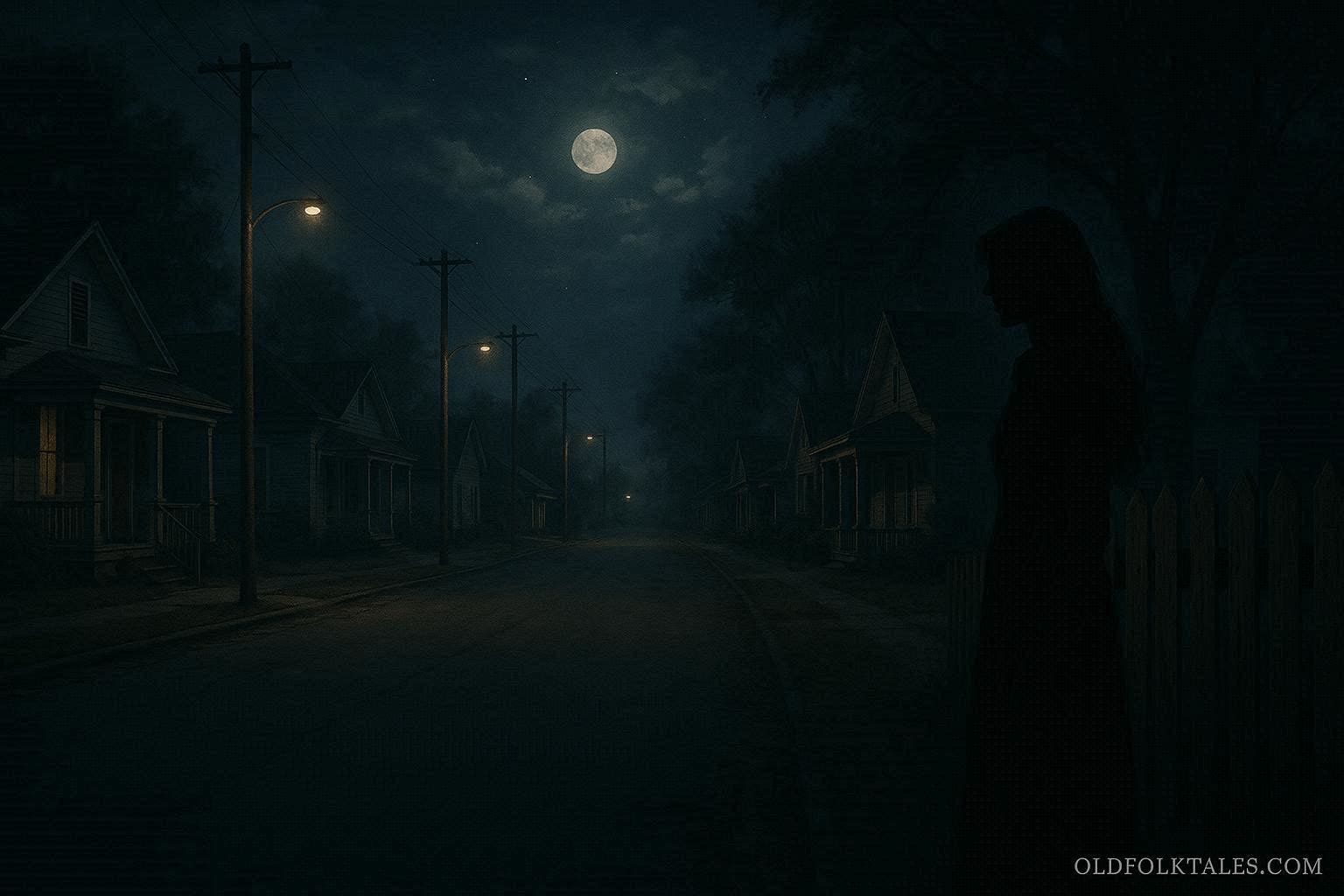
In the quiet town of Abbeville, Alabama, the evenings once belonged to crickets, porch swings, and the distant hum of cicadas. Streets were narrow and softly lit. Children played outside until the last streak of orange faded from the sky. Parents called them home as darkness settled over the red clay roads.
But long before streetlights glowed at every corner, there was another reason children hurried home before full nightfall.
They feared Huggin Molly.
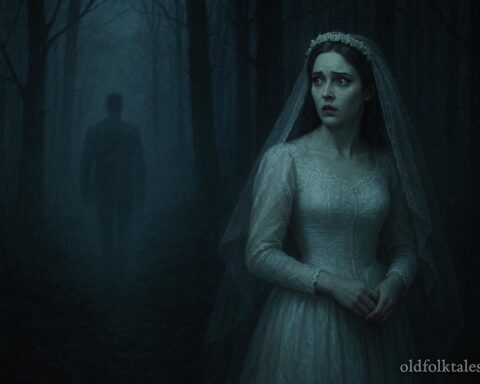
The legend of Huggin Molly has lived in Abbeville for generations. She is described as a tall ghostly woman who roams the streets after dark. Unlike many spirits said to haunt graveyards or abandoned houses, Huggin Molly walked openly through town. She did not rattle chains or wail in sorrow. She searched for children who stayed out too late or disobeyed their parents.
Older residents recall hearing the story when they were young. It was often told in a serious tone, not as entertainment but as warning. If a child ignored bedtime, wandered too far from home, or refused to listen, someone would quietly say that Huggin Molly might be watching.
Step into America’s cultural roots — from folk healing and weather lore to seasonal celebrations.
The earliest versions of the tale describe her as unusually tall, taller than any grown man in town. Some claimed she wore a long dark dress that brushed the ground as she moved. Others said her face was pale and expressionless. A few insisted she had glowing eyes that could be seen from the end of the street.
But one detail remained consistent in every telling.
She hugged.
According to the legend, Huggin Molly would approach a child silently from behind. Before the child could scream or run, she would wrap her long arms tightly around them. The embrace was not gentle. It was crushing and cold. Children who claimed to encounter her said they felt the air leave their lungs.
Then she would whisper something softly into their ear. No two accounts agree on what she said. Some believed she scolded them. Others thought she warned them to obey their parents. After the whisper, she would release her grip and vanish into the darkness.
No lasting harm was ever reported. The children were shaken, sometimes crying, sometimes speechless, but physically unharmed. By morning, any redness on their arms would fade. Only the memory remained.
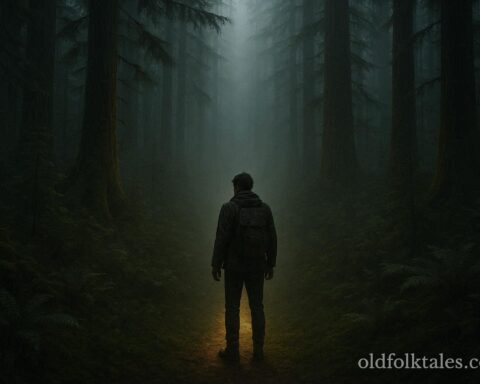
One story passed down through families tells of a boy who refused to come inside after sunset. He insisted there was nothing to fear in the dark. One night, as he walked home alone along a dirt road, he sensed someone following him.
He turned quickly but saw nothing.
Then he felt arms wrap around him from behind. The grip was firm and icy. He tried to shout but could barely breathe. A low whisper brushed against his ear. He never revealed what he heard. When the arms loosened, he ran home as fast as he could.
From that night forward, he never argued about bedtime again.
As Abbeville grew and modern life replaced horse drawn carriages with cars, the legend did not disappear. Instead, it adapted. Teenagers began daring one another to walk alone at night near certain streets rumored to be her favorite paths. Some claimed to feel sudden cold drafts even during warm Alabama evenings. Others reported hearing faint footsteps behind them that stopped whenever they stopped.
Skeptics have offered practical explanations. Some suggest that the legend began as a way for parents to keep children safe in a time before well lit streets and secure neighborhoods. Nighttime in earlier centuries carried real dangers. Wild animals, strangers, and uneven roads posed risks. A frightening but nonviolent ghost may have been an effective method of discipline.
There were also rumors long ago of a real woman who walked the streets at night dressed in dark clothing. Some believe she may have been a local resident with a strict personality who confronted misbehaving children directly. Over time, memory and imagination may have transformed her into something larger than life.
Yet the emotional power of the story remains.
Huggin Molly is not a monster who harms. She does not chase adults. She does not terrorize families. Her purpose seems singular. She corrects.
The hug itself carries symbolic meaning. A hug is normally comforting. It represents love and protection. In this legend, however, the hug becomes a warning. It is firm, unexpected, and unforgettable. It teaches through fear without causing injury.
In many Southern communities, folklore often served as moral instruction. Stories were tools to shape behavior. The Huggin Molly legend fits within that tradition. It reflects a community’s effort to guide children safely through a world that once felt far less secure after sunset.
Even today, some residents of Abbeville smile knowingly when the story is mentioned. Local festivals occasionally reference her. Visitors sometimes ask about the legend, curious whether anyone still believes.
Most adults will say it is only a story.
Yet when night falls and the streets grow quiet, few children in Abbeville choose to wander far from their homes. The idea of long silent footsteps behind them still sends a quick shiver down the spine.
The power of Huggin Molly lies not in violence but in mystery. She appears, teaches a lesson, and disappears. There is no dramatic confrontation, no battle between good and evil. Only a moment of fear followed by change.
Legends survive when they serve a purpose. In Abbeville, Huggin Molly continues to represent caution, obedience, and the unseen boundaries that protect a community.
If you walk through the town after dark, you may notice how quickly sounds travel in the still air. A dog barking several streets away can seem close. A shifting tree branch can resemble a moving shadow. Imagination thrives in such spaces.
And somewhere in that quiet, in the space between porch light and darkness, some still believe a tall figure may be watching, waiting to remind any wandering child that night belongs at home.
Explore how American legends shaped the nation — from frontier heroes to Revolutionary War tales.
Moral Lesson
Folklore can teach discipline and safety, reminding young people to respect rules meant to protect them.
Knowledge Check
- Where does the legend of Huggin Molly originate?
In Abbeville, Alabama. - Who was she said to target?
Children who misbehaved or stayed out too late. - What did she do to them?
She hugged them tightly and whispered before disappearing. - Was she believed to cause physical harm?
No. She frightened but did not injure children. - Why might the legend have developed?
To encourage obedience and keep children safe at night. - Why does the story continue today?
Because it remains part of local tradition and identity.
Source
Adapted from Alabama Department of Archives and History
Cultural Origin
Abbeville, Alabama