Austin, Texas rose steadily in prominence during the late nineteenth century. As the state capital expanded, politicians, cattle barons, and traveling businessmen filled its streets with energy and ambition. Horse drawn carriages rattled over limestone roads, and gaslights illuminated storefront windows well into the evening. In 1886, one structure came to symbolize the growing confidence of the city. It was grand, Romanesque in design, and built from sturdy Texas limestone. Its towering presence suggested permanence and prestige.
The building was the Driskill Hotel.
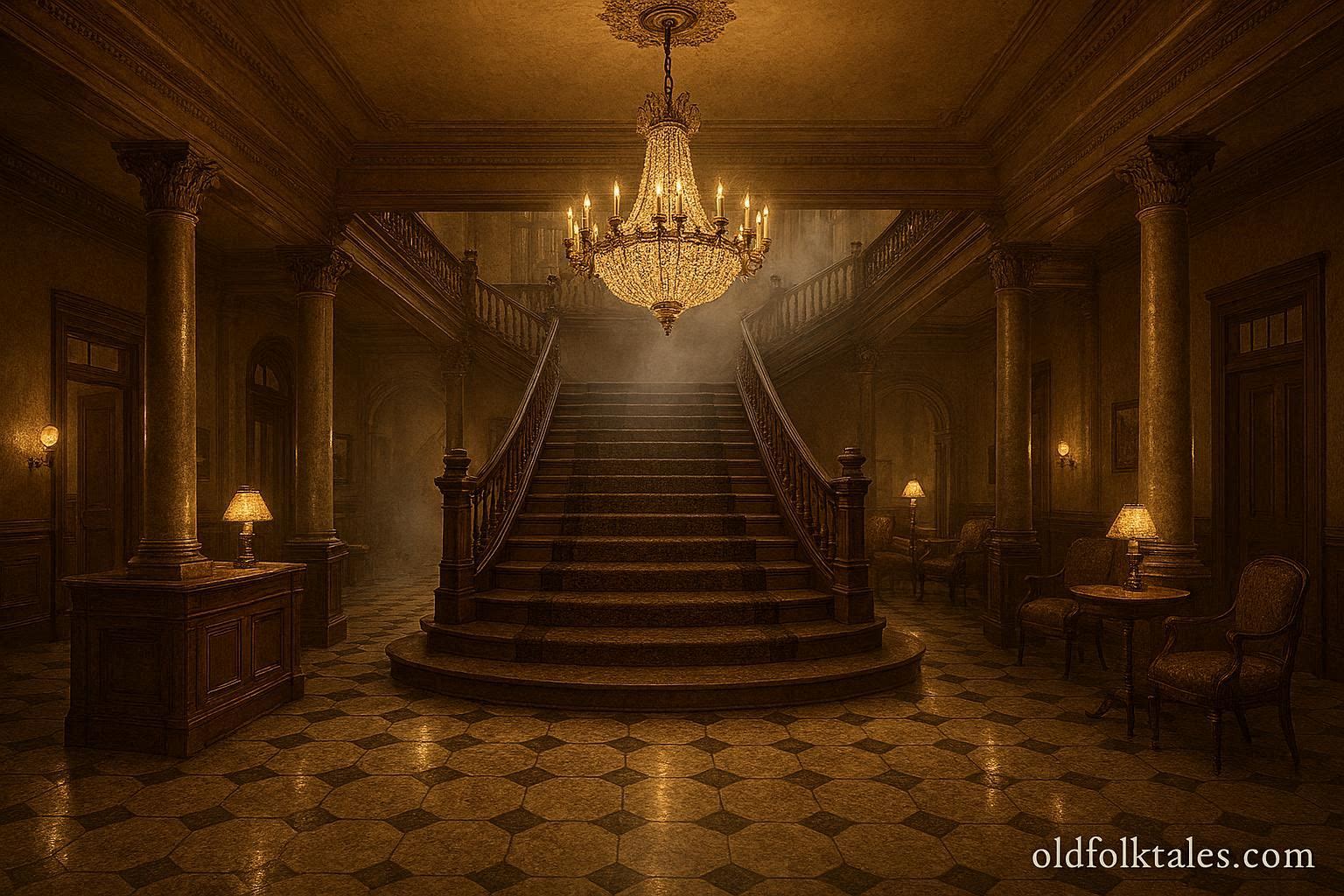
Constructed by cattleman Jesse Driskill, the hotel was intended to be the finest in the region. It welcomed governors, legislators, performers, and wealthy travelers. Marble floors reflected chandelier light. Polished wooden staircases curved upward toward elegantly furnished guest rooms. From its earliest days, the hotel represented progress and prosperity in a rapidly developing Texas capital.
Yet woven into its elegant reputation is a quieter story, one shaped not by celebration but by sorrow.
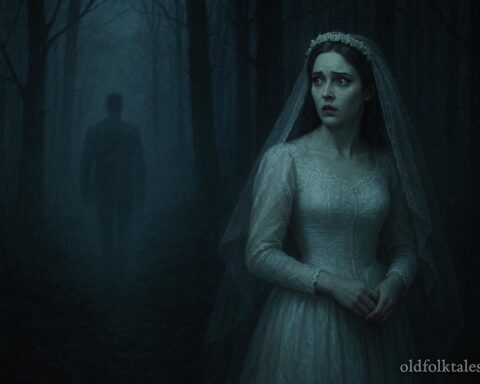
Among the most enduring legends attached to the Driskill Hotel is that of a grieving spirit said to wander its halls. Guests over generations have described encounters with a presence often connected to a tragic nineteenth century event involving a young girl.
Discover chilling ghost tales and haunted places that echo through America’s towns and countryside.
According to local lore, the daughter of a United States senator was staying at the hotel with her family during the late 1800s. While playing with a ball near the grand staircase, she reportedly fell to her death. The accident, sudden and devastating, cast a shadow over the hotel’s early history. Though official records provide limited documentation of the event, the story persisted among staff and residents of Austin.
In the decades that followed, visitors began to report unusual experiences.
Some guests claimed to hear the faint sound of a child’s laughter echoing through corridors late at night. Others reported the sensation of being watched while ascending the staircase. A few described glimpsing the figure of a young girl in period clothing before she vanished at the turn of a hallway.
One account, frequently retold by hotel employees, described a traveling businessman who checked into a room overlooking Congress Avenue. During the night, he awoke to the feeling that someone was sitting at the foot of his bed. In the dim light, he believed he saw the outline of a small figure. When he reached forward to switch on the lamp, the presence was gone.
Another guest recounted finding a rubber ball resting in the middle of the hallway outside her room. Assuming it belonged to a child staying nearby, she placed it on a nearby table. The next morning, she found the ball positioned once again in the center of the corridor.
Hotel staff, accustomed to such stories, neither confirm nor deny the legend outright. Instead, they acknowledge that the building, like many historic structures, carries memories of its long past. Over more than a century, countless lives have intersected within its walls. Weddings have been celebrated beneath its chandeliers. Political alliances have formed in its dining rooms. Grief and joy alike have unfolded in its guest chambers.
The Driskill Hotel also carries a documented history of financial hardship. Its founder, Jesse Driskill, lost the property only a few years after its completion due to economic downturn. Ownership changed hands multiple times. Renovations preserved its architectural grandeur while modernizing its interior for new generations of visitors.
Through each era, the ghost story endured.
The haunting gained renewed attention in the twentieth century as interest in paranormal investigations increased nationwide. Texas urban legends began to circulate more widely through newspapers and later through television programs. The Driskill Hotel became known as one of the most famous allegedly haunted hotels in the American South.
Psychologists often interpret such legends as reflections of collective memory. Grand hotels, especially those built during periods of expansion and ambition, symbolize both aspiration and vulnerability. Tragic events, whether fully documented or not, provide narrative anchors for unexplained sounds or sensations.
The legend of the sorrowful spirit at the Driskill reflects broader themes in Southern storytelling. Memory is rarely abandoned. Instead, it lingers in architecture, in family histories, and in community narratives. A tragic accident becomes a reminder of life’s fragility within spaces built for celebration.
Visitors today walk the same polished floors that nineteenth century guests once crossed. The staircase still curves elegantly upward. Sunlight filters through tall windows during the day, casting warm patterns across the lobby. At night, however, the hotel takes on a quieter tone. Shadows stretch longer along the corridor walls. Footsteps echo more distinctly.
Some guests arrive specifically hoping for an encounter. Others are unaware of the legend until after their stay. A few claim to experience cold drafts in otherwise warm hallways. Others report doors closing softly without visible cause. Most visitors, however, leave with nothing more than admiration for the hotel’s historic charm.
The power of the story lies not necessarily in proof of paranormal activity but in the endurance of narrative. The Driskill Hotel stands as a physical link between Austin’s nineteenth century origins and its modern identity as a vibrant cultural center. The ghost story binds past to present.
Scholars studying folklore emphasize that urban hauntings often emerge in spaces where history is layered and visible. Old hotels, theaters, and government buildings accumulate stories because they serve as gathering places across generations. Each generation adds interpretation, strengthening the legend.
In this way, the Ghost of the Driskill Hotel becomes less about fear and more about remembrance. The imagined figure of a young girl on the staircase embodies the intersection of innocence and tragedy. Her presence in local lore ensures that the hotel’s history remains personal rather than abstract.
Austin has transformed dramatically since 1886. Modern skyscrapers now rise beyond the historic district. Electric lights replaced gas lamps long ago. Automobiles fill streets once traveled by horse drawn carriage. Yet the Driskill Hotel remains, its limestone façade standing firm against time.
Whether one believes in spirits or not, the story continues to shape the experience of those who walk its halls. A grand hotel built to represent ambition now also represents memory. Within its walls, prosperity and loss coexist.
And sometimes, on quiet nights when footsteps echo softly along polished floors, guests pause for just a moment, listening.
Explore how American legends shaped the nation — from frontier heroes to Revolutionary War tales.
Moral Lesson
Historic spaces carry the stories of those who came before. Respect for memory and understanding of the past help communities preserve identity across generations.
Knowledge Check
- In what year was the Driskill Hotel opened in Austin?
The hotel opened in 1886. - What tragic event is commonly associated with the hotel’s ghost legend?
The reported accidental death of a young girl who fell on the staircase. - What types of experiences have guests claimed to encounter?
Hearing childlike laughter, sensing a presence, seeing a young girl’s figure, and objects appearing mysteriously in hallways. - Why do scholars believe historic hotels often become centers of ghost legends?
Because they host generations of visitors and accumulate layered memories and stories. - Does documented evidence fully confirm the tragic event described in the legend?
Historical documentation is limited, and much of the story survives through local lore. - What broader theme does the Ghost of the Driskill Hotel represent?
The connection between architecture, memory, and community identity.
Source
Adapted from Texas State Library and Archives Commission
Cultural Origin
Austin, Texas