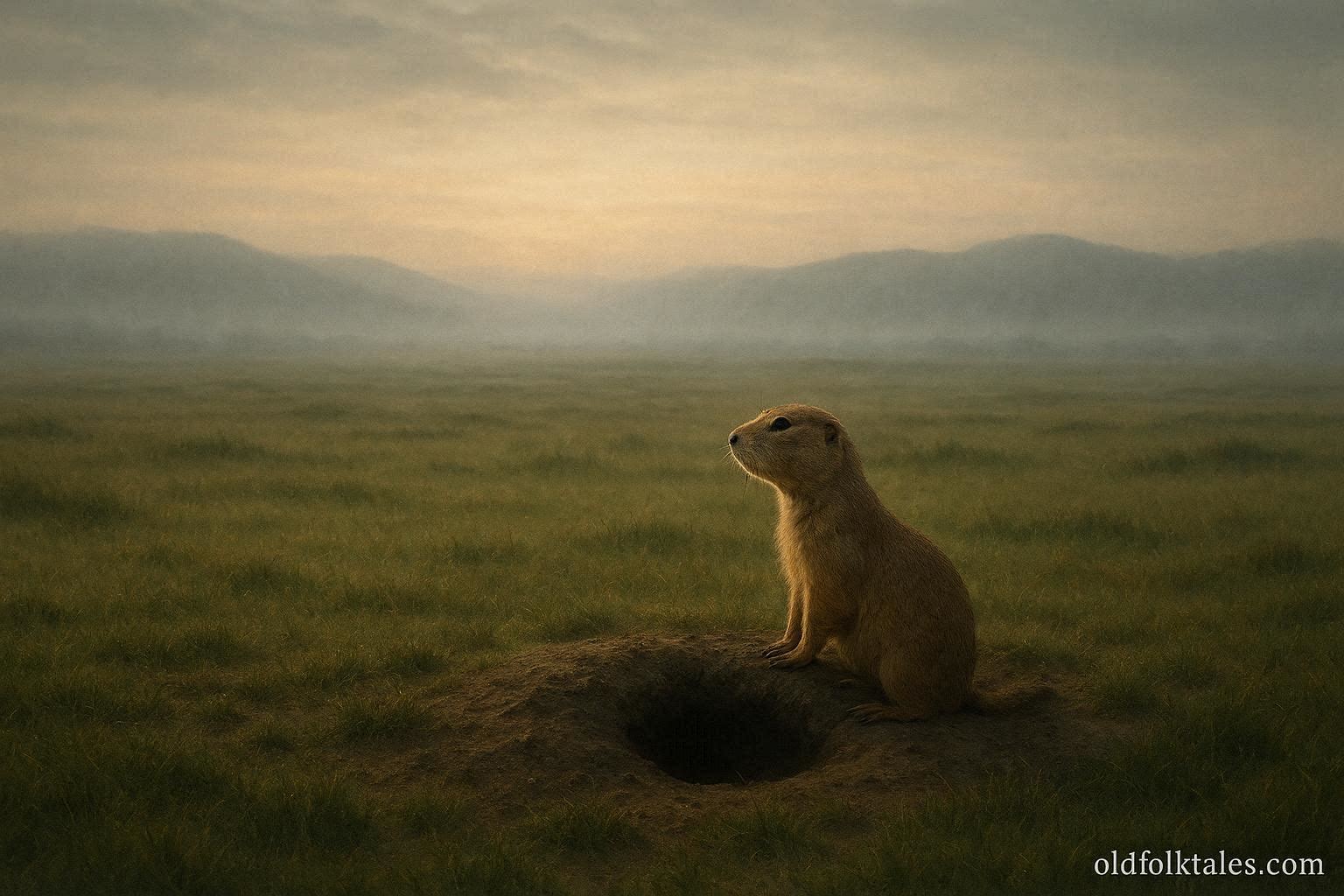
On the wide, rolling plains of what is now South Dakota, the Lakota people lived in close connection with the animals that shared their homeland. The open grasslands were home to bison, coyotes, prairie chickens, and countless small creatures, each playing a role in the delicate balance of the plains. Among these animals, one of the smallest was also one of the wisest according to Lakota tradition: the prairie dog.
The legend tells of a time long ago when the Lakota people were preparing for the seasonal hunt. Families had set up temporary camps along a river, unaware that a sudden and violent storm was gathering far to the west. Thunderclouds rolled across the horizon, and the wind carried a foreboding chill, though many of the people did not yet sense danger.
In the midst of their camp, a lone prairie dog watched carefully from the safety of its burrow. Known for its keen awareness of the land, the prairie dog sensed the subtle signs of the approaching disaster — the shifting winds, the smell of rain, and the trembling of the earth beneath its small feet. Understanding that the humans were unaware, the prairie dog decided to act.
Explore how American legends shaped the nation — from frontier heroes to Revolutionary War tales.
The creature began moving rapidly between burrows, calling out with high-pitched chirps that echoed across the plains. At first, the people ignored the noises, thinking it was only the small creature’s usual chatter. But as the prairie dog’s calls grew more urgent, one of the hunters approached to investigate. He followed the animal to a hidden tunnel network beneath the prairie.
The prairie dog paused, looking up at the hunter and making insistent movements toward the entrance of the underground burrows. The hunter realized that the small animal was trying to convey a warning. Trusting the prairie dog, he gathered the elders and families to follow the creature into the extensive burrow system.
Moments after everyone had taken shelter underground, the storm arrived. Fierce winds ripped across the plains, hail pounded the ground, and lightning illuminated the darkened sky. From beneath the earth, the people were safe, protected from the full force of the storm. When the skies finally cleared, they emerged from the burrows, amazed that a creature as small as a prairie dog had guided them to safety.
The elders explained to the younger members of the tribe that the prairie dog was more than an ordinary animal. It was a messenger of the natural world, endowed with the wisdom to protect those who observed and respected the land. This story became a teaching tale, emphasizing that even the smallest creatures could hold great intelligence and power, and that humans should remain attentive to signs in nature.
Over time, many other accounts reinforced this legend. Travelers along the plains claimed that prairie dogs often appeared before dangerous weather, unusual animal migrations, or other disruptions of the natural order. Their burrows were seen as sanctuaries, and their behavior was carefully observed by those who understood the balance of the prairie ecosystem.
The legend of the prairie dog who saved the people also highlights a central theme in Lakota culture: survival depends not only on skill and strength but also on awareness, humility, and cooperation with the natural world. The plains were vast and unpredictable, and every animal, plant, and weather pattern carried lessons for those willing to pay attention.
Even today, prairie dogs are a reminder of this ancient story. Observing them burrow, communicate, and maintain their colonies reflects a deep intelligence that the Lakota have long recognized. The legend teaches that respect for even the smallest creatures can lead to wisdom, protection, and harmony with the world around us.
The story of the prairie dog endures as a symbol of foresight, humility, and the importance of listening to the natural world. It is a reminder that guidance and protection can come from unexpected sources, and that those who honor the land and its creatures often survive and thrive.
Discover celestial myths of the sun, moon, and stars — and the heroes who bridged earth and sky.
Moral Lesson
The legend teaches that wisdom and safety often come from paying attention to nature. Even the smallest beings can offer guidance and protection when humans observe carefully and respect the world around them.
Knowledge Check
- Which tribe tells the story of the prairie dog?
The Lakota people - What did the prairie dog warn the tribe about?
An approaching dangerous storm - How did the tribe find safety?
By following the prairie dog into its underground burrows - Why was the prairie dog considered wise?
Because it could sense danger and guide humans to protection - What lesson does the legend teach about humans and animals?
That humans should observe and respect nature’s signals - How does the story emphasize survival?
By showing that awareness, humility, and cooperation with nature ensure safety
Source
Adapted from records preserved by the South Dakota State Historical Society
Cultural Origin
Lakota traditions of the Great Plains, United States