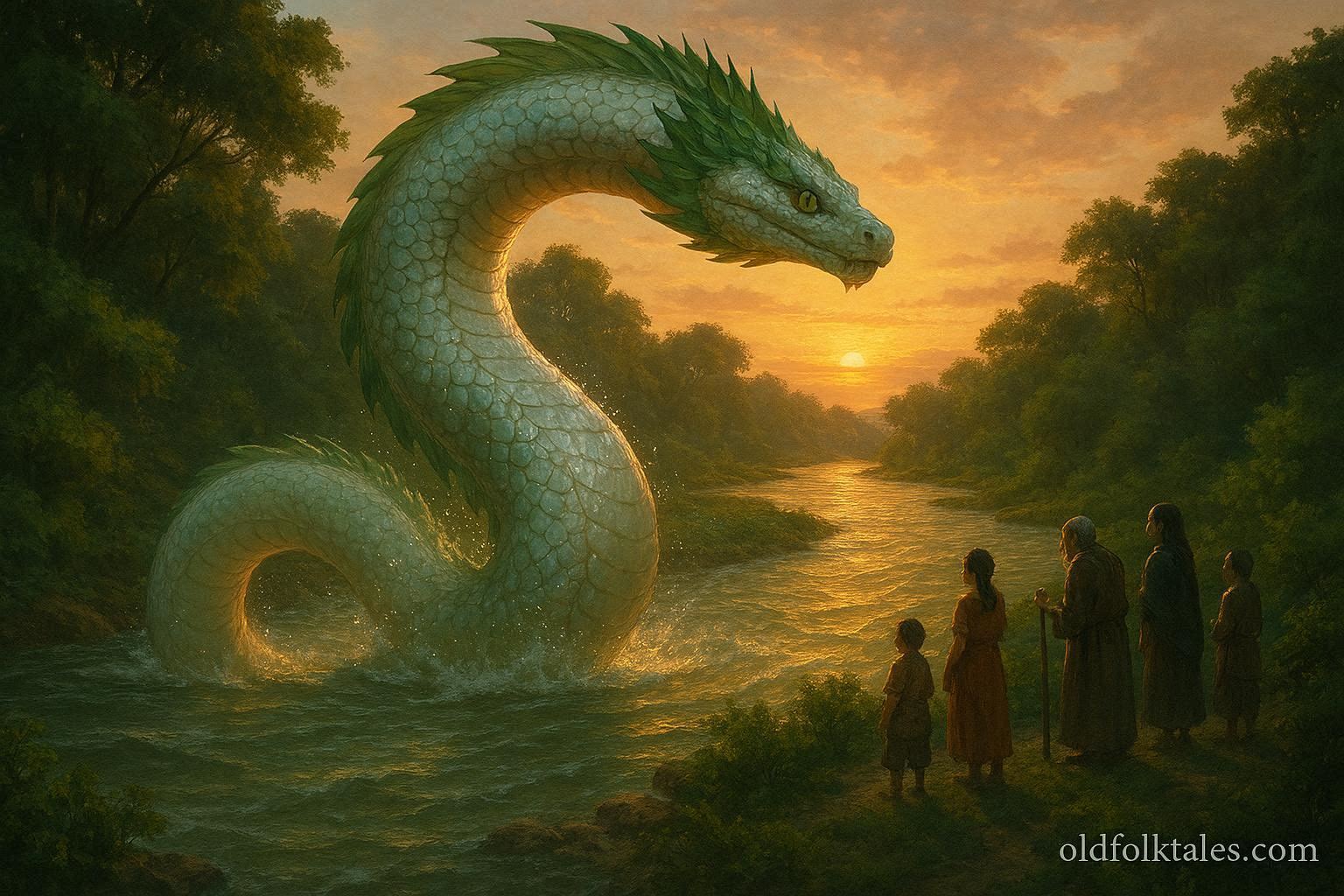
Long ago, in the lands of the Choctaw people, there flowed a river unlike any other. Its waters were crystal clear, teeming with fish, and sustaining the forests, fields, and villages along its banks. The Choctaw recognized this river as sacred, a gift from the Creator, and taught that it must be treated with reverence. Among their legends was a tale of a giant serpent that lived in the deepest bends of the river, guarding its waters and protecting all who relied on it. This was no ordinary snake. Its scales shimmered like polished gemstones in sunlight, and its eyes glowed with wisdom and power.
One summer, a group of young hunters ventured to the river to fish and gather water for their families. In their excitement, they carelessly left scraps of food in the water and disturbed the riverbanks, frightening the fish and polluting the once-pristine waters. That evening, as the sun dipped below the horizon, a deep rumble echoed through the valley. The villagers reported seeing the enormous serpent rise from the water, coiling along the shore and sending waves crashing into the banks. Its hissing filled the air, and the young hunters froze in awe and fear. They understood immediately that the spirit had come to punish disrespect.
The serpent’s presence was both terrifying and majestic. Its scales reflected the colors of the river itself, changing from deep blues to shimmering silvers as it moved. The Choctaw believed the serpent had the power to command the waters, summon storms, and even remove those who acted recklessly from the river’s edge. Legends tell that it could sense intent, rewarding those who approached with humility and punishing those who disrespected the sacred space.
Explore the heart of America’s storytelling — from tall tales and tricksters to fireside family legends.
One night, an elder recounted a story to the village children. Long ago, a man had taken more fish than needed, ignoring the rituals of gratitude. The river rose suddenly, and a massive shadow emerged from its depths. The serpent coiled around his canoe and overturned it, leaving the man stranded until he apologized and offered thanks to the river. From that day forward, the community learned the importance of moderation, respect, and mindful use of the river’s resources.
Travelers along the river often reported encounters with the serpent. Some saw only its rippling back as it moved beneath the water’s surface, while others glimpsed the head rising above the currents, watching carefully with glowing eyes. Many felt a sense of awe rather than fear, understanding that the serpent was not malevolent but a guardian ensuring balance. Elders explained that the serpent’s power reminded humans that the river, and nature itself, must not be taken for granted.
The Choctaw also used these stories to teach younger generations about environmental stewardship. Children were told that polluting the river, overfishing, or failing to show respect could anger the serpent, leading to floods or scarcity. By linking the well-being of the people to the behavior of a mystical creature, the stories encouraged careful interaction with the natural world. The legend emphasizes that humans are part of a larger ecosystem, and that maintaining balance ensures survival for both people and the creatures that share the land.
Even today, the story of the sacred river serpent endures. In certain parts of the Choctaw homeland, villagers tell of seeing shadows in the river or feeling waves rise unexpectedly, signs that the serpent still watches over the waters. It serves as a reminder that sacred spaces are alive, that water is a precious resource, and that respect and reverence are essential for survival. The legend carries lessons not only about nature but about humility, responsibility, and the interconnectedness of life.
The story of the river serpent is also a reminder of the spiritual relationship between humans and the land. The Choctaw believed that every river, forest, and hill has a spirit, and that honoring these spirits ensures harmony, abundance, and protection. The serpent embodies the power of nature, the importance of careful stewardship, and the necessity of ethical conduct toward the environment.
Through the tale, the Choctaw convey that respect for water, wildlife, and the land itself is a moral obligation. The serpent teaches vigilance, mindfulness, and care, encouraging humans to live in balance with the earth and its sacred forces. The legend has been passed down for generations, not only as a story of wonder but as a guide for how people should act to preserve life and community.
Moral Lesson
The legend teaches the importance of respecting natural resources and sacred places. Humans must act with care, mindfulness, and gratitude to ensure harmony, survival, and abundance.
Knowledge Check
- Which tribe tells the story of the river serpent?
The Choctaw people - What does the serpent guard?
A sacred river and its life-sustaining waters - How does the serpent respond to disrespect?
It punishes those who pollute or overfish and rewards humility - How do children learn lessons from the serpent?
Through stories about respect, moderation, and ethical interaction with nature - What moral does the legend emphasize?
Humans must act with respect and care toward the natural world - Why is the serpent considered important today?
As a symbol of environmental stewardship, sacred protection, and balance
Source
Adapted from materials preserved in the Newberry Library American Indian and Indigenous Studies Collection
Cultural Origin
Choctaw traditions of the Southeastern United States