Along the winding rivers of Northern California, the Yurok people depended on salmon for sustenance, weaving the cycles of the river into daily life and spiritual practice. Among the Yurok, salmon were more than a source of food; they were considered spirit beings who temporarily took the form of fish to provide for humans before returning to the water world. This belief shaped rituals, prayers, and a deep sense of respect for the creatures and the waters that carried them.
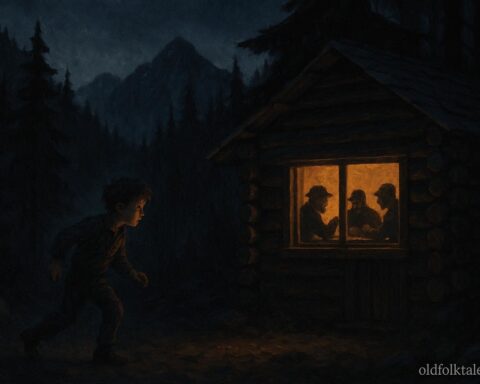
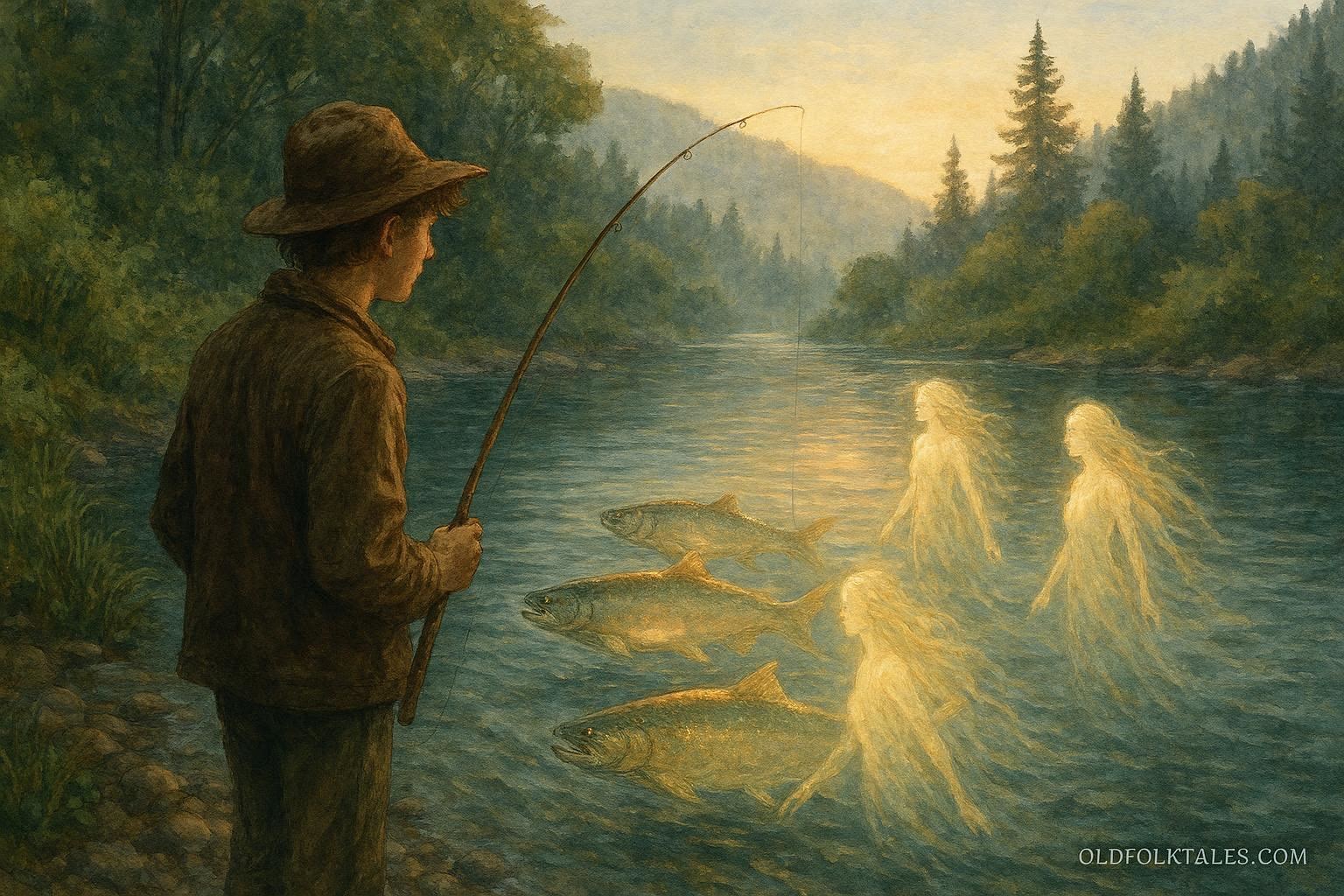
Ketu, a young fisherman, prepared for the seasonal salmon run. He was skilled and confident, yet his focus often remained on the harvest rather than the river’s spirit. One morning, while checking his nets, he noticed an unusual shimmer beneath the surface. The salmon moved with a precision and intelligence that suggested awareness beyond the ordinary. As he leaned closer, the water seemed to ripple in patterns, and he glimpsed shapes shifting within the river.
To Ketu’s astonishment, the fish began transforming. Scales turned into hands, fins became arms, and luminous eyes reflected an unmistakable human intelligence. The salmon had revealed themselves as the Salmon People, spirits who guided the river and ensured balance between nature and humanity. One spirit surfaced and addressed Ketu, explaining that every salmon taken must be honored through offerings and gratitude. Disrespect or waste could disrupt the harmony of the river and bring misfortune to the village.
Explore how American superstitions and rituals still influence modern life and local traditions.
Ketu listened carefully, recognizing the wisdom in their words. He learned that the Salmon People accepted human reliance on them only when humans acted with humility and understanding. Overfishing or carelessness would anger the spirits and threaten the community’s survival. The fisherman promised to honor these principles and carry the teachings back to the village.
From that day, Ketu approached the river with reverence. Before each trip, he offered thanks, performed small rituals, and carefully selected only the salmon needed to feed his family. He shared the story of the Salmon People with other villagers, emphasizing that respect for the river and its creatures ensured both spiritual and material prosperity. As the community followed these practices, the salmon runs flourished, and the bond between humans and the river grew stronger.
Over generations, the tale of the Salmon People became a cornerstone of Yurok oral tradition. It reminded children that the natural world contains intelligence and spirit, that food is a sacred gift, and that actions have consequences beyond immediate perception. The story also illustrated how humans can learn from interactions with the unseen, cultivating gratitude, restraint, and responsibility.
The Salmon People continued to live in the river, appearing at times when humans ignored their teachings or took the river’s bounty for granted. Their presence reinforced a culture of sustainability and mindfulness, ensuring that the delicate balance between people and nature endured. Through this folktale, the Yurok conveyed lessons about ethical stewardship, reverence for life, and the spiritual dimension of everyday practices such as fishing.
The legend of the Salmon People reflects a worldview in which all living beings are interconnected and every action matters. It emphasizes that respect, careful observation, and gratitude are essential in maintaining harmony with the environment. The story encourages both moral awareness and ecological responsibility, teaching that humans can thrive only when they honor the spirits and laws of the natural world.
Click to read all American Folktales — timeless oral stories passed through generations across the United States.
Moral Lesson
The folktale teaches that humans must treat natural resources with respect, gratitude, and care. Observing rituals of acknowledgment and acting with restraint maintains harmony with the environment and the spirits that sustain life.
Knowledge Check
- What are the salmon considered in Yurok belief?
Spirit beings who provide food and return to the water world. - Why did the Salmon People reveal themselves to Ketu?
To teach him respect for the river, its creatures, and sustainable fishing practices. - How did Ketu change his behavior after meeting the spirits?
He performed offerings, took only what was needed, and shared the teachings with his community. - What consequences could occur if the salmon were treated disrespectfully?
Disruption of river balance, misfortune, and scarcity of fish for the village. - How does this folktale reflect Yurok values?
It emphasizes respect for nature, sustainability, gratitude, and spiritual awareness. - What broader lesson does the story convey about humans and the environment?
Humans thrive when they act responsibly and honor the interconnectedness of all living beings.
Source
Adapted from University of Washington Libraries Special Collections
Cultural Origin
Yurok traditions