The First World War brought American soldiers into a conflict unlike anything the nation had experienced before. Beginning in 1917, thousands of troops crossed the Atlantic Ocean to join the fighting in Europe. They entered a war defined by trenches, artillery bombardments, and dense forests that concealed both danger and confusion.
One of the most famous and dramatic episodes of the war involving American troops became known as the Lost Battalion. The story developed during the massive offensive that Allied forces launched in the autumn of 1918. The battle was part of the larger Meuse–Argonne Offensive, one of the final campaigns that helped bring the war toward its conclusion.
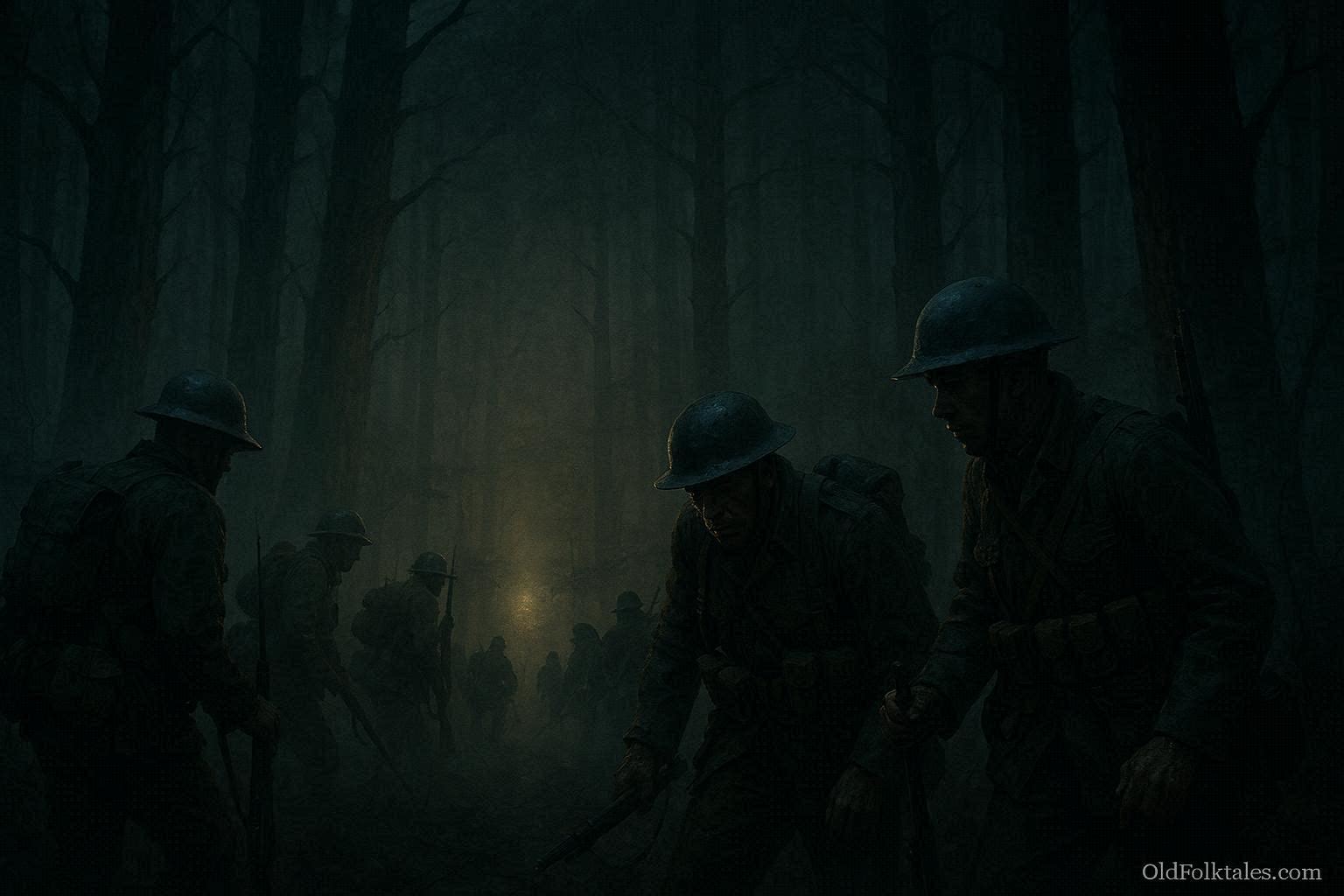
American soldiers moved forward through the thick woods of the Argonne Forest, an area known for its steep ravines, tangled undergrowth, and limited visibility. The terrain made it difficult for commanders to maintain communication between different units. Messages were often carried by runners who risked enemy fire while moving between positions.
Step into shadowy legends of restless spirits and ghostly travelers in American Ghost Stories.
During the advance, a group of American soldiers pushed deeper into the forest than neighboring units. As the battle unfolded, enemy forces surrounded them on several sides. The soldiers found themselves cut off from supplies and reinforcements.
This trapped group of troops eventually became known as the Lost Battalion.
The soldiers faced extremely difficult conditions. Food and water quickly became scarce. Ammunition had to be carefully rationed. Communication with the rest of the American forces was almost impossible because telephone lines had been destroyed and runners often failed to return.
Enemy soldiers positioned on the surrounding hills fired into the trapped battalion from multiple directions. The Americans dug defensive positions in the forest floor and fought to hold their ground while hoping that help would eventually reach them.
Despite the danger, the soldiers continued to resist for several days.
Within the difficult environment of the forest, visibility was often limited to only a few yards. The tall trees blocked sunlight and the thick vegetation created confusing shadows. During the night, darkness made navigation even more difficult.
According to later stories shared by soldiers, it was during this time that an unusual experience began to circulate among members of the trapped unit.
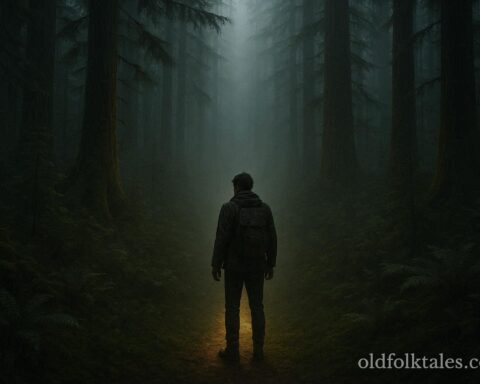
Some men claimed that while attempting to move quietly through the forest at night, they heard a distant voice calling directions from somewhere among the trees. The voice did not belong to any soldier they recognized. Yet it seemed to guide them away from dangerous positions and toward safer ground.
One story describes a small patrol attempting to locate a route through the forest that might allow them to deliver a message or escape the encirclement. As the patrol moved through thick brush and fallen branches, they reportedly heard a calm voice telling them which direction to follow.
The men could not see the speaker. The darkness of the forest hid everything beyond the small circle of light produced by their lantern. Yet the voice continued to call out short instructions, guiding them step by step along a narrow path between rocky slopes.
Eventually the patrol reached a ridge where they were able to observe enemy positions more clearly. The information they gathered helped the trapped battalion prepare for the next attack.
When the soldiers later tried to locate the person who had guided them, they found no one nearby.
Another account from soldiers in the battalion described hearing a voice warning them not to advance along a particular trail. Moments later, enemy gunfire swept across the very path they had been about to take. Those who shared the story believed that the warning had saved their lives.
Stories about the mysterious voice spread quietly among the exhausted soldiers. Some believed it might have been a scout who had become separated from the unit. Others suggested that the sound might have traveled strangely through the forest, making it difficult to locate the source.
However, a few soldiers interpreted the experience in a more spiritual way. The extreme stress of battle often led soldiers to rely on faith and belief for strength. Some thought the voice might represent divine guidance helping them survive the dangerous situation.
Military historians studying the Lost Battalion emphasize that the soldiers’ survival was largely due to their determination and leadership. The trapped troops were commanded by Charles W. Whittlesey, who refused to surrender despite repeated enemy demands.
Under his command, the soldiers held their defensive positions while enduring days of intense combat. Eventually other American units managed to break through enemy lines and relieve the surrounded battalion.
The rescue became one of the most dramatic moments of the Meuse Argonne campaign. Although many soldiers had been wounded or killed, the surviving members of the battalion emerged from the forest as symbols of courage and endurance.
After the war ended, soldiers often shared their memories of the experience in letters, interviews, and conversations with friends and family. Among these recollections were the stories about the mysterious voice that had guided some men through the forest during the darkest moments of the battle.
Folklore scholars note that such stories frequently appear in wartime narratives. Soldiers facing life threatening situations sometimes describe unusual experiences that seem to offer protection or direction. These accounts may be shaped by exhaustion, heightened senses, or the deep emotional impact of combat.
At the same time, the stories serve an important cultural role. They help express the feeling that survival in extreme situations sometimes involves more than strategy or luck. For many soldiers, the idea that unseen guidance might have helped them endure the battle provided comfort and meaning.
The legend of the guiding voice gradually became part of American World War I soldier folklore. It joined many other battlefield stories that blended real historical events with the mysterious elements that often appear in wartime storytelling.
Today historians continue to study the experiences of the Lost Battalion as an example of resilience during one of the largest battles involving American troops in World War I. The bravery shown by those soldiers remains an important part of military history.
Meanwhile, the legend of the mysterious voice continues to be shared in books and discussions about wartime folklore. Whether interpreted as coincidence, imagination, or something more mysterious, the story reflects the powerful emotions experienced by soldiers struggling to survive in the forests of France.
For those who remember the story, the voice in the forest symbolizes hope appearing during moments of fear and uncertainty. It reminds listeners that courage, faith, and perseverance often guide people through even the most difficult situations.
Explore how American legends shaped the nation — from frontier heroes to Revolutionary War tales.
Moral Lesson
Courage and perseverance help people survive even the most dangerous situations, and hope can guide individuals through moments of fear and uncertainty.
Knowledge Check
1. What was the Lost Battalion during World War I?
It was a group of American soldiers trapped in the Argonne Forest during the Meuse Argonne Offensive.
2. Why were the soldiers called the Lost Battalion?
They were surrounded by enemy forces and cut off from communication and supplies.
3. What strange experience did some soldiers report in the forest?
They reported hearing a mysterious voice guiding them through the woods.
4. Who commanded the trapped battalion?
The battalion was commanded by Charles W. Whittlesey.
5. How were the soldiers eventually rescued?
Other American units broke through enemy lines and reached their position.
6. What does the legend of the voice symbolize in soldier folklore?
It symbolizes hope, guidance, and survival during wartime.
Source
Adapted from materials preserved in the U.S. Army Heritage and Education Center Archives
Cultural Origin
American World War I soldier folklore