Within the forests and river valleys of the southeastern United States, the Choctaw people have long preserved stories about spiritual beings that exist beyond ordinary human sight. These stories helped explain mysterious experiences in the wilderness and reminded listeners that the natural world contained both visible and invisible forces. Among the most unsettling of these figures is the Nalusa Falaya, a shadowy spirit known in Choctaw tradition as the Long Black Being.
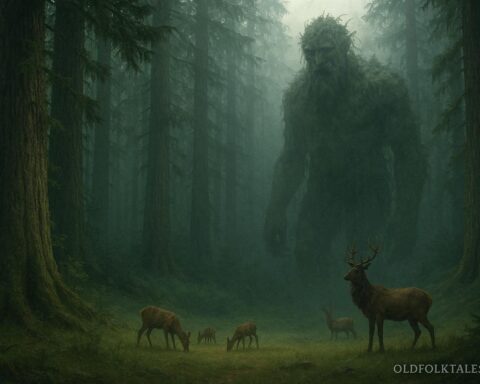
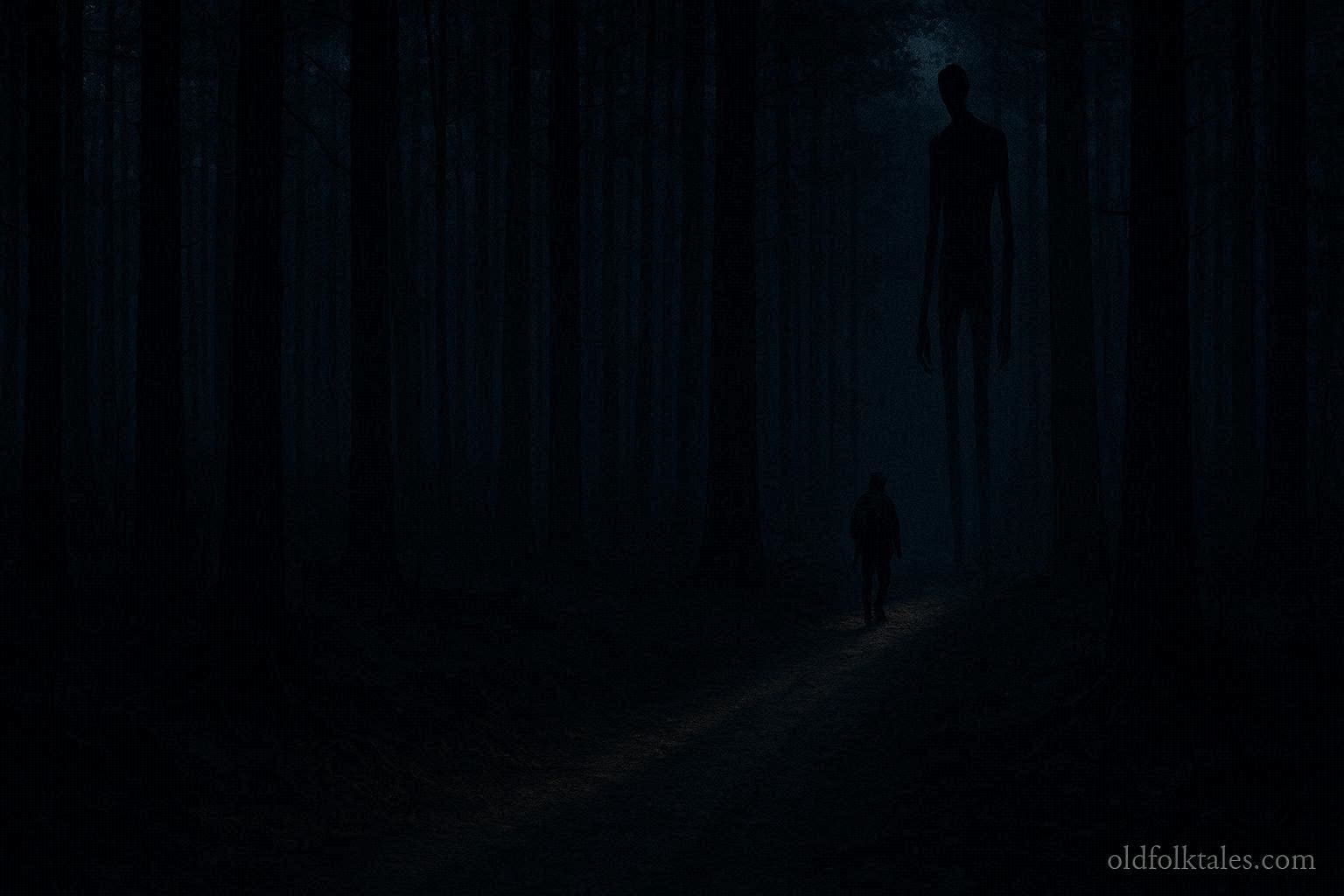
The name Nalusa Falaya describes the creature’s most striking appearance. According to oral tradition, the being is extremely tall and thin, with a body so dark that it resembles a living shadow. Some storytellers describe it as having long limbs and hollow eyes, while others say it appears as a shifting dark shape that blends into the surrounding forest.
Unlike many creatures in folklore that roar or attack openly, the Nalusa Falaya is known for its silent presence. The spirit does not usually approach people directly. Instead, it is believed to observe travelers from a distance while standing motionless among the trees or along narrow trails.
Explore the heart of America’s storytelling — from tall tales and tricksters to fireside family legends.
For people traveling through the forests long ago, this idea was deeply unsettling. The southeastern wilderness could be dense and quiet, with tall trees blocking sunlight and thick undergrowth hiding movement. A person walking through such a landscape might occasionally feel as though they were being watched, even when no one could be seen.
Stories about the Nalusa Falaya grew from these feelings of unease. Travelers sometimes reported glimpsing a tall dark figure between trees that disappeared when they tried to look closer. Others said they sensed a strange presence behind them while walking along lonely paths.
In Choctaw storytelling, the Nalusa Falaya was often associated with negative emotions and harmful intentions. The spirit was believed to feed on fear, sadness, or anger. For this reason, elders warned that people who allowed their thoughts to become filled with hatred or bitterness might attract the attention of dark spirits.
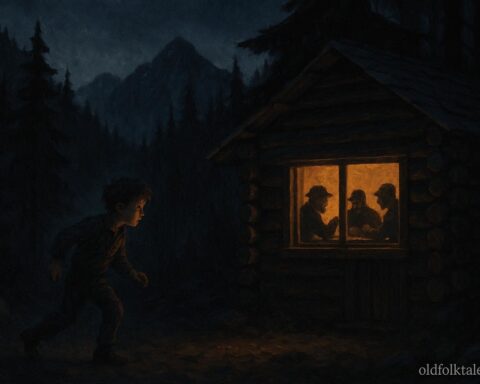
One story tells of a young traveler who set out alone along a forest path that connected two villages. The journey was not long, but it passed through a thick woodland where sunlight rarely reached the ground.
As the traveler walked deeper into the forest, he began to feel uneasy. The wind had grown quiet, and the usual sounds of birds and insects seemed to fade. At first he ignored the feeling and continued walking.
Soon he noticed something strange ahead on the trail. Between two trees stood a tall dark shape that seemed almost human but far too thin and motionless to be a person. The figure appeared to stretch upward like a shadow cast by the fading light.
The traveler stopped and stared. When he blinked, the shape seemed to shift slightly and then vanish into the darkness of the forest. Unsure of what he had seen, he hurried along the path.
A few moments later the feeling of being watched returned. The traveler turned around quickly but saw nothing behind him. Only the quiet forest remained.
When he finally reached the next village, he told the elders about the strange shadow he had seen on the trail. The elders listened carefully and then explained that he may have encountered the Nalusa Falaya.
They told him that the Long Black Being often appears along lonely paths where travelers walk alone. The spirit rarely attacks, but it watches silently and spreads fear among those who notice it.
The elders advised the traveler that the best protection against such spirits was a calm mind and a strong heart. Dark beings were believed to gain strength from fear and anger, so maintaining courage and balance was considered the best defense.
Another story describes hunters who camped overnight in a deep forest valley. During the night one of them awoke and noticed a tall shadow standing just beyond the edge of the firelight. The figure did not move or speak, but its shape was clearly visible against the faint glow of the flames.
When the hunter blinked and looked again, the shadow had disappeared. In the morning the hunters discussed the strange event and concluded that the Nalusa Falaya might have been watching them during the night.
These stories were never meant simply to frighten listeners. In Choctaw tradition, they carried deeper meanings about emotional balance and spiritual awareness. The Nalusa Falaya symbolized the harmful effects of negative thoughts and destructive behavior.
Elders taught that allowing anger, jealousy, or cruelty to grow inside a person could invite harmful spiritual influences. By living with kindness and respect, people could keep such forces away from their lives.
Folklore researchers later documented these stories when studying Choctaw oral traditions. The accounts preserved in archives show how legends like the Nalusa Falaya helped communities teach moral lessons and explain mysterious experiences in the wilderness.
The figure of the Long Black Being also reflects the powerful atmosphere of the southeastern forests where these stories originated. Thick trees, quiet trails, and deep shadows naturally inspire imagination and caution.
Today the legend of the Nalusa Falaya continues to be remembered as part of Choctaw cultural storytelling. The tale reminds listeners that fear and darkness can exist not only in the outside world but also within the human mind.
By telling the story of the silent shadow that watches from the forest, elders encouraged younger generations to maintain courage, kindness, and emotional balance. In this way the legend serves both as a cautionary tale and a reflection of the spiritual beliefs that shaped Choctaw culture for generations.
Click to read all American Cryptids & Monsters — creatures of mystery and fear said to inhabit America’s wild landscapes
Moral Lesson
Negative thoughts and harmful emotions can attract trouble. Maintaining courage, kindness, and balance helps protect both the mind and spirit.
Knowledge Check
- What does the name Nalusa Falaya mean?
The Long Black Being. - How is the Nalusa Falaya usually described?
As a tall, thin shadowlike spirit that watches people from a distance. - Where is the creature most often said to appear?
Along forest trails and deep woodland areas. - What emotion is the Nalusa Falaya believed to feed on?
Fear and negative feelings. - What advice did elders give to protect against the spirit?
Remain calm, courageous, and avoid negative thoughts. - What lesson does the legend teach?
Emotional balance and kindness help keep dark influences away.
Source
Adapted from materials preserved in the Mississippi Department of Archives and History
Cultural Origin
Choctaw traditions