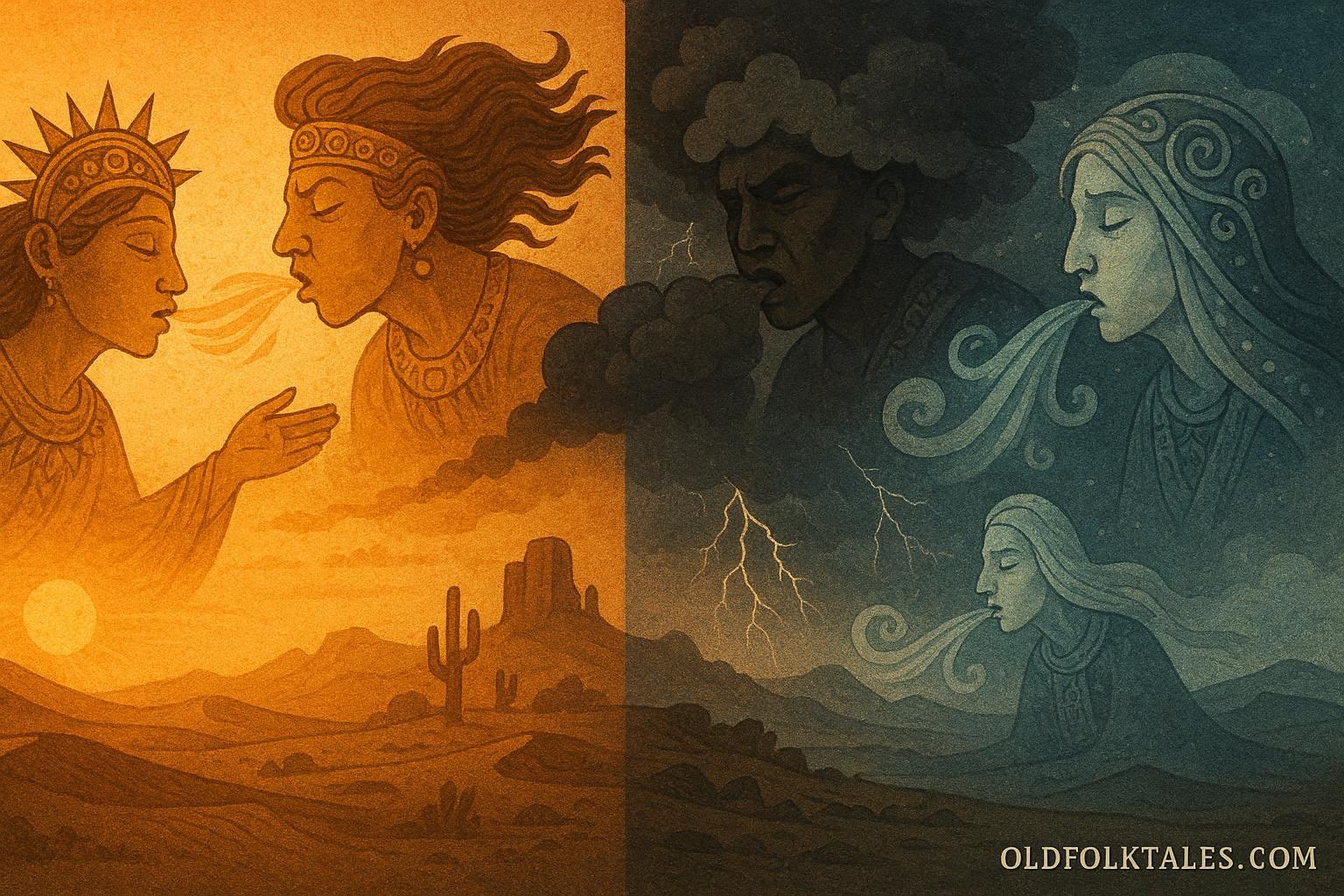
Across vast desert lands and open skies, people observed the wind not as a single force but as many voices moving with purpose. The wind did not simply blow. It arrived with intention, direction, and meaning. From this understanding grew the belief that the winds were guided by spirit beings who lived in the four directions, each carrying its own power and responsibility.
In this tradition, the East Wind was known as the bringer of beginnings. It arrived with the rising sun, carrying gentle air that signaled new life and fresh opportunities. Villagers believed this wind awakened the Earth each morning, stirring plants from rest and guiding animals into motion. When the East Wind blew softly, it was seen as a blessing, a reminder that each day carried the chance to begin again.
The South Wind was warmer and more intense. It carried heat across the land and was often associated with growth and energy. Crops depended on its presence, yet too much of it could dry the soil and weaken the people. Elders taught that the spirit of the South Wind required respect. Offerings and prayers were sometimes made to ensure that its strength remained balanced and did not become destructive.
Discover celestial myths of the sun, moon, and stars — and the heroes who bridged earth and sky.
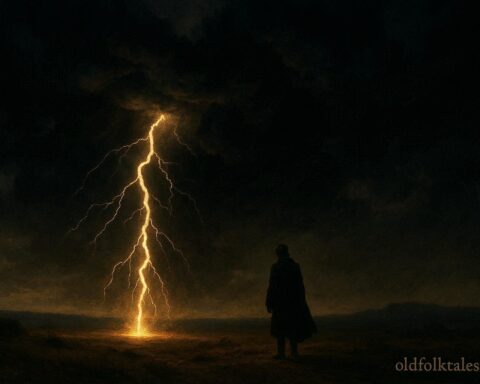
From the West came a very different force. The West Wind carried storms, rain, and change. Dark clouds often followed in its path, and thunder could be heard rolling across the sky. While some feared this wind, others understood its importance. Without the storms it brought, rivers would dry and life would struggle. The West Wind spirit was seen as powerful and unpredictable, demanding both caution and respect.
The North Wind was the most feared of all. It brought cold air, frost, and harsh conditions that tested the endurance of both people and animals. During its strongest presence, the land could become still and silent. Yet even this wind had its purpose. It cleared away weakness, preserved the land, and prepared it for renewal. The North Wind spirit was often described as strict but necessary, teaching survival and resilience.
Stories told of how these four wind spirits worked together to maintain balance in the world. If one spirit became too dominant, the harmony of nature would be disrupted. There were times when the winds seemed to argue, shifting suddenly and violently as though competing for control. During such moments, elders would gather and perform rituals to restore balance, calling upon each spirit to return to its rightful place.
One well known story tells of a time when the South Wind refused to yield. It blew continuously, drying rivers and scorching the land. Crops began to fail, and the people grew worried. The elders said that the South Wind spirit had grown proud and forgotten its role. In response, they called upon the West Wind, asking it to bring rain and calm the imbalance. Soon, dark clouds gathered, and a powerful storm swept across the land, restoring life and teaching the South Wind humility.
Another story speaks of a traveler who journeyed across the land and encountered each wind spirit. In the East, he felt hope and renewal. In the South, he felt strength and energy. In the West, he witnessed power and transformation. In the North, he learned endurance and patience. When he returned home, he shared his experience, teaching others that the winds were not random forces but living expressions of balance in the world.
These beliefs also shaped daily life. People paid attention to the direction of the wind before making decisions such as planting crops, traveling, or preparing for storms. The winds were seen as messengers, offering guidance to those who listened carefully. Ignoring these signs was considered unwise, as it meant turning away from the wisdom of the natural world.
Children were taught about the wind spirits from a young age. They learned to recognize the feel of each wind and understand what it meant. These lessons were not only about weather but also about balance in life. Just as the winds must remain in harmony, so too must people learn to balance strength with patience, action with reflection, and growth with rest.
Over time, the story of the four wind spirits became a way to explain the changing seasons. The shifting patterns of weather were seen as the movements of these spirits as they took turns guiding the Earth. This understanding connected people deeply to their environment, encouraging respect for the forces that shaped their lives.
Even today, the idea of winds carrying meaning continues to resonate. The belief that nature operates through balance and intention remains a powerful lesson. The wind, though unseen, reminds people that not everything needs to be visible to be understood. Its presence is felt, its effects are seen, and its lessons continue to guide those who listen.
Step into America’s cultural roots — from folk healing and weather lore to seasonal celebrations.
Moral Lesson
Balance is essential in both nature and life, and respecting the forces around us helps maintain harmony and stability.
Knowledge Check
- What did the East Wind represent?
It represented new beginnings and renewal. - Why was the South Wind both helpful and dangerous?
It brought warmth for growth but could also cause dryness and destruction if too strong. - What did the West Wind bring to the land?
It brought storms, rain, and change. - Why was the North Wind feared?
It brought cold, harsh conditions that tested survival. - What happened when one wind spirit became too powerful?
It disrupted the balance of nature and caused problems for the land and people. - What lesson did the traveler learn from the wind spirits?
He learned that each wind had a purpose and that balance was necessary for harmony.
Source
Adapted from materials preserved in the American Philosophical Society Indigenous Manuscripts Collection
Cultural Origin
Southwestern tribal traditions