In the heart of historic Charleston stands Dock Street Theatre, a place known for its long connection to performance, art, and storytelling. Its walls have witnessed countless plays, voices, and moments that once filled the stage with life.
During the day, the theater appears elegant and calm.
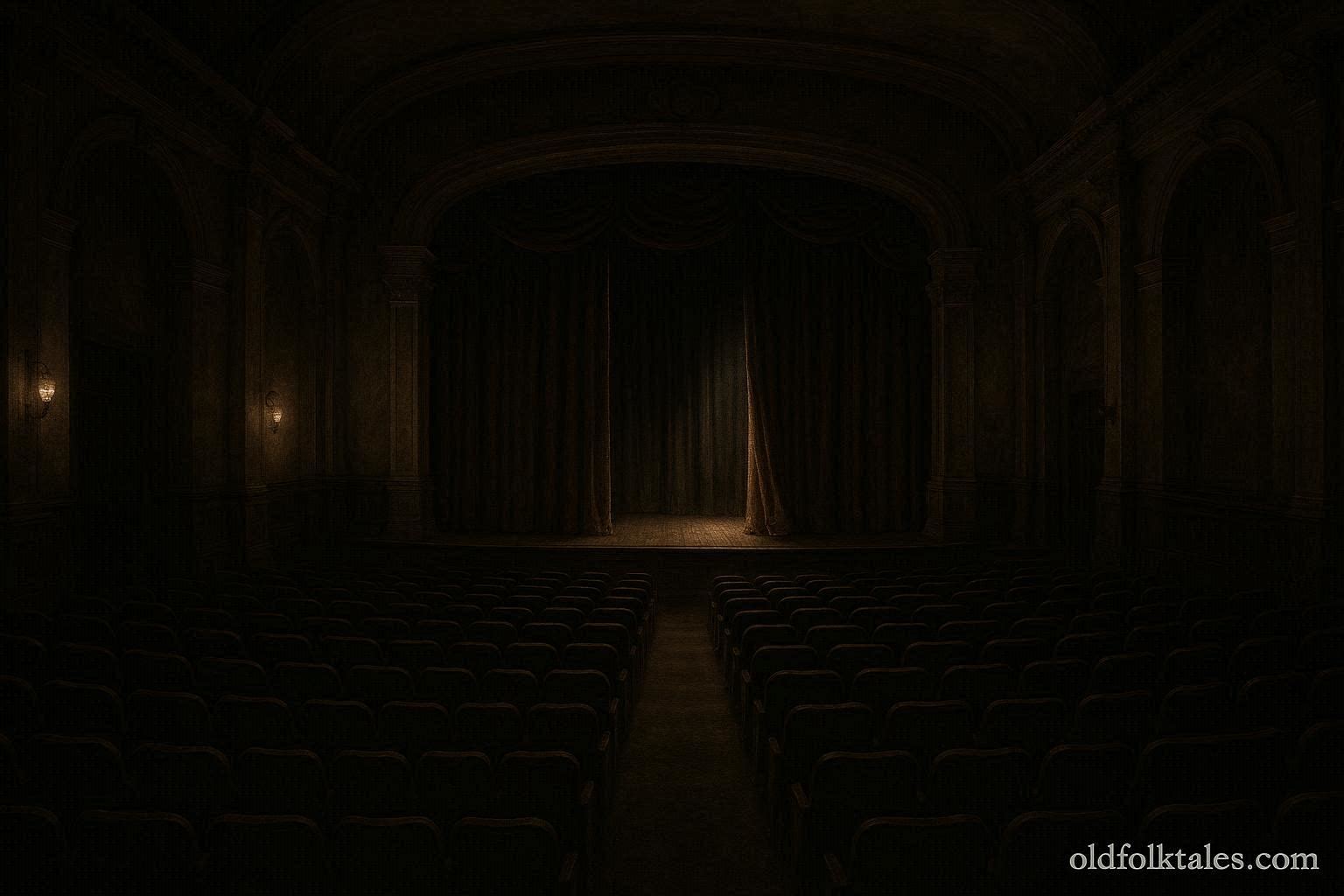
Rows of seats face the stage, quiet and orderly. The curtains rest without movement, and the wooden floor holds no trace of the activity that once defined it. Visitors walk through the space, observing its design and imagining the performances that once took place.
But as night approaches, the atmosphere begins to change.
The light fades.
The silence deepens.
And within the theater, something begins to stir.
At first, it is barely noticeable.
A soft creak from the stage.
A faint shift in the air.
Small sounds that could easily be dismissed as the natural settling of an old building. But those who remain long enough begin to notice a pattern.
The sounds are not random.
Explore Native American beings, swamp creatures, and modern cryptid sightingsacross the country.
They carry rhythm.
They feel intentional.
Caretakers and staff who have spent time in the theater after hours often speak of these moments. They describe hearing footsteps crossing the stage when no one is present. The sound is light, measured, as though someone is moving carefully from one side to the other.
When they check, the stage is empty.
The seats remain still.
Nothing appears out of place.
Yet the sense of activity remains.
There are times when the curtains shift slightly, even when there is no breeze to move them. On rare occasions, lights seem to flicker softly, not enough to illuminate the space fully, but enough to suggest motion.
Some describe hearing what sounds like distant voices.
Not clear words, but tones that rise and fall, like lines being spoken in a performance that cannot be fully heard. The sound carries briefly, then fades, leaving the theater in silence once more.
Those who understand the deeper meaning of such places offer their perspective.
They explain that theaters are spaces built on expression.
Every performance leaves an impression. Every voice that has spoken on the stage, every movement, every moment of emotion, becomes part of the place itself. Over time, these moments do not simply disappear.
They remain.
Not as visible figures, but as presence.
As echoes of what once was.
One account tells of a stage worker who stayed late one evening to complete his tasks. He had worked in the theater for many years and was familiar with its sounds and structure.
As he moved across the stage, checking the set and ensuring everything was in place, he heard a soft step behind him.
He turned quickly.
No one was there.
He paused, listening carefully, expecting the sound to repeat. For a moment, there was nothing. Then, just as he resumed his work, the sound came again.
Another step.
Light.
Measured.
He walked toward the center of the stage, focusing his attention on the space around him. The air felt different, not in temperature, but in presence. It was as though the stage was no longer empty.
He stood still.
Then, for a brief moment, he heard something more.
A voice.
Faint and distant, as though carried from another time. It was not loud enough to understand, but it held a tone that felt deliberate, like a line spoken during a performance.
The sound lingered, then faded.
He remained where he was, not out of fear, but out of respect for what he had experienced. He did not try to explain it. He simply acknowledged that the theater held more than what could be seen.
When he finished his work and left the building, he spoke of the experience carefully. He described it not as something frightening, but as something meaningful.
A continuation.
Others who have spent time in the theater after hours share similar stories. Some feel a presence without hearing anything. Others hear sounds without seeing movement. Each experience is different, but all point to the same understanding.
The theater is not empty.
It carries its past within it.
Visitors who attend performances during the day or evening often notice nothing unusual. The theater fulfills its purpose as it always has, hosting plays and welcoming audiences.
But when the lights go out and the doors are closed, the space returns to its quiet state.
And in that quiet, the echoes of past performances seem to continue.
Not for an audience.
Not for recognition.
But simply because they remain.
Even now, the stage stands ready.
The curtains wait.
And the silence, though deep, is never complete.
Because somewhere within the theater, the performance continues.
Unseen.
Unheard by many.
But present for those who listen closely enough.
Click to explore all American Ghost Stories — haunting legends of spirits, lost souls, and mysterious places across the U.S.
Moral Lesson
Places filled with human expression can carry lasting echoes, reminding us that meaningful moments never truly disappear.
Knowledge Check
- Where is the Dock Street Theatre located?
In Charleston, South Carolina. - What unusual activity is reported in the theater?
Footsteps, voices, and movement without visible people. - When do these events usually happen?
At night when the theater is quiet. - What did the stage worker hear?
Footsteps and a faint voice. - What do experts believe about such places?
They hold echoes of past performances. - What lesson does the story teach?
Moments of expression can leave lasting impressions.
Source
Adapted from materials preserved by College of Charleston
Cultural Origin
South Carolina folklore