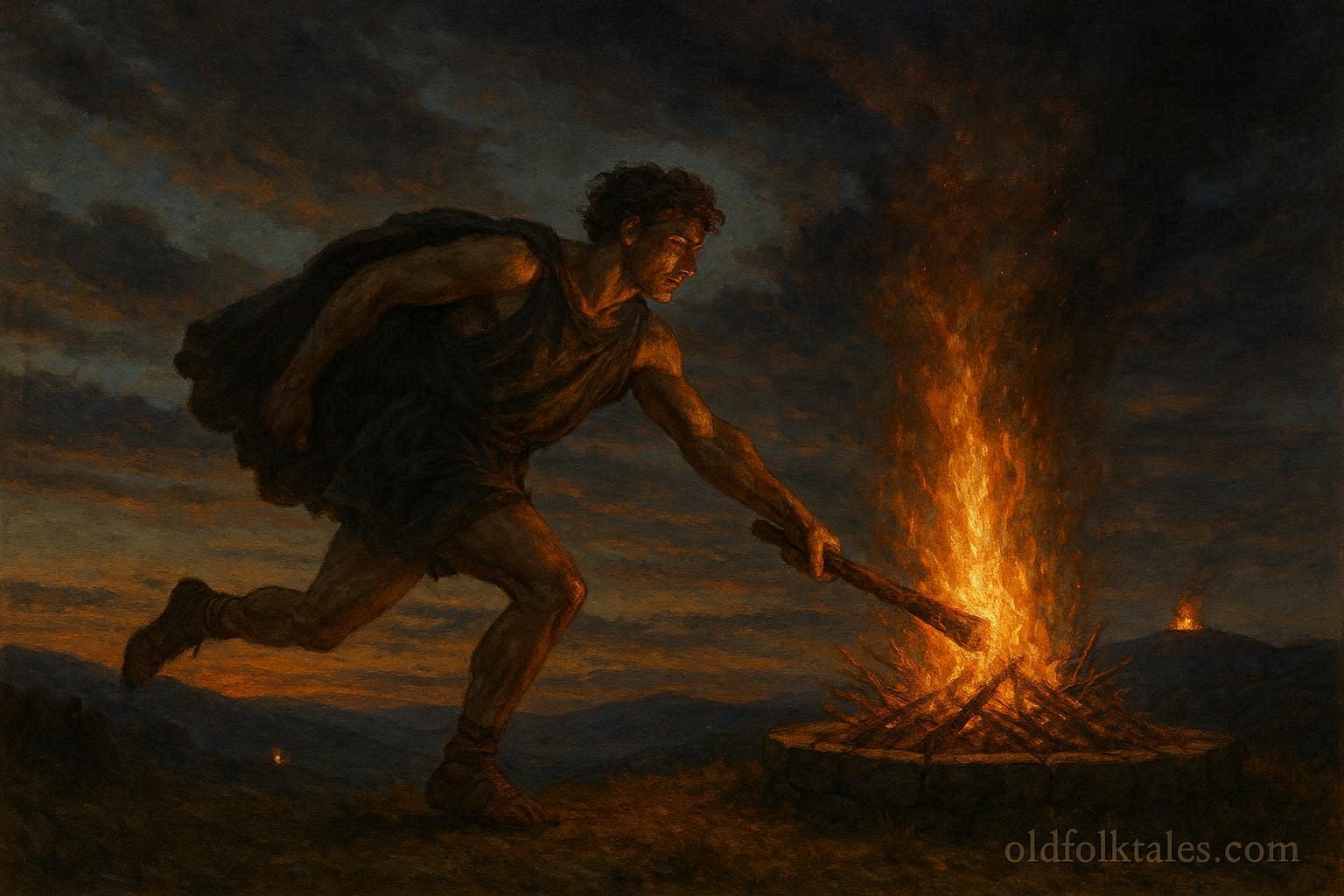
In the times before modern communication, communities relied on natural signals to convey important messages across great distances. One of the most effective methods was the use of signal fires. From the top of a hill or mountain, a fire could be seen for miles, sending warnings to people far away. Yet, lighting the fire at the right time, and ensuring the message reached its intended destination, required someone both swift and vigilant.
This was the role of the Signal Fire Runner.
The runner was not merely fast; they were trained to understand the landscape as intimately as they knew their own home. Each hill, ridge, and valley was mapped in their mind. They knew where the wind could carry sparks, where terrain could block vision, and how to make the fire visible to neighboring settlements. Their responsibility was immense, for a delayed signal could mean disaster for the people who depended on them.
Stories tell of the runner starting at dawn, carrying bundles of dry kindling and prepared flames. They would sprint along narrow paths, leap across streams, and climb rocky slopes. The journey was exhausting, yet the runner’s determination never faltered. Each fire had to be carefully lit, large enough to be seen from afar but controlled so as not to endanger the hillsides themselves.
One day, as the story goes, scouts spotted a band of raiders approaching a valley settlement. The runner was dispatched immediately. With heart pounding and legs moving swiftly, they ran from one hilltop to the next, igniting signal fires along the way. The flames leapt into the sky, sending a message of imminent danger to all who could see them. Villagers prepared defenses, hid their livestock, and gathered their families, all thanks to the runner’s tireless effort.
Step into America’s cultural roots — from folk healing and weather lore to seasonal celebrations.
The terrain was often unforgiving. Steep cliffs, thick underbrush, and unpredictable weather tested the runner’s skill and endurance. Rain threatened to extinguish flames before they could be seen. Snow made paths treacherous. Yet, the runner adapted to every challenge, understanding that the message they carried was a lifeline.
Communities came to revere the runner not only for physical skill but for devotion to duty. While others slept, hunted, or worked the land, the runner kept watch over the safety of many. Their presence was a reminder that communication and vigilance were as crucial as any weapon or fortification.
The Signal Fire Runner’s legend grew with each successful warning. Some say the runner could traverse dozens of miles in a single day, reaching settlements that were thought impossible to contact quickly. Others claimed that even when exhausted, the runner’s determination never waned; their legs carried them onward, and their hands kept the flames alive, fueled by unwavering focus.
In one famous tale, a sudden landslide blocked the usual path between hills. The runner could have turned back, but instead they found an alternative route, climbing a neighboring ridge and lighting the signal fire from an unexpected angle. The message still reached the villages below, averting panic and disaster. Observers marveled at the ingenuity and bravery shown under pressure.
The runner’s courage was not born from the desire for recognition. They acted out of loyalty, responsibility, and an understanding that their role protected lives. In many accounts, the runner’s speed became legendary. Children would race along local hills, imagining themselves as the famed messenger, inspired by the story of someone who never hesitated in the face of danger.
As time passed and new methods of communication emerged, the runner’s role became less critical. Yet the stories endured, told by elders around fires, shared to teach the value of vigilance, dedication, and quick thinking. The hills, once the stages for a real hero’s journey, became living symbols of their legacy.
Even today, when someone sees a hilltop aglow at night or imagines a swift figure racing across a ridge, the memory of the Signal Fire Runner lives on. It is a reminder that courage often comes in quiet, tireless forms, and that the safety of a community can rest on the dedication of a single individual.
The legend of the Signal Fire Runner shows that heroism is not only measured in battle or wealth, but in the ability to act quickly, think clearly, and carry responsibility for the well-being of others. Every flame they lit was a lifeline, every step a testament to endurance, and every message delivered a safeguard for countless lives.
Explore ancient Native American creation myths and the symbolic tales that shaped America’s belief systems.
Moral Lesson
Dedication, vigilance, and quick action can protect communities and save lives, even when facing great challenges.
Knowledge Check
- What was the main role of the Signal Fire Runner?
To light fires across hilltops to warn distant communities of danger. - What qualities made the runner exceptional?
Speed, endurance, knowledge of terrain, and vigilance. - How did the runner ensure the message reached villages?
By carefully lighting visible fires and adapting to obstacles or unexpected challenges. - Why were the communities grateful to the runner?
The runner’s actions protected lives and allowed villagers to prepare for threats. - How did the runner respond to obstacles like landslides or storms?
They found alternative routes and ensured the fires remained visible. - What lesson does the story teach about responsibility and heroism?
Heroism includes tireless dedication, quick thinking, and acting for the greater good.
Source
Adapted from materials preserved by Smithsonian Institution
Cultural Origin
Indigenous communication folklore