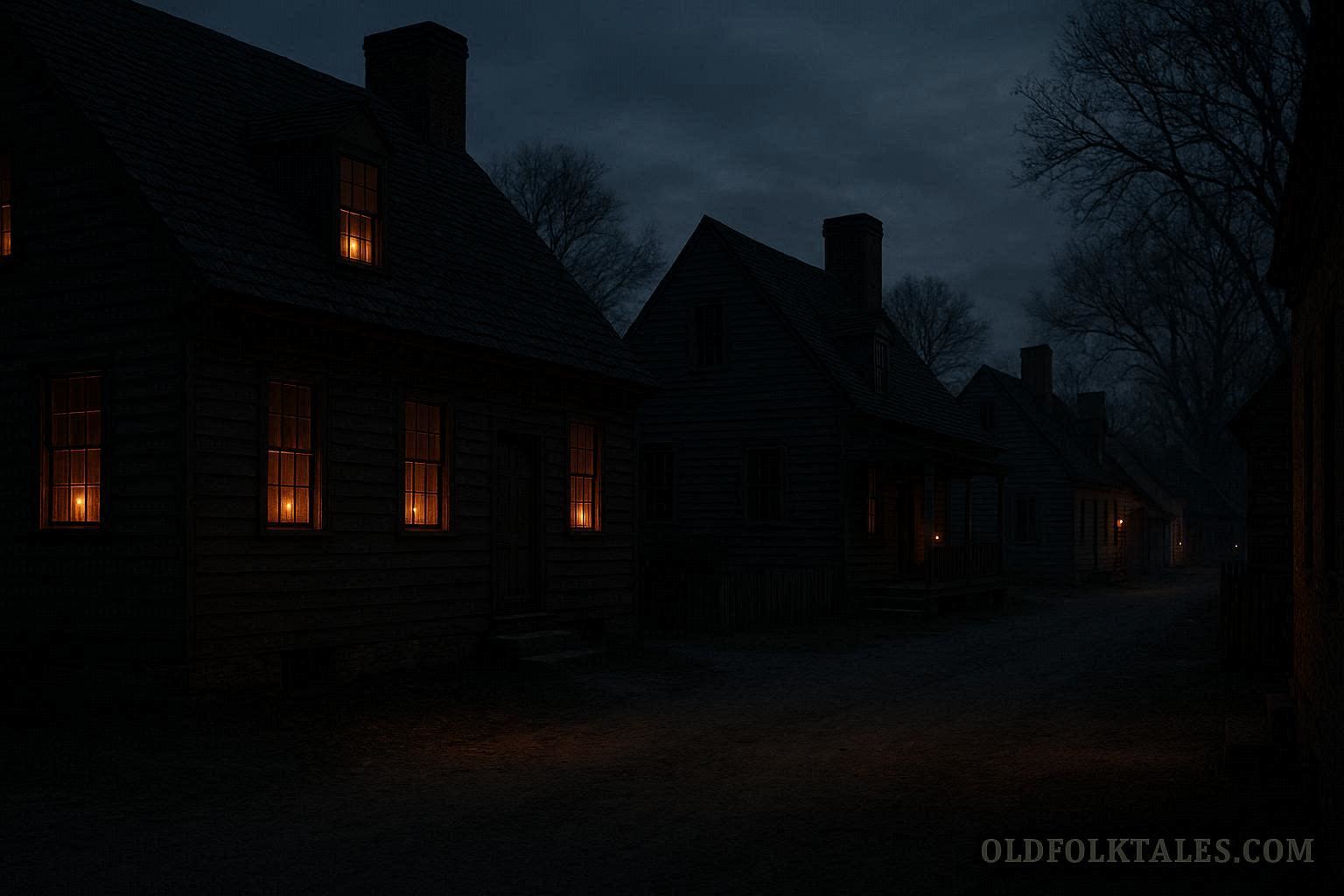
When the events of the Salem Witch Trials finally came to an end, the town of Salem did not return to normal as quickly as many had hoped. The accusations stopped, the trials ceased, and life slowly resumed, but something remained.
A quiet unease settled over the town.
People tried to move forward. Homes were repaired, routines restored, and conversations shifted away from the fear that had once gripped every corner of the community. Yet beneath this effort to return to ordinary life, there lingered a sense that the past had not fully released its hold.
It began with small things.
A door found open when it had been carefully shut. Footsteps heard in empty rooms. Objects misplaced and later discovered in unusual locations. None of these events were dramatic on their own, but they were frequent enough to be noticed, and consistent enough to raise questions.
At first, people said little.
The memory of accusations and fear was still fresh, and no one wanted to risk being misunderstood. But as similar experiences were quietly shared between neighbors, a pattern began to emerge.
The disturbances were not random.
Step into America’s cultural roots — from folk healing and weather lore to seasonal celebrations.
They seemed to occur most often in places closely tied to the events of the trials. Certain homes, certain paths, and certain meeting spaces carried more reports than others. It was as if the locations themselves held something that had not yet faded.
Some described hearing voices.
Not loud or clear, but faint, as though carried from a distance. A whisper in an otherwise silent room. A murmur just beyond understanding. Those who heard them often paused, listening carefully, only to find the sound gone as quickly as it had appeared.
Others spoke of shadows.
Not the ordinary kind cast by candlelight, but shapes that seemed to move independently, shifting along walls or across floors without a clear source. These sightings were brief, often dismissed even by those who experienced them, yet they left a lasting impression.
The stories spread slowly.
No one made bold claims. Instead, they shared what they had seen or heard with caution, careful not to repeat the mistakes of the past. The town had learned the danger of fear when it grew unchecked, and many were determined not to allow it to take hold again.
Still, the experiences continued.
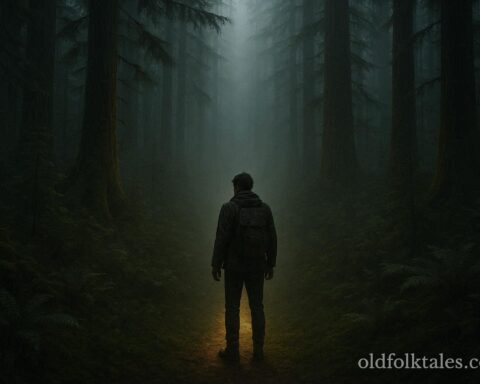
One account told of a man walking home late in the evening. As he passed near an open field, he heard footsteps behind him, steady and measured. When he turned, no one was there. The sound stopped. When he continued walking, it returned.
He did not run.
Instead, he walked calmly, listening until the sound faded on its own. The next day, he mentioned it quietly to a neighbor, who responded with a similar story from a different part of town.
These shared moments created a sense of recognition.
People began to understand that whatever was happening, they were not alone in experiencing it. Yet the meaning remained unclear.
Some believed the events were a natural result of memory.
The trials had been intense, filled with fear and uncertainty. It was possible that the mind, shaped by such experiences, continued to interpret ordinary sounds and sights in unusual ways. The town had lived through something powerful, and perhaps it simply took time for those effects to settle.
Others were not so certain.
They believed the land itself remembered.
That events of such significance could leave an imprint, something that remained even after the people involved had moved on. In this view, the sounds and shadows were not active forces, but echoes, traces of moments that had once taken place.
This idea did not bring fear so much as reflection.
If the past could remain in such a way, then it was important to understand it, to acknowledge it, and to learn from it. The stories became less about danger and more about memory.
Over time, the tone of the accounts began to change.
What had once been described with unease was now spoken of with a kind of quiet respect. The events were not ignored, but neither were they exaggerated. They became part of the town’s history, something to be remembered rather than feared.
Visitors who came to Salem often heard these stories.
They were told not as warnings, but as reminders of what the town had experienced. Guides and storytellers spoke of the trials, and then of what followed, explaining how the effects of such a period could linger in ways that were not always visible.
Even generations later, there were occasional reports.
A sound where there should be silence.
A movement where nothing should be.
A moment that felt connected to something older than the present.
No one claimed to fully understand these occurrences.
They were not documented in official records, nor were they proven in any measurable way. Yet they persisted, carried forward through personal accounts and shared experiences.
The story of Salem did not end with the trials.
It continued in the quiet moments that followed, in the effort to rebuild trust, and in the recognition that actions have lasting consequences. The aftermath became part of the larger narrative, shaping how the events were remembered and understood.
In the end, the legends of Salem’s aftermath were not about fear alone.
They were about memory.
About the way a community carries its past.
And about the possibility that some moments leave impressions that do not fade quickly, but remain, subtle and persistent, reminding those who come after to be careful, thoughtful, and aware.
Explore how American legends shaped the nation — from frontier heroes to Revolutionary War tales.
Moral Lesson
The past can leave lasting effects, and it is important to learn from history to build a wiser and more thoughtful future.
Knowledge Check
- What historical event is connected to the story?
The Salem Witch Trials. - What kinds of strange events were reported after the trials?
Unexplained sounds, moving shadows, and objects being misplaced. - Where did most of these events occur?
In places connected to the events of the trials. - Did people openly talk about these experiences at first?
No, they shared them quietly due to fear of being misunderstood. - What are two explanations people gave for these events?
Psychological effects from the past or lingering echoes of history. - What is the main idea of the story?
That historical events can leave lasting impressions on people and places.
Source
Adapted from materials preserved by Harvard University
Cultural Origin
New England folklore