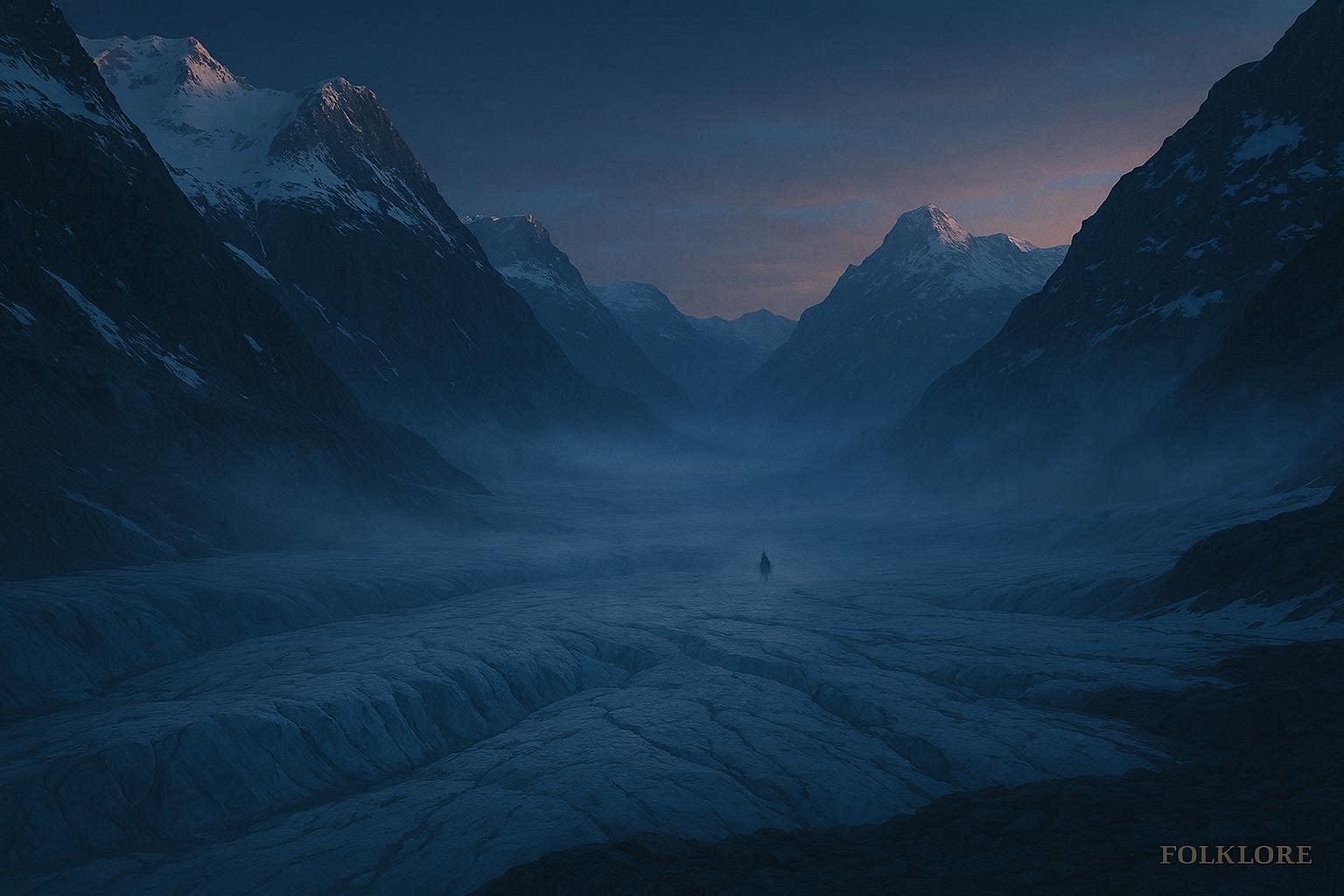
High in the rugged Rocky Mountains, glaciers stretch like frozen rivers, carving through ancient peaks and valleys. These icy expanses are inhospitable and isolated, where few venture without preparation. The cold air bites sharply, and the silence of snowfields is profound. It is here, among these glaciers, that tales of the Whispering Beast have persisted for generations.
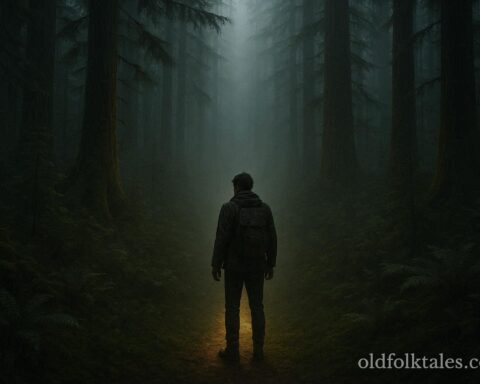
Locals and experienced hikers describe a sensation unlike any ordinary wildlife encounter. As they traverse the crevasses and frozen slopes, a subtle vibration seems to follow them, almost as if the glacier itself were alive. Occasionally, a low growl resonates across the ice. It is deep and guttural, reverberating through the valley, yet no creature is ever seen. Other times, a faint whisper carries on the wind. Names, unintelligible phrases, or soft warnings are said to drift through the air, leaving hikers unsettled.
One account recalls a group of mountaineers scaling a glacier in late autumn. As the sun dipped behind jagged peaks, an eerie quiet settled over the slope. Suddenly, a sound like a low murmur swept past them. One hiker swore he heard a warning not to proceed further. The others did not hear the words clearly but felt the weight of the message in the still air. They reported no footprints, no animal tracks, and no signs of human presence.
Explore how American legends shaped the nation — from frontier heroes to Revolutionary War tales.
These experiences are not fleeting. Many describe the whispers and growls as recurring phenomena. They do not appear in one spot alone but seem to follow hikers along valleys and over ice fields. Some suggest the sound originates from the glacier itself, amplified by the ice and wind in unusual ways. Others believe the creature is real, a guardian or specter of the mountain, invisible to the eye but perceptible through sound.
The physical features of the terrain add to the mystery. Snowfields, crevasses, and ice caves create natural acoustics, making noises echo and distort. Sounds that might seem distant could be much closer than expected, and natural ice movements produce low groans that could be mistaken for a living presence.
Yet, the consistency of the reports makes some hikers certain something beyond natural explanation exists. They describe the feeling of being watched, a sense of presence that cannot be accounted for by wind or wildlife. A nearby avalanche might shift ice, or a snow-laden branch might crack, but the deep resonance of a growl or whisper is distinct.
The cultural context reinforces these encounters. For centuries, local Indigenous peoples and early explorers spoke of guardian spirits inhabiting high mountain regions. In some versions of Rocky Mountain folklore, unseen entities patrol glaciers, warning travelers of danger and ensuring respect for the land. Such stories may have inspired contemporary accounts, connecting modern hikers’ experiences with a long tradition of oral storytelling.
Some scientists and researchers from University of Montana have studied the acoustic properties of glaciers. They note that natural phenomena, such as creaking ice and shifting snow, can create noises that carry for miles. Nevertheless, these explanations do not account for the feeling of intention conveyed in some reports. Hikers often describe the whispers as directional, almost as if the unseen speaker is aware of their movements.
The Whispering Beast remains an elusive figure. There is no physical evidence of its existence, only repeated auditory experiences and a lingering sense of unease. Some hikers report returning to the same glacier months later and experiencing the same sounds, even in different weather conditions, further intensifying the legend.
Despite fear, many are drawn to these glaciers. The isolation and majesty of the Montana Rockies attract adventurers and nature enthusiasts. Encountering the Whispering Beast has become, for some, a rite of passage—a reminder that the wilderness holds mysteries beyond human understanding. The legend continues to thrive because of the intersection of natural phenomena, psychological perception, and the powerful influence of oral tradition.
The Whispering Beast exemplifies how natural landscapes can inspire stories of the unknown. It reminds visitors that mountains are not merely passive scenery but dynamic environments with forces both visible and unseen. In these high-altitude expanses, sound and silence carry weight, and every whisper may hint at a story older than the people who traverse the ice fields today.
Click to explore all American Ghost Stories — haunting legends of spirits, lost souls, and mysterious places across the U.S.
Moral Lesson
Respect the wilderness and approach unknown environments with caution and humility, as nature may hold both visible and unseen forces.
Knowledge Check
- Where is the story set?
Rocky Mountains - What unusual phenomenon do hikers hear?
Low growls and whispers - Are the sources of the sounds seen?
No, the creature or source remains invisible - What natural explanation could account for some of the sounds?
Ice shifting, crevasses, and acoustics of glaciers - How does folklore contribute to these experiences?
Stories of guardian spirits may influence perception of the sounds - Why do some hikers return to these glaciers despite fear?
The experience connects them to wilderness mysteries and local tradition
Source
Adapted from materials preserved by University of Montana
Cultural Origin
Rocky Mountain folklore