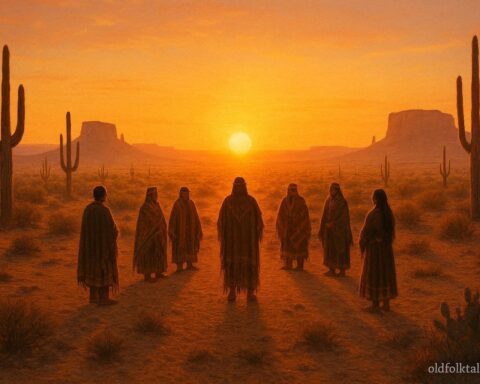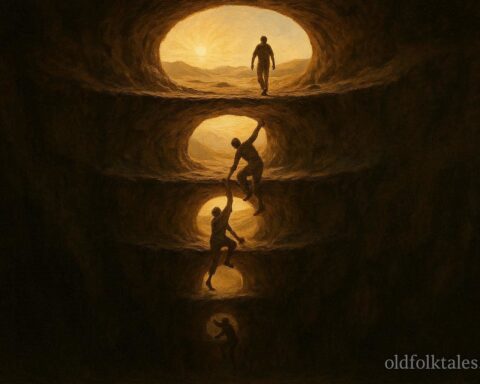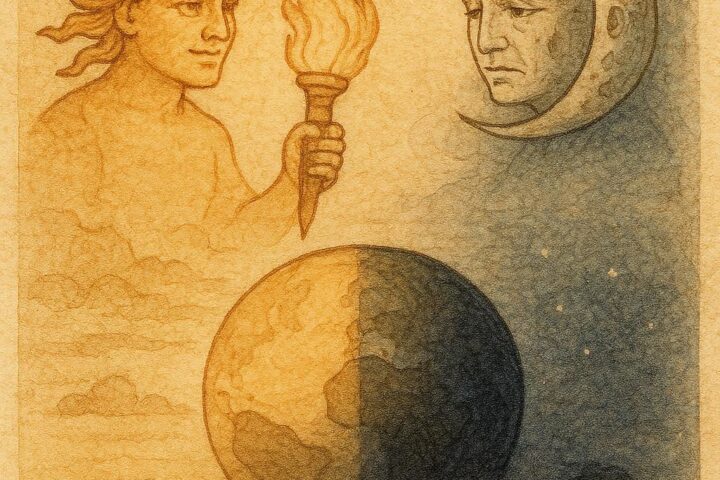
Long before the year followed a steady rhythm, before people could predict when the land would grow warm or when it would turn cold, time moved without clear structure. Days passed, but they did not belong to any pattern. The land remained in long stretches of sameness, with no clear beginning or ending to change.
In the northern regions now known as Alaska, where the land meets wide skies and the environment shapes every part of life, this lack of balance created uncertainty. The people who lived there depended on the land for survival, but without the rhythm of seasons, they could not prepare for what was to come.
There were times when the cold lasted too long.
Times when warmth stayed without change.
The animals moved without clear patterns.
The rivers did not follow expected cycles.
Nothing aligned.
The people began to realize that the world needed order, not just in space, but in time.
Among them were spiritual beings who observed these struggles. They were not separate from the land, but deeply connected to it. They understood the movement of wind, the shifting of ice, and the quiet signals of change that others could not yet recognize.
Explore how American legends shaped the nation — from frontier heroes to Revolutionary War tales.
They saw that time, like the land, needed to be shaped.
Not controlled.
But guided.
These beings gathered to decide how balance could be created. They did not act alone, because the task required more than one force. It required cooperation, each part contributing something different.
Together, they formed a plan.
The year would be divided.
Not randomly.
But with purpose.
Each part would carry its own role, its own feeling, its own responsibility in maintaining balance.
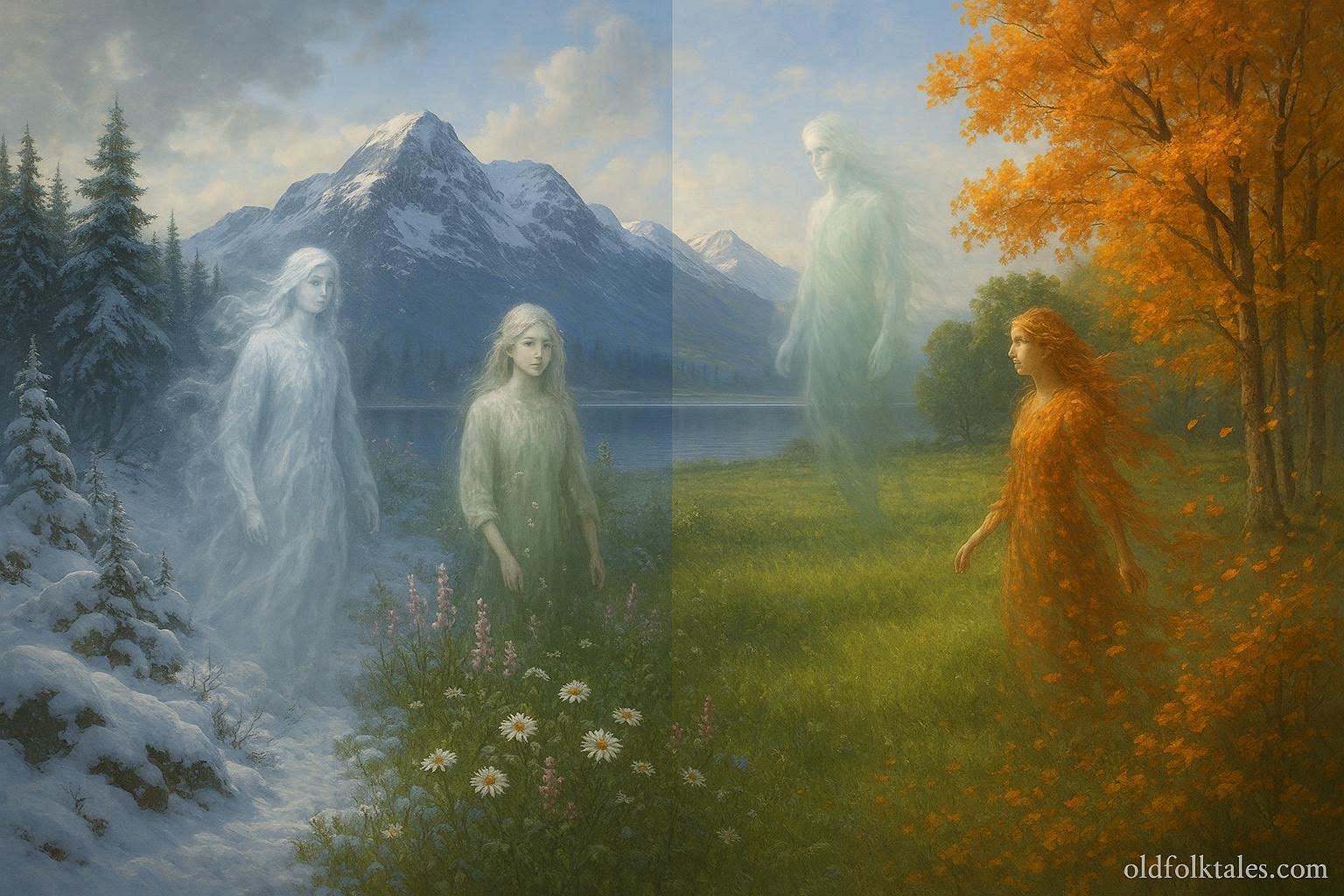
The first to step forward was the spirit of cold.
This spirit moved slowly, deliberately, bringing stillness to the land. As it took its place, the air grew colder, and the ground hardened. Snow began to fall, covering the earth in a quiet layer that slowed movement and softened sound.
This became the first season.
Winter.
A time of rest.
A time when the land would pause, gathering strength beneath the surface.
At first, the people found this difficult. The cold required preparation. Food had to be stored. Movement had to be careful. But over time, they began to understand its purpose.
Winter created stillness.
Stillness created renewal.
After the spirit of cold had taken its place, another spirit followed.
This one carried change.
Movement.
Growth.
As it stepped forward, the snow began to melt. Water flowed again. The ground softened, and small signs of life appeared. Plants began to rise, and animals returned to activity.
This became the second season.
Spring.
A time of beginning.
A time when life would return and grow again.
The people welcomed this change. After the long stillness, the movement of spring brought energy and hope. It showed that the world was not fixed, but capable of renewal.
Next came the spirit of warmth.
This spirit moved with strength and brightness, bringing longer days and steady heat. The land responded quickly. Plants grew fully, rivers flowed strongly, and animals thrived in the abundance.
This became the third season.
Summer.
A time of life.
A time of activity, growth, and gathering.
The people worked during this time, collecting what they would need for the future. They understood that this season, though full, would not last forever.
Finally, the last spirit stepped forward.
This spirit carried transition.
Not as sudden change, but as a gradual shift.
The warmth began to fade. The air cooled. Leaves changed color and fell, marking the slow return to stillness. The land prepared itself once again for rest.
This became the fourth season.
Autumn.
A time of preparation.
A time of reflection.
The people used this time wisely, knowing that winter would return. They gathered, stored, and planned, guided by the rhythm that had now been established.
With all four spirits in place, the year began to move in a cycle.
Winter to spring.
Spring to summer.
Summer to autumn.
Autumn back to winter.
The pattern repeated, steady and reliable.
The land changed, but in a way that could be understood.
The people adapted.
They learned when to move and when to rest, when to gather and when to wait. The rhythm of the seasons became part of life, guiding actions and shaping traditions.
In the teachings connected to the Athabaskan, the seasons are not just changes in weather. They are expressions of balance, each one necessary for the whole.
No season stands alone.
Each depends on the others.
Winter makes spring possible.
Spring leads to summer.
Summer prepares for autumn.
And autumn returns the world to winter.
This balance reflects a deeper understanding of life.
That change is constant.
That each phase has its purpose.
That nothing remains the same, yet everything follows a pattern.
Even now, the cycle continues.
The snow returns.
The ice melts.
The warmth grows.
The leaves fall.
The spirits, though not seen, remain present in the rhythm of the world.
Their work continues in every passing year, shaping time in a way that brings order, balance, and meaning.
Explore ancient Native American creation myths and the symbolic tales that shaped America’s belief systems.
Moral Lesson
Every phase of life has its purpose, and balance comes from accepting change.
Knowledge Check
- What was time like before the seasons were created?
It had no clear pattern or structure - Who created the seasons?
Spiritual beings connected to the land - What does winter represent?
Rest and stillness - What happens during spring?
Life begins to grow again - Why is autumn important?
It prepares for the coming winter - What is the main idea of the story?
That balance comes from the cycle of change
Source
Adapted from materials preserved by University of Alaska Fairbanks
Cultural Origin
Athabaskan