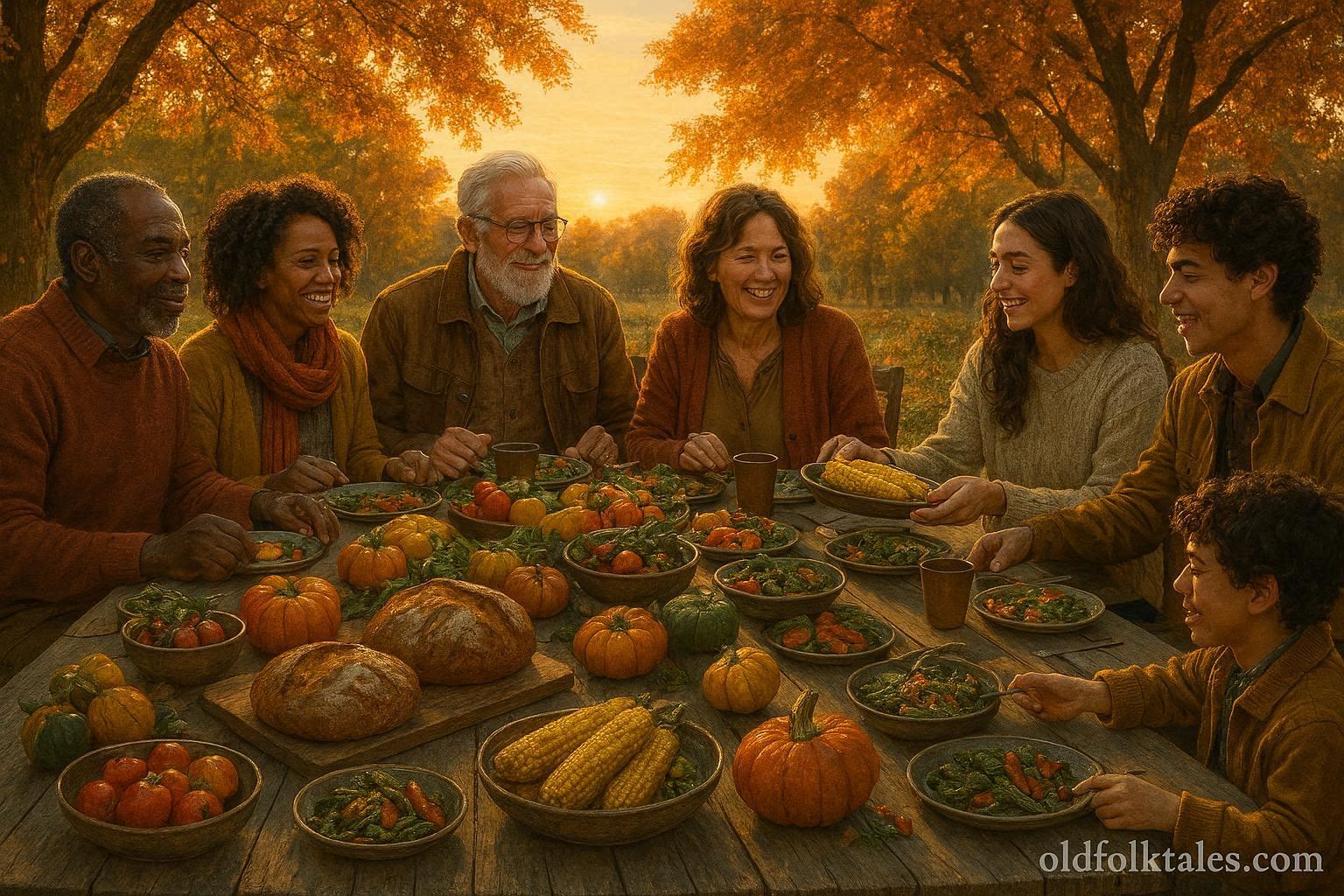
As the harvest season reaches its peak and the fields begin to empty after months of work, there comes a time when the focus shifts from labor to gratitude. In early communities across United States, this moment was not only practical but deeply meaningful. It marked the end of a long growing season and the beginning of a time to reflect, share, and give thanks. This moment became known as the Thanksgiving harvest sharing tradition.
The months leading up to this time were filled with effort. Planting, tending, and harvesting required patience, skill, and cooperation. The outcome of the season depended on many factors beyond human control. Weather, soil conditions, and time all played a role in determining whether the harvest would be strong or difficult. By the time the crops were gathered, the work had shaped both the land and the people who depended on it.
When the harvest was complete, communities began to prepare for a different kind of gathering. Instead of working in the fields, they came together in shared spaces. Food was brought forward, often prepared from the very crops that had been harvested. Corn, vegetables, grains, and other seasonal foods were arranged and shared among families and neighbors.
Discover celestial myths of the sun, moon, and stars — and the heroes who bridged earth and sky.
This gathering was not simply about eating. It was about recognition. Each dish represented the effort that had gone into the season. Each shared meal reflected the connection between the land and the people who worked it. The act of sharing food became a way of acknowledging that no one person achieved the harvest alone.
Gratitude was at the center of the tradition. People gave thanks not only for the food itself, but for the opportunity to grow, to work, and to sustain their communities. This gratitude extended beyond individuals, recognizing the role of nature and the environment in providing what was needed.
In early colonial settings, this tradition also became a moment of cooperation between different groups. Shared meals allowed for interaction, exchange, and understanding. While these moments were shaped by complex histories, the idea of gathering to share food and express thanks became a lasting part of the cultural practice.
Institutions such as the Smithsonian Institution preserve records of these traditions, showing how they developed over time and how they continue to influence modern celebrations. The harvest sharing tradition is not only historical, but also a reflection of values that remain important today.
As the gathering continued, conversations naturally followed. People spoke about the season that had passed, the work that had been done, and the lessons that had been learned. Stories were shared, connecting the present moment to past experiences. These conversations helped strengthen the sense of community, reinforcing the idea that people were part of something larger than themselves.
The environment of the gathering was often calm and welcoming. There was no urgency, no pressure to move quickly. The pace of the moment reflected the completion of the work. It was a time to rest, to appreciate, and to connect with others.
Children played a role in these gatherings as well. They observed the sharing, listened to the stories, and participated in the experience. Through this, they learned the importance of gratitude and community. The tradition was passed down not through instruction alone, but through participation.
The harvest sharing tradition also marked a transition between seasons. As autumn moved toward winter, the focus shifted from growth to preservation and preparation. The gathering served as a moment between these phases, allowing people to pause before the challenges of winter began.
Over time, the tradition evolved into what is now widely recognized as Thanksgiving. While modern celebrations may differ in form, the core ideas remain. The act of gathering, sharing food, and expressing gratitude continues to define the occasion.
In contemporary settings, the tradition may take place in homes rather than fields, and the food may come from different sources. However, the meaning remains connected to its origins. The meal still represents abundance, the gathering still reflects community, and the expression of thanks continues to be central.
The simplicity of the tradition is part of its strength. It does not depend on elaborate preparation or specific conditions. It is built on basic human experiences. Eating together, sharing stories, and expressing gratitude are actions that remain meaningful across time.
The harvest sharing tradition also serves as a reminder of interdependence. It highlights the idea that people rely on each other, on the land, and on the cycles of nature. This understanding encourages respect, cooperation, and awareness.
As each year passes, the tradition continues. The harvest comes and goes, the gathering takes place, and the cycle repeats. While the details may change, the purpose remains consistent.
It is a moment to recognize what has been given.
To appreciate what has been achieved.
And to share that experience with others.
In this way, the Thanksgiving harvest sharing tradition becomes more than a single event. It becomes a reflection of values that shape both individual lives and communities. It reminds people to pause, to look back on what has been done, and to move forward with gratitude.
Step into America’s cultural roots — from folk healing and weather lore to seasonal celebrations.
Moral Lesson
Gratitude and sharing strengthen community and help us appreciate what we have.
Knowledge Check
- What is the Thanksgiving harvest tradition about?
Sharing food and giving thanks - When does it take place?
After the harvest season - What does the food represent?
The work and effort of the season - Why do people gather together?
To share and express gratitude - What does the tradition teach?
The importance of community and appreciation - What is the main idea of the story?
That gratitude and sharing bring people together
Source
Adapted from materials preserved by Smithsonian Institution
Cultural Origin
Early American colonial tradition