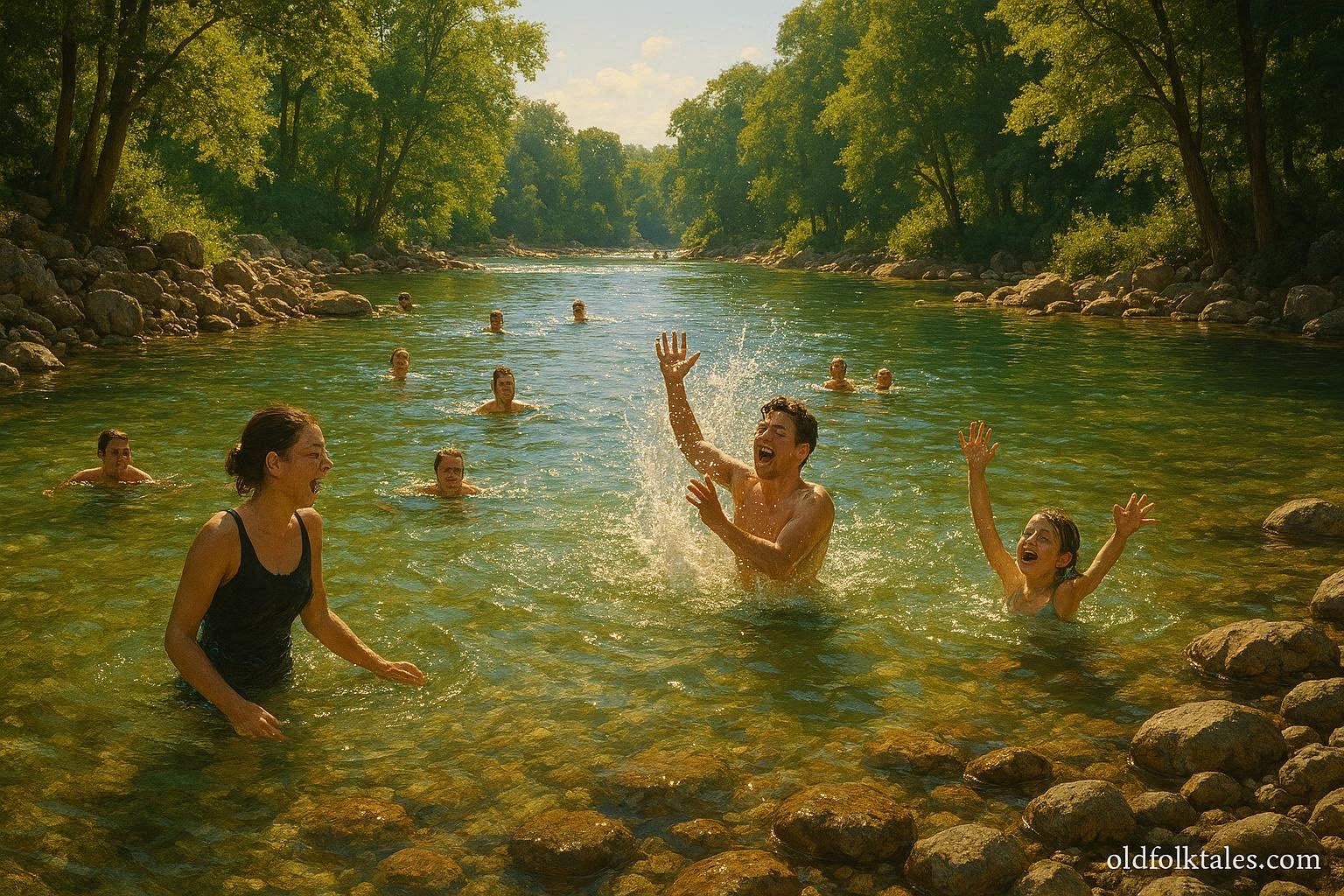
As spring slowly gives way to summer, there is a noticeable shift in both the land and the rhythm of daily life. The air grows warmer, the sun lingers longer in the sky, and the natural world becomes more active. In many regions of the Western United States, this seasonal change is not marked by a date on a calendar, but by a simple and meaningful moment known as the first river swim.
Throughout the spring months, rivers run cold and fast, fed by melting snow from distant mountains. The water is powerful, often too strong and too cold for safe swimming. People observe from the banks, waiting for the conditions to change. They watch the water level, feel the temperature, and pay attention to the current. These observations are not casual. They are part of an understanding that has been developed over time.
As the weeks pass, the river begins to change. The flow becomes steadier, the water warms slightly, and the currents settle. The signs are subtle, but they are recognized by those familiar with the environment. The river becomes inviting rather than distant, and the possibility of entering the water becomes real.
Encounter the strange and the unseen — from Bigfoot to regional monsters hiding in America’s forests.
The first swim of the season is not taken lightly. It is approached with both excitement and awareness. People gather at familiar spots along the riverbanks, places that have been used for generations. These locations are chosen for their safety, their accessibility, and their connection to past experiences.
Before stepping into the water, there is often a moment of pause. The temperature is tested, the current is observed, and the conditions are assessed. This moment reflects respect for the river, an understanding that it is both a place of enjoyment and a force of nature.
When the first swimmer enters the water, the experience is immediate and vivid. The coolness of the river contrasts with the warmth of the air, creating a sensation that is both refreshing and intense. The body adjusts quickly, and what begins as a shock becomes a feeling of freedom.
This first swim carries meaning beyond the physical experience. It signals that summer has truly begun. It marks the transition from waiting to participation, from observation to action. The river, which had been watched from a distance, becomes a place of activity and connection.
Others soon follow, entering the water and sharing in the experience. Laughter, movement, and energy fill the space. The river becomes a gathering place, where individuals come together not only to swim, but to share the moment.
In traditions connected to Western American communities, rivers have long been central to daily life. They provide water, shape the landscape, and offer spaces for recreation. The first swim of the season reflects this relationship, combining practical awareness with a sense of enjoyment.
The significance of such seasonal practices is preserved in archives like those at University of Colorado Boulder, where the connection between people and natural environments is studied and documented. These traditions show how seasonal changes influence behavior and create shared experiences.
As the day continues, the river becomes more than a place for swimming. It becomes a space for relaxation, conversation, and connection. People sit along the banks, dry in the sun, and return to the water again. The rhythm of the day is shaped by the flow of the river and the warmth of the season.
The first swim also creates a sense of anticipation for what lies ahead. It marks the beginning of a season filled with outdoor activity, exploration, and movement. The river becomes part of a larger pattern, one that includes hiking, gathering, and spending time in nature.
For younger participants, the first swim is often a memorable event. It represents a step into the season, a moment of excitement that signals freedom from the routines of earlier months. These experiences become lasting memories, tied to both place and time.
The tradition also carries an element of respect. The river is not taken for granted. Conditions are always considered, and safety remains important. This balance between enjoyment and awareness reflects a deeper understanding of the natural environment.
As summer progresses, swimming becomes more common, but the first swim remains special. It is remembered as the moment when the season truly began. Each return to the river builds on that initial experience, but none carry the same sense of beginning.
Even as modern life introduces new forms of recreation, the tradition continues. People still gather at rivers, still wait for the right conditions, and still recognize the significance of that first entry into the water. The practice remains simple, but its meaning endures.
In some places, the tradition may take on different forms. Lakes, streams, or other bodies of water may serve the same purpose. The specific location may change, but the idea remains the same. The first safe swim marks the start of summer.
As the season eventually begins to shift again and the days grow shorter, the river returns to a quieter state. The water cools, the activity slows, and the cycle moves forward. But the memory of the first swim remains, carried into the next year.
When spring returns and the rivers begin to change once more, the process begins again. People watch, wait, and prepare for the moment when the water becomes inviting again. The anticipation builds, leading once more to that first step into the river.
In this way, the summer river swimming opening tradition becomes more than a single event. It becomes part of a larger cycle, connecting people to the seasons, the environment, and each other. It reflects the balance between patience and action, between waiting and experiencing.
The river flows continuously, but the meaning created around it changes with the seasons. The first swim stands as a reminder that beginnings can be simple, that joy can come from natural moments, and that connection to the environment can shape how we experience time.
Click to read all American Traditions & Beliefs — the living folklore of daily life, customs, and superstitions.
Moral Lesson
Simple moments in nature can bring joy and mark meaningful new beginnings.
Knowledge Check
- What marks the start of the tradition?
The first safe swim in the river - Why do people wait before swimming?
To ensure the river is safe and warm enough - What does the first swim symbolize?
The beginning of summer - How do people feel during the first swim?
Excited and refreshed - What does the tradition teach?
Respect for nature and enjoyment of simple moments - What is the main idea of the story?
That natural moments can mark important beginnings
Source
Adapted from materials preserved by University of Colorado Boulder
Cultural Origin
Western American tradition