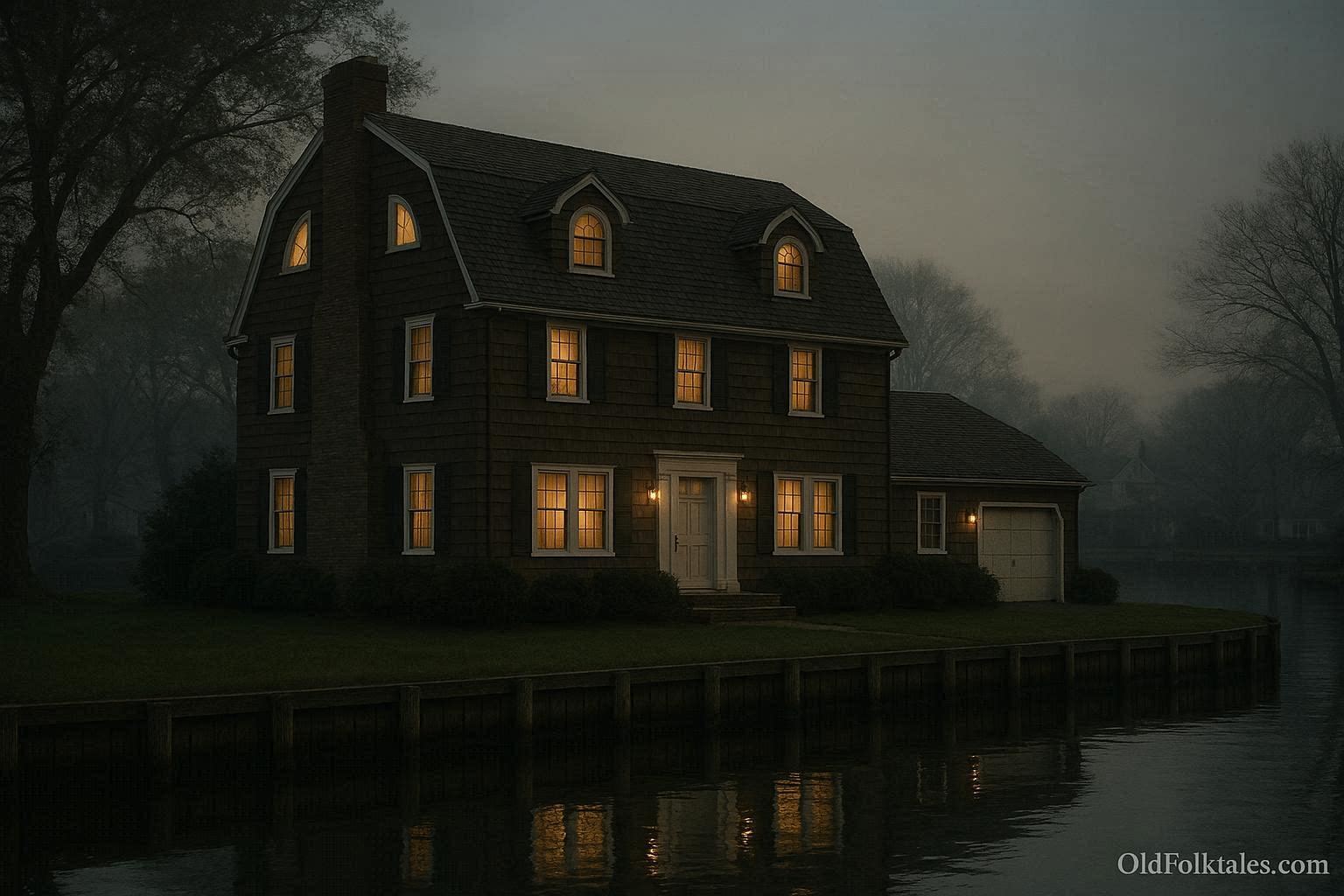
In the quiet suburban village of Amityville, New York, a large Dutch Colonial house stood along the calm waters of Ocean Avenue. With its distinctive quarter moon windows and a boathouse resting gently by the canal, the home appeared picturesque and peaceful. Neighbors passed by without suspicion. Children rode bicycles along the street. Boats drifted quietly in the background. Nothing about the house suggested that it would soon become one of the most debated haunted homes in American history.
In November 1974, tragedy struck inside the house. Ronald DeFeo Jr. murdered six members of his family while they slept. The crime shocked the local community and quickly made national headlines. Newspapers documented the details and court records preserved testimony and evidence. The home, once simply a suburban residence, became permanently linked to the violent event. Ronald DeFeo Jr. was later convicted and sentenced to prison, but the emotional impact of the crime lingered far beyond the courtroom.
Thirteen months after the murders, in December 1975, George and Kathy Lutz purchased the house at what many considered a surprisingly affordable price. They moved in with their three children, hopeful for a fresh start. At first, life in the house seemed ordinary. The family unpacked boxes, arranged furniture, and attempted to settle into a routine. Yet within days, they began to claim that something felt wrong.
Encounter the strange and the unseen — from Bigfoot to regional monsters hiding in America’s forests.
According to the Lutz family, unexplained events began almost immediately. They described sudden cold spots in certain rooms despite functioning heating. Doors reportedly slammed shut without warning. Strange odors drifted through hallways. Kathy Lutz later recounted seeing dark stains appear and disappear on walls. George Lutz spoke of waking each night at approximately 3:15 a.m., the same time investigators believed the DeFeo murders occurred.
As the days passed, their accounts grew more unsettling. The children allegedly spoke of an unseen presence. Kathy claimed to witness objects moving slightly from where they had been placed. The family described hearing unexplained sounds echoing through the house. Though no independent investigators confirmed these occurrences at the time, the Lutz family maintained that the experiences were intense and terrifying.
After only twenty eight days, the Lutz family abruptly left the home, leaving many belongings behind. They later stated that fear drove them out and that they believed the house was haunted by something malevolent. Their story quickly attracted media attention. Reporters, authors, and television programs sought interviews. Public curiosity surged.
In 1977, author Jay Anson published the book The Amityville Horror, presenting the Lutz family’s account as a detailed narrative of supernatural terror. The book became a bestseller and transformed the house into a cultural phenomenon. Two years later, the story was adapted into a film, further cementing its place in popular culture. Sequels, remakes, and documentaries followed over the decades, each adding layers to the legend.
Skeptics questioned the claims almost immediately. Some investigators suggested that the story may have been exaggerated or fabricated. Legal disputes emerged between the Lutz family and other parties connected to the case. Journalists revisited the timeline, comparing statements and records. The house itself changed owners several times, and later residents reported no unusual experiences.
Despite controversy, the Amityville house became a symbol of haunted home folklore. It blended documented crime with alleged paranormal events, creating a narrative that was both frightening and compelling. The house’s image, especially its distinctive windows resembling watchful eyes, became iconic. Even people who never visited the village recognized its silhouette from book covers and film posters.
Over time, the address was changed to reduce unwanted attention from tourists and curiosity seekers. The structure was renovated, and some exterior features were modified. Yet the legend remained. Visitors still traveled to the quiet street, hoping to glimpse the house that had inspired so many stories.
Folklore scholars often point to the Amityville case as an example of how modern legends develop. A real tragedy provided the foundation. Personal testimony added emotional intensity. Media coverage amplified the narrative. Books and films transformed it into entertainment. Whether one believes in the paranormal claims or not, the cultural impact is undeniable.
The Amityville Horror House continues to occupy a unique place in American ghost lore. It stands at the intersection of true crime and supernatural storytelling. The murders of 1974 are documented historical fact. The haunting described by the Lutz family remains debated. Together, they created a story that has endured for decades.
Today, the house remains a private residence in Amityville, New York. It no longer seeks attention, nor does it publicly embrace its reputation. Yet in conversations about haunted houses in America, its name inevitably rises to the surface. The legend persists not only because of fear, but because it reflects society’s fascination with the unknown and with stories that blur the line between reality and imagination.
Click to explore all American Ghost Stories — haunting legends of spirits, lost souls, and mysterious places across the U.S.
Moral Lesson
The story of the Amityville house reminds us to approach extraordinary claims with both open mindedness and critical thinking. Real tragedies deserve respect, and legends should be understood carefully so that truth and imagination are not confused.
Knowledge Check
- Where is the Amityville Horror House located?
It is located in Amityville, New York. - What tragic event occurred there in 1974?
Six members of the DeFeo family were murdered. - Who moved into the house after the murders?
George and Kathy Lutz and their children. - How long did the Lutz family stay in the house?
They stayed for twenty eight days. - What book popularized their story?
The Amityville Horror by Jay Anson. - Why does the legend continue today?
Because it combines documented crime with disputed paranormal claims and media influence.
Source
Adapted from local press archives and historical criminal records
Cultural Origin
Amityville, New York twentieth century American folklore