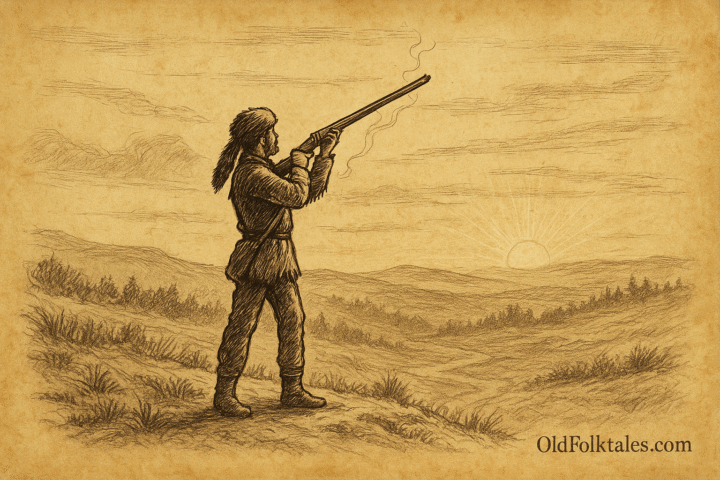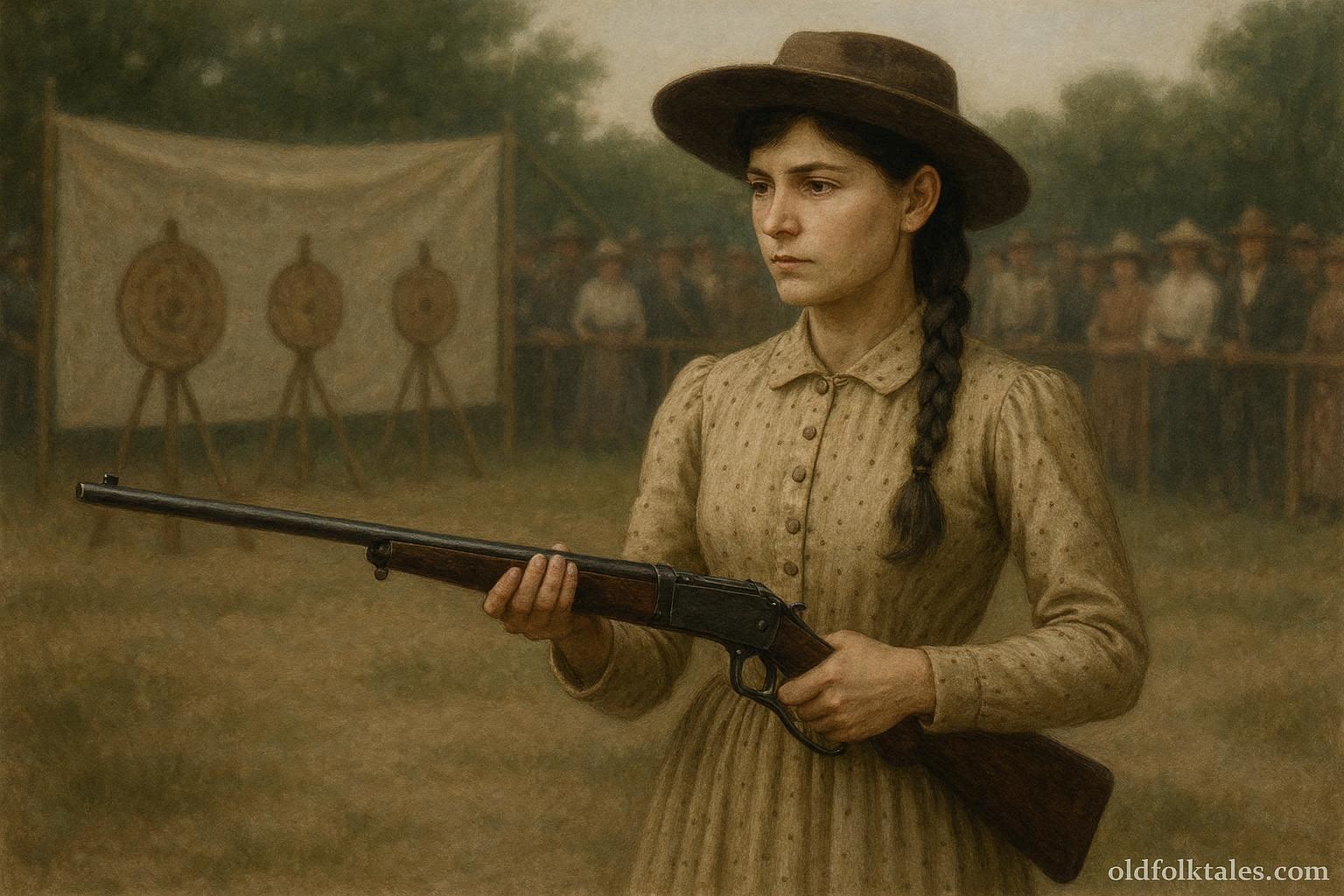
The audience came expecting thunder. They expected a loud voice, a bold stance, and a performer who would announce her greatness before proving it. What they witnessed instead unsettled their expectations. A woman stepped forward without flourish, her posture straight but unforced, her expression composed. Annie Oakley did not raise her rifle to command attention. She raised it because the moment required it.
In the noisy world of frontier entertainment, where exaggeration was currency and bravado filled the air, Oakley’s silence became remarkable. Her stillness was not emptiness. It was control. The rifle rested against her shoulder as if it had always belonged there, and when the shot rang out, it arrived exactly where she intended. There was no celebration in her posture afterward. She lowered the rifle and waited, calm as before.
Annie Oakley’s legend did not grow from spectacle alone. It grew from discipline shaped by necessity. Born into poverty and hardship, she learned early that survival depended on precision rather than pride. Hunting was not an act of sport in her youth. It was a responsibility. Each bullet represented food, safety, and stability. A careless shot meant hunger. A rushed hand meant loss. Over time, the discipline required for survival hardened into habit, and habit became mastery.
Discover African American wisdom, Native American spirit stories, and the humor of early pioneers in American Folktales.
When she entered shooting contests, she did not arrive with a reputation. She arrived with preparation. Crowds often underestimated her, distracted by size and gender in an era obsessed with outward strength. Annie never corrected them. She allowed assumptions to exist, knowing they would dissolve the moment the target fell. Her confidence was quiet because it had already been tested in circumstances far harsher than applause.
Her performances grew more complex as her reputation spread. She shot coins tossed into the air, split playing cards edgewise, and extinguished candle flames without damaging the wick. Each demonstration required extraordinary focus, yet Annie treated them as routine. She believed that skill lost its integrity when paired with arrogance. For her, excellence demanded restraint.
Unlike many performers of her time, Oakley resisted exaggeration. Show managers encouraged dramatic stories and grand claims, but Annie declined to inflate her image. She insisted that her abilities remain grounded in truth. The audience did not need illusion when reality was precise enough. This refusal to dramatize herself became a defining feature of her legacy.
Annie’s humility was not insecurity. It was deliberate discipline. She understood that attention could distract the mind, and distraction led to error. By remaining inwardly focused, she preserved consistency. Shot after shot, performance after performance, her steadiness never faltered. Where others burned brightly and briefly, Oakley endured.
As her fame crossed borders, she carried the same principles onto international stages. European audiences, accustomed to rigid formality, were struck by her composure. American spectators, used to frontier bravado, found her restraint unexpectedly powerful. In both worlds, Annie Oakley stood apart because she did not need to dominate the room to command respect.
Stories circulated of challengers who doubted her abilities and attempted to unsettle her with impossible requests. Annie accepted them without comment. She adjusted her stance, waited for alignment, and fired. The result was always the same. Precision answered doubt more effectively than argument ever could. When questioned afterward, she attributed success to practice, never to talent alone.
Beyond performance, Annie Oakley believed in responsibility. She promoted firearm safety at a time when recklessness was often celebrated. She taught that discipline with a weapon reflected discipline in character. Shooting, in her view, was a mirror. A careless mind revealed itself through careless handling. A steady spirit produced steady results.
Oakley also challenged cultural assumptions quietly. Rather than arguing for recognition, she demonstrated it. Her success expanded the public imagination of who could embody mastery. Yet she never framed herself as exceptional because of difference. She framed herself as exceptional because of effort. Skill, she insisted, was earned.
As years passed and younger performers emerged, many attempted to replicate her feats with louder personas. Few matched her consistency. Annie understood that mastery was not a single achievement but a sustained commitment. She practiced relentlessly even after fame secured her place. To stop practicing, she believed, was to invite decline.
When age eventually slowed her movements, it did not diminish her reputation. The legend endured because it rested on values that did not fade with time. Precision remained admirable. Humility remained rare. Discipline remained powerful. Annie Oakley’s story survived because it reflected something deeper than entertainment. It reflected character.
In her later years, she spoke less about shooting and more about preparation. She advised young people to respect their craft, whatever it might be. Skill, she said, was not about outperforming others but about honoring responsibility. The rifle had taught her patience. The stage had taught her restraint. The applause had taught her nothing she did not already know.
When Annie Oakley finally stepped away from public performance, there was no dramatic farewell. No final boast. No attempt to secure legacy through spectacle. She left quietly, confident that her work had spoken clearly enough. History agreed. Her name became synonymous not with noise, but with steadiness.
In a culture that often equated greatness with volume, Annie Oakley offered a different definition. She showed that mastery could be calm, that strength could be measured, and that humility could sharpen rather than diminish excellence. The shot that never shook was not just her aim. It was her spirit.
Click now to read all American Legends — heroic tales where truth and imagination meet, defining the American spirit.
Moral Lesson
True mastery is sustained by discipline and humility, not by pride or performance. Lasting respect is earned through consistent effort and quiet confidence.
Knowledge Check
- Why did Annie Oakley avoid showmanship during her performances?
Because she believed focus and discipline were essential to true precision. - How did Annie Oakley’s childhood shape her approach to shooting?
Hunting for survival taught her responsibility and the importance of accuracy. - What distinguished Annie Oakley from other frontier performers?
Her calm restraint, consistency, and refusal to rely on exaggerated bravado. - How did Annie respond to skepticism or challenges from others?
She answered doubt through preparation and flawless execution rather than argument. - What values did Annie Oakley associate with responsible marksmanship?
Discipline, safety, humility, and respect for the craft. - Why has Annie Oakley’s legacy endured over time?
Because it was built on character, consistency, and mastery rather than spectacle.
Source
Adapted from Library of Congress American performance and frontier folklore archives
Cultural Origin
19th-century American frontier entertainment culture