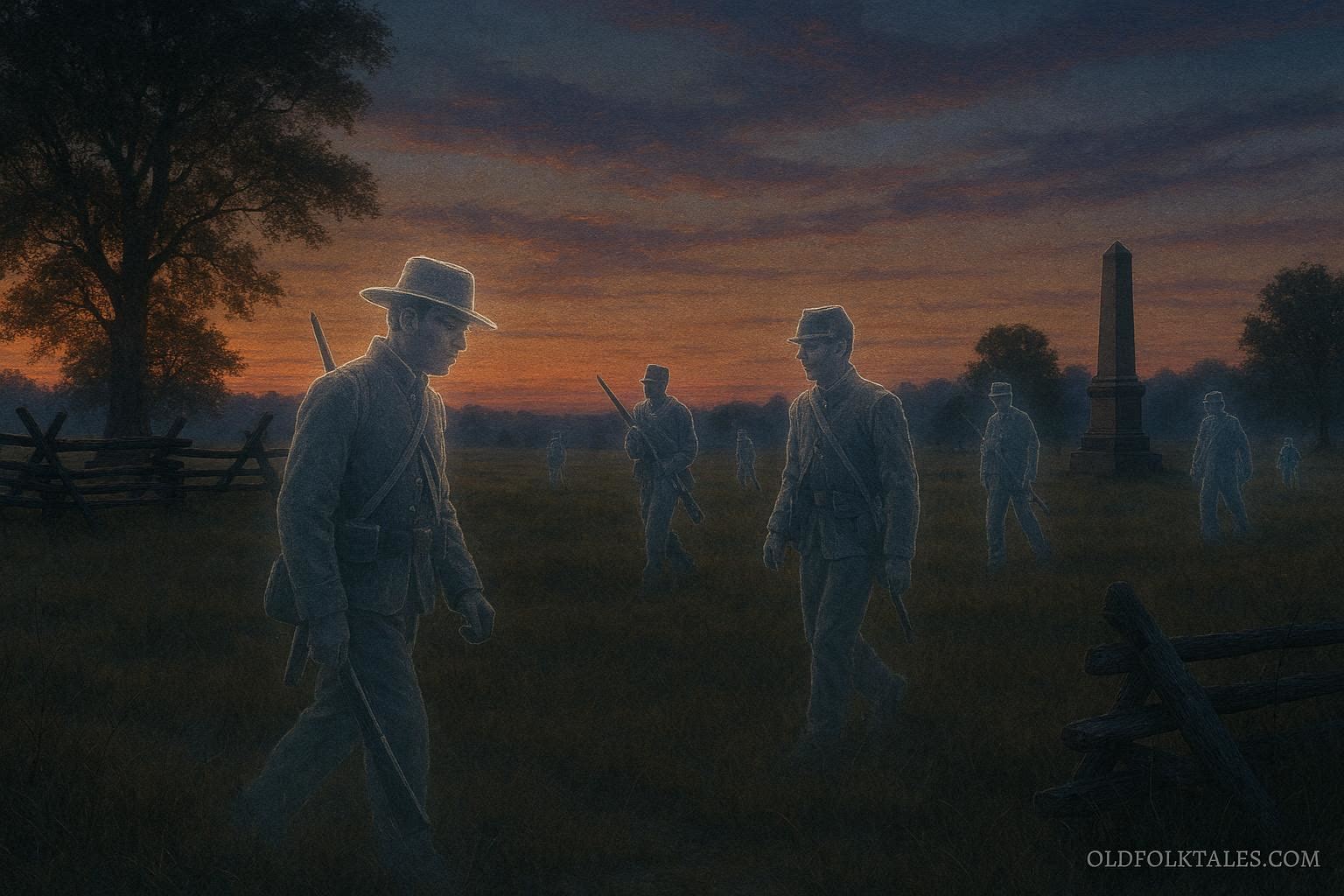
As the sun sank below the horizon, a cool hush settled over the battlefield. The grass swayed in the evening wind, and the distant outlines of trees cast long shadows over the scarred earth. Local families had long whispered about figures moving silently across the open fields. These were not travelers, hunters, or animals. They were translucent forms resembling soldiers, often appearing in the fading light and disappearing when fully observed. Witnesses described an eerie calm surrounding the figures, a weight of memory that seemed to press gently upon the land.
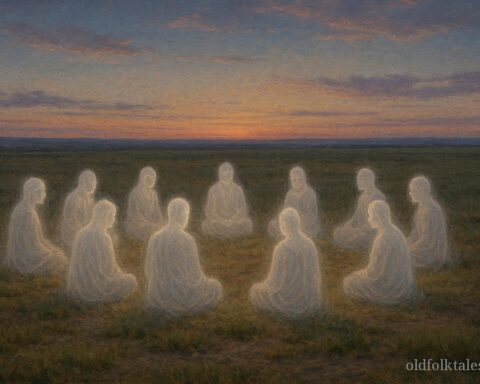
These figures were most often reported along the ridges and natural lines of the battlefield, the same paths that soldiers once marched during battles now etched into local memory. They did not speak or interact with observers. They moved in formation, pausing near small rises, trees, or remnants of fortifications. Elders explained that these spirits were not restless but were bound to the land as guardians of memory. They preserved the history of the conflict and the sacrifices of those who had fought, ensuring that the land itself remembered the events that took place there.
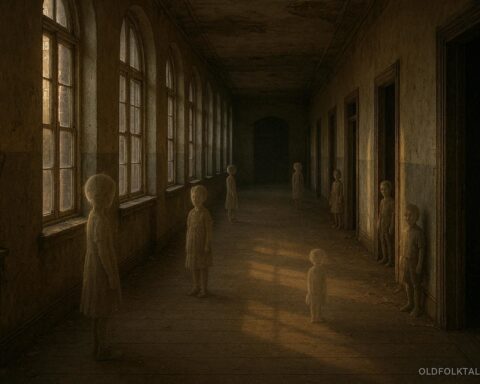
Children were sometimes the first to notice the spirits. They spoke of seeing faint figures standing silently in rows or moving along the edges of fields. When asked to describe them, children often mentioned details of clothing, posture, and formation, noticing what adults often overlooked. Elders interpreted this as evidence that young people were particularly sensitive to the lingering presence of history, able to perceive what the eye of an adult might pass over.
Encounter the strange and the unseen — from Bigfoot to regional monsters hiding in America’s forests.
Adults reported different experiences. Many described a sudden stillness in the air, a quiet that seemed to descend over the land. Birds would pause mid-flight, and livestock became unusually calm or hesitant. Travelers passing through these battlefields at dusk sometimes sensed movement at the edge of their vision and felt the weight of unseen observers. The feeling was not one of fear, but of reverence. People became aware that the land carried the memory of lives lost and decisions made in moments of great consequence.
These apparitions were often most visible during particular seasons. Autumn and late spring were mentioned most frequently, corresponding to the historical timing of key battles and the seasonal movements of troops. During these times, the shapes seemed to appear more clearly, moving across the fields with deliberate care. Witnesses believed that the land itself facilitated their appearance, that memory and history converged in these moments to create a visible echo of the past.
The legends suggest that the spirits are collective rather than individual. They do not represent a single soldier or officer, but groups of people who once fought together, shared hardship, and endured the chaos of conflict. This collective presence reinforced the idea that the battlefield holds history in its entirety, not only the story of one person but of the community involved. Observers reported seeing figures aligned in rows, as if engaged in silent drills, or pausing briefly to face the horizon.
Despite their visibility, the spirits did not interact with the living. Animals sometimes sensed them and behaved cautiously. People walking the fields at dusk often felt a weight or stillness but were never threatened. Some reported subtle sounds, such as soft footsteps or the faint rustle of fabric, but these occurrences were rare and fleeting. The spirits seemed to maintain a presence without disturbing the natural world, serving as witnesses rather than participants in contemporary life.
Over time, families living near these battlefields incorporated the stories into lessons for children. They taught respect for the sacrifices represented and encouraged reflection on the events that had shaped the land. Some families placed small offerings near battlefield markers, such as stones, flowers, or a few grains of corn. These gestures were intended to honor memory rather than appease spirits, demonstrating an ongoing recognition of history and responsibility.
Historians have noted that these legends serve multiple purposes. They preserve the memory of those who lived and died, provide context for community identity, and reinforce the connection between land and history. The spirits act as silent teachers, reminding observers of the consequences of conflict, the value of endurance, and the persistence of memory across time.
Even in the modern era, travelers and visitors report sightings. Figures appear along ridges, near trees, or across open fields just as the sun disappears. The apparitions move deliberately, sometimes retracing historical paths or pausing near landmarks. Observers consistently describe a feeling of reverence and awe rather than fear, as if the spirits serve to preserve both the memory of the fallen and the dignity of the battlefield.
The legend of battlefield spirits illustrates that history is not only recorded in books. It lives in the land, in memory, and sometimes in forms visible to those who take the time to notice. By observing and respecting these presences, the living maintain a connection to the past and honor the endurance, courage, and sacrifice of those who came before. The spirits are reminders that even after conflict ends, its lessons and the people who experienced it continue to shape the land and those who walk upon it.
Discover chilling ghost tales and haunted places that echo through America’s towns and countryside.
Moral Lesson
Respect for history and the sacrifices of those who came before is preserved through awareness, observation, and acknowledgment of the land and its memory.
Knowledge Check
- What do the battlefield spirits represent?
They represent memory, endurance, and the collective experience of soldiers. - When are the spirits most often seen?
At dusk or shortly after sunset. - Who is often the first to notice these apparitions?
Children. - Why do people leave offerings near battlefield markers?
To honor the presence of those who lived and to acknowledge the lessons embedded in the land. - Are the spirits considered dangerous or frightening?
No, they are not frightening and do not harm observers. - During which seasons are sightings most common?
Autumn and late spring.
Source
Adapted from American Folklife Center Civil War spirit narratives
Cultural Origin
Eastern United States communities