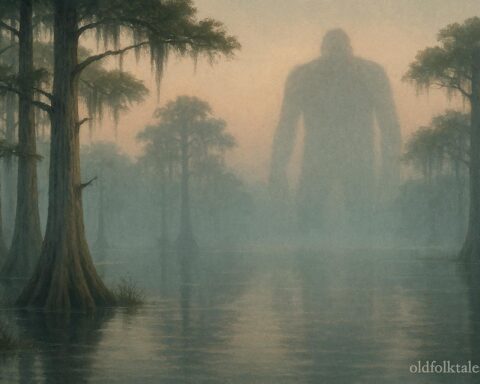
Freshwater depths have always held secrets. In the clear, cold waters of Bear Lake, straddling Utah and Idaho, communities for centuries have shared whispers of a massive serpentine creature that inhabits the deep. Unlike ordinary fish or waterfowl, this being surfaces mostly during storms or seasonal migrations, its long, dark body undulating beneath the waves. Some say it has ridged scales, a horned head, and a flowing mane-like crest that rises above the surface before disappearing again.
Early Indigenous peoples of the region treated the lake with caution, speaking of powerful water beings and unseen guardians. When settlers arrived in the 19th century, they encountered the same unease, interpreting unusual waves, sudden storms, and floating debris as signs that the lake’s spirit was observing human activity. Over time, these accounts merged with settler tales to form a lasting cryptid legend: the Bear Lake Monster.
Witnesses described seeing something enormous moving beneath the water, dragging nets and snapping tree limbs near the shoreline. One group of settlers, camping along the lake during seasonal migration, reported seeing the creature arching its back in the middle of the night. Horses panicked and fires went out, forcing the group to abandon their supplies and retreat inland. By morning, strange drag marks stretched from the water into the trees, evidence of the lake’s unseen power.
Discover African American wisdom, Native American spirit stories, and the humor of early pioneers in American Folktales.
The monster rarely attacked people directly. It did not capsize boats or chase hunters, but it became a natural enforcer of caution. Residents quickly learned that the creature symbolized the lake’s unpredictability. Fishermen observed patterns of movement, avoided crossing during sudden storms, and built their homes at safe distances. In this way, the Bear Lake Monster functioned as both a warning and a protector of human life.
By the late 19th century, local newspapers sensationalized sightings. Illustrators depicted a dragon-like beast with enormous eyes, spines, and a gaping maw. Skeptics dismissed it as folklore, attributing sightings to oversized sturgeon, misidentified otters, floating logs, or optical illusions caused by the lake’s clarity. Yet consistent witness accounts kept the legend alive, particularly stories describing its size, undulating movement, and timing during storms.
Stories of the Bear Lake Monster served a deeper purpose than fear or curiosity. For frontier communities, unpredictable weather and dangerous terrain were part of daily life. The monster represented nature’s power and the need to respect it. Parents warned children to stay away from the water at dusk. Fishermen read subtle changes in wave patterns and air temperature. Every sudden storm became a lesson in caution and observation. The creature was rarely seen, yet the very possibility of its presence influenced behavior, keeping communities safe.
Throughout the 20th century, folklorists and scholars documented these oral histories. The creature was compared with freshwater cryptids worldwide, revealing recurring cultural themes: respect for water, awareness of environmental dangers, and moral lessons tied to humility. Modern residents continue to share sightings, often during storms when the lake roils and a shadow seems to slide beneath the surface. Some describe a chill in the air or sudden currents strong enough to rock small boats. Even today, locals tell newcomers, “Do not underestimate Bear Lake.”
The legend continues to shape regional identity. Tourists are drawn to its clarity, its deep blue waters, and the quiet tension of a lake that seems alive. The Bear Lake Monster, whether real or imagined, is more than a creature—it is a symbol of the interconnectedness between humans and the environment. It reminds those who live and work near the lake that survival requires attentiveness, humility, and respect for forces beyond understanding.
Stories like these endure because they combine observation, imagination, and practical wisdom. The Bear Lake Monster remains a cultural guardian, ensuring that people remember the lessons of the water: move carefully, respect natural limits, and pay attention to signs that life itself provides. Whether glimpsed beneath stormy waves or preserved in oral tradition, the lake’s cryptid continues to teach that mystery and caution go hand in hand.
Click now to read all American Legends — heroic tales where truth and imagination meet, defining the American spirit.
Moral Lesson
Respect nature’s power and unpredictability. The unknown often serves as a guardian, teaching communities to observe, prepare, and act with humility.
Knowledge Check:
1. What type of creature is the Bear Lake Monster described as?
Answer: A massive serpentine freshwater cryptid
2. When does the monster typically appear?
Answer: During storms and seasonal migrations
3. How did early communities respond to the lake’s unusual activity?
Answer: They observed patterns, avoided danger, and respected the water
4. What lesson does the monster convey about human behavior?
Answer: Humility, caution, and respect for nature
5. How did newspapers in the 19th century portray the monster?
Answer: As a dragon-like creature, often exaggerated
6. Why does the legend continue today?
Answer: It preserves cultural identity and teaches environmental respect
Source:
Adapted from Utah State University regional folklore collections
Cultural Origin:
Intermountain West communities, Utah–Idaho