Long before railroads stitched the West together and long before dime novels turned scouts into legends, there were whispers across the Great Plains of two brothers born beneath the same thunderstorm.
One would grow famous.
The other would grow fast.
William Cody became known across America as Buffalo Bill, the buffalo hunter, scout, and showman whose name echoed from Kansas to New York. But old ranch hands and prairie riders sometimes lowered their voices and spoke of a twin brother who never cared for applause.
They called him Antelope Bill.
If Buffalo Bill could ride, Antelope Bill could run.
The story begins on a stretch of open prairie where the grass rolled like waves beneath an endless sky. The twin boys were said to have been born as lightning split the clouds in two. Their mother declared that one carried the strength of the herd, the other the spirit of the wind.
As children, they tested this prophecy daily.
Discover chilling ghost tales and haunted places that echo through America’s towns and countryside.
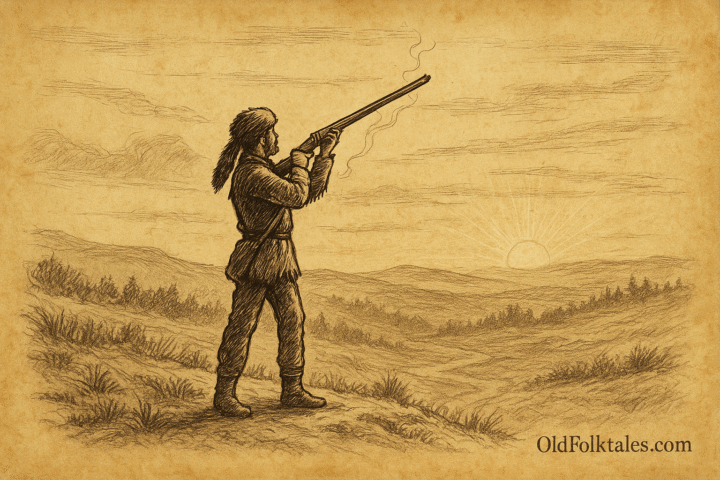
Buffalo Bill learned early how to steady a rifle and track hoofprints across dust. Antelope Bill, by contrast, rarely stayed still long enough to be tracked. He chased tumbleweeds for sport. He raced prairie dogs across burrow fields. By the time he was ten, he could outrun a startled jackrabbit.
Neighbors swore they once saw him sprint alongside a herd of pronghorn antelope, keeping pace with their powerful leaps.
Pronghorns were the fastest land animals in North America, capable of astonishing speed across open plains. Yet the tall tale insists that Antelope Bill matched them stride for stride, laughing as the wind tore tears from his eyes.
While Buffalo Bill earned his nickname hunting buffalo to supply railroad crews, Antelope Bill refused to carry a rifle.
“I ain’t built to chase what stands still,” he once declared. “I’m built to chase what runs.”
The rivalry between the brothers was friendly but fierce. At campfires, cowboys placed bets.
Could Antelope Bill outrun a mustang?
Could he beat a dust storm to the next ridge?
One summer afternoon, when heat shimmered like silver on the horizon, the challenge came.
A group of drovers pointed toward a distant herd of pronghorn grazing beyond a dry creek bed. “Reckon you could catch one?” they teased.
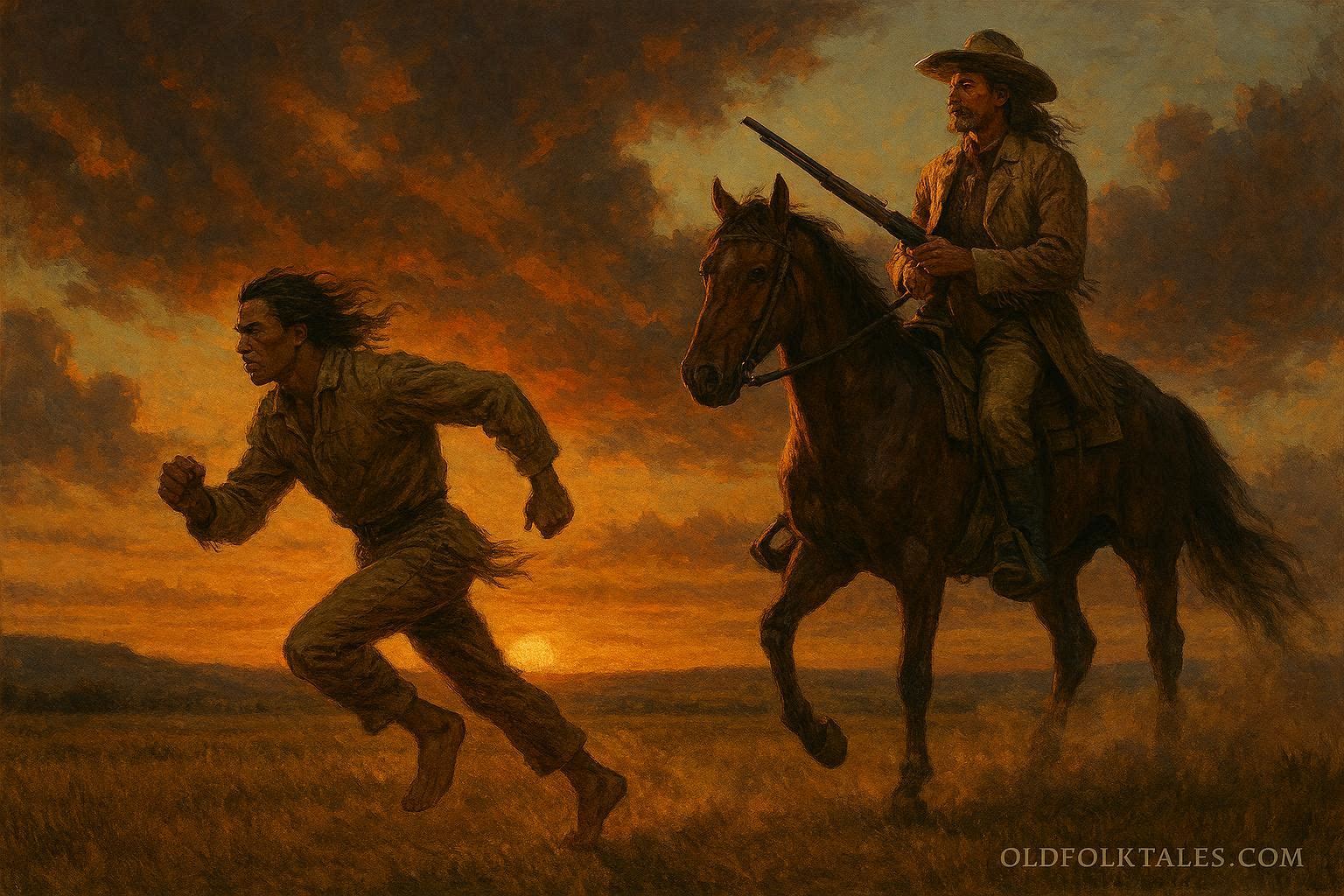
Antelope Bill grinned, kicked off his boots, and took off barefoot.
Witnesses claimed he ran so fast that grass bent flat in his wake. Dust spiraled upward behind him like a miniature tornado. The pronghorn herd scattered, yet one young buck sprinted ahead, determined not to yield.
Across miles of prairie they ran.
Buffalo Bill, watching from horseback, tipped his hat in reluctant admiration.
The tale says Antelope Bill never caught the buck, but neither did he fall behind. They ran until sunset painted the sky crimson. At dusk, both slowed, breathing hard but undefeated. Antelope Bill raised his hand in respect before turning back toward camp.
“He runs free,” Bill reportedly said of the antelope. “So do I.”
Unlike his brother, Antelope Bill never joined Wild West shows. Crowds unsettled him. He preferred open horizons to applause. While Buffalo Bill toured cities, reenacting frontier exploits for eager audiences, Antelope Bill explored deserts, mesas, and wind-swept plateaus.
Another legend tells of the Great Sandstorm Race.
A sudden wall of dust once rose across the plains, rolling toward a wagon train like a moving mountain. Horses panicked. Visibility vanished.
Antelope Bill stepped forward.
“I’ll outrun it,” he said calmly. “And tell you where it breaks.”
Before anyone could object, he vanished into the swirling haze.
Some say he ran straight into the storm, leaning forward like an arrow. Others claim he ran ahead of it, racing along its edge until he found a canyon where the wind split around stone walls.
Moments later, as dust swallowed the camp, a faint whistle echoed back through the gale. The wagon master followed the sound and led his caravan toward safety.
When the storm passed, Antelope Bill was waiting calmly on a ridge, hair full of sand but grin wide as the horizon.
“You can’t beat the wind,” he told them. “But you can learn its habits.”
Stories multiplied with each passing year.
They said he once outran a prairie fire to warn a distant ranch.
They claimed he carried messages between forts faster than mounted couriers.
They insisted he could sprint from dawn to dusk without tiring, guided by instinct rather than compass.
Historians may point to exaggeration, as all tall tales invite. Yet the figure of Antelope Bill symbolizes something deeper than literal speed. In a landscape defined by vast distances and harsh elements, agility meant survival.
Where Buffalo Bill represented the conquering hunter and showman, Antelope Bill represented adaptation.
One final tale captures their bond.
As the brothers aged, Buffalo Bill’s fame grew nationwide. Crowds cheered his reenactments. Newspapers printed his likeness. Yet when he returned to the plains between tours, he often rode out alone at sunset.
There, across a distant stretch of open grass, he would glimpse a figure running along the horizon.
Hatless. Bootless. Swift as a streak of shadow.
Buffalo Bill would raise his hand in salute.
Whether Antelope Bill truly existed as twin brother or metaphor for untamed freedom remains uncertain. But in Western frontier tall tale tradition, legends often split themselves into contrasts. One brother embodies strength and spectacle. The other embodies motion and mystery.
In the end, it is said that Antelope Bill never slowed.
Some swear that on quiet evenings, when the prairie wind hums through tall grass, you can see a ripple moving faster than any rider.
Not chasing fame.
Not chasing fortune.
Just chasing the horizon.
Explore the heart of America’s storytelling — from tall tales and tricksters to fireside family legends.
Moral Lesson
Fame and recognition are not the only measures of greatness. While one person may shine in the spotlight, another may find fulfillment in freedom, skill, and quiet mastery. Antelope Bill’s legend reminds us that every individual carries a unique strength. Some conquer through force and visibility, while others thrive through adaptability, humility, and harmony with their environment. True fulfillment comes not from comparison, but from embracing the path that matches one’s own spirit and purpose.
Knowledge Check
- What distinguished Antelope Bill from his famous brother?
His extraordinary speed and love of running - What animal was he said to outrun?
Pronghorn antelope - Why did he refuse to carry a rifle?
He preferred chasing speed rather than hunting - What natural disaster did he race to guide settlers through?
A massive sandstorm - What does Antelope Bill symbolize in frontier folklore?
Freedom, adaptability, and untamed spirit - How does his legend contrast with Buffalo Bill’s?
Buffalo Bill represents fame and spectacle, while Antelope Bill represents quiet mastery and freedom
Source
Adapted from Buffalo Bill Center of the West archives; American Folklore Society collections
Cultural Origin
Great Plains and Western frontier